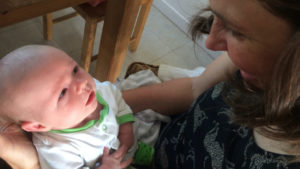
A package of our best selected practices for ‘holding and handling’ new babies, that we believe can make the most significant difference to the quality of care and attachment between parents and their newborns in the community.
The pandemic has had a disastrous impact on maternity care and especially on postpartum care. Given staff shortages and limited resources, we need to reach new parents in their communities, in their homes or in local children’s centres.
There is also a rising urgent need in our global culture. Worldwide, more mothers hold a newborn for the first time when they hold their first baby. Right after birth, parents are expected to respond to the demands of little beings who fascinate them but whose language they don’t understand. In the past, ‘holding and handling’, the fundamentals of embodied communication with newborns (Bowlby), were handed down with love from relatives and skilled neighbours. Apps and helplines packed with information and advice cannot fill this crucial gap of true body-based connection.
resources which can ease baby care in the early days and weeks, to make it a mutually enjoyable experience
Birthlight’s embodied new-old ways of handling newborns respond to their needs, help them thrive and trigger an enjoyable two-way communication with parents. Newborns seek connection with all their senses together: touch and movement, eyesight and hearing, smell and taste. Babies whose connection needs are met radiate their contentment to parents, who in turn relax and convey calmness to their infants: this creates an expanding spiral of wellbeing between them.
Nothing out of the ordinary, but done slightly differently, routine baby care becomes filled with wonder.
We focus on three sets of practices that are part of routine baby care and can help parents to discover ‘the wonderful talents’ (Klaus) of their newborns:
Relaxed Holds to feed, burp and pacify infants while providing the anchor of safety and closeness they most need. Congruent with the latest neuro-physiological research on the transition from womb to world, ‘relaxed holds’ coupled with slow breathing sync parents and new babies in ways that best fulfill their respective physiological and psychological adjustments to each other.
Bathing, a universal postnatal practice, can be a pleasurable or dreadful experience for parents and babies. Simple guidance, even online, can ensure that the bath becomes a highlight of newborn care, creating lasting special bonds and happy memories, particularly with fathers.
Relaxation is key to successful infant feeding. Birthlight promotes breastfeeding and its impressive range of health advantages for mother and baby, but we have always supported mums who, for any reason, opt to bottle feed. All babies benefit from being fed in aligned positions by mothers whose relaxation can then engage them in tremendous positive bio-feedback loops of closeness with their infants.
A bonus: early postnatal recovery for new mothers
While facilitating attachment, ‘relaxed holds’ also support new mothers’ early postnatal recovery through micro-movements combined with breathing. Extended exhalations are both calming and help repositioning the organs and toning abdominal muscles after birth. Practices can be fitted into the day at any time and do not require any special equipment.
‘Hands on’ community support is needed more than ever at a time when health care services are under increased strain and perinatal mental health issues are rising.
Hands on community support is needed more than ever at a time when health care services are under increased strain and perinatal mental health issues are rising.
Birthlight’s commitment to support pregnancy and birth holistically through embodied practices has not changed since Françoise was inspired by her Amazonian indigenous hosts in the 1980s. But nurturing the transition from prenates to newborns now needs to take new, in some ways more basic, forms to supplement the lack of direct skill transmission.
We are currently exploring platforms to make the ‘Embodied Postpartum’ practice pack available to parents in communities with face-to-face or if needed, online transmission at low or zero cost as much as possible through our Birthlight Charity.
We are grateful to Dave Savva, Trustee of Birthlight, for filming a pilot session at the Conewood Children’s Centre, London N5, with Birthlight instructors Kirsteen Ruffell, Liz Thompson and Francoise Freedman (original sound track by Nick Mulvey). The centre is run by Islington Council and it’s thanks to the Bright Start Central Team that it all went ahead. Brian Barnes contributed post-production editing skills. It was a very enjoyable morning for all. Watch the short film above and you will hear what parents say in their own words.
Follow our Embodied Postpartum blog series on the Birthlight website in 2022 (this is our first in a series – watch the bottom of our frontpage for more posts coming soon) and send us your thoughts after watching the films. Hands-on ‘active bonding’ in the early weeks after birth complements prenatal yoga as the best seed that our small Charity can plant at this time for lasting family well being all around.
Please get in touch if you’d like to know more about how to offer these sessions in your centre or organisation.

In the past year I had an amazing opportunity to expand my knowledge and become an Aquanatal Yoga Practitioner with Birthlight. Three years ago I became a teacher for baby and toddler swimming which I love and going down the antenatal route just felt right. I already enjoy practicing yoga and mindfulness and I wanted to help pregnant ladies feel calm, centred and powerful.
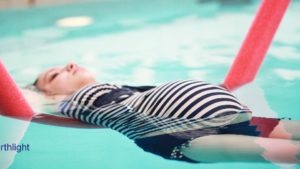
The course itself contained all the information needed to teach a class including yoga stretches, swimming and breath work while being in water. What I didn’t expect was the amount of technical information, showing the physical changes within a woman’s body, how to mentally prepare during pregnancy and birth preparation techniques. Even with it being a covid year, Birthlight had tailor made the course to be a mixture of live zoom sessions and a weekend of practical face to face pool time too, I didn’t feel like I was missing out at all and it was made interactive and fun! My most memorable part of training was day two of the pool session, we came together making a birthing tunnel with woggles and one at a time we smoothly glided through, face submerged with a long exhale to the point where you felt like you needed to take a breath of life but stayed gliding beyond that for a few extra seconds. For me it was an emotional release, the anxieties and worries of previous pregnancy and birth experiences I was able to finally let go. I never thought of the personal journey I would also go through.

Once I had completed the course I went on to gain further information and achieve the Aquanatal Yoga Diploma certificate. I began teaching very soon after and as my confidence grew and I knew I was heading down the right path, empowering these amazing women! What I enjoy the most about teaching Aquanatal Yoga is seeing the mums-to-be feeling relief in the stretches, mindful in their breathing and how it makes them feel, plus heavenly floating in a deep relaxation by the end. I encourage every session to be open and for the women to share their pregnancy journeys. I love seeing the friendships forming as they get to know each other. I feel like this is never just about delivering the class, its about building a community. After a year of separation let’s rebuild the village.
Birthlight had tailor-made the course to be a mixture of live zoom sessions and a weekend of practical face to face pool time too
Victoria howse, Participant, birthlight Aquanatal Yoga course
Coming up I will be attending the Yoga for Maternity course and I am super excited to get back into training and learning more about birth preparation. Having had two children myself and feeling ‘the fear’ in my first pregnancy I knew for my second labour I needed to be more prepared. I joined pregnancy yoga classes and wow it made such a difference, I breathed through the contractions and I listened to what my body needed, staying focused and in control. Knowing how I felt, I want to help ease the anxieties of other women too.
I was born to teach and I can’t wait to get my feet on the mat!

Aquanatal & Baby and Toddler Swimming Teacher
Victoria Howse teaches at Calm-a-baby in Peterborough, UK.

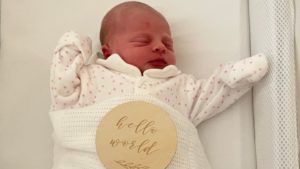
We send well wishes and a big congratulations to Becky Minihan, owner of Dolphin Academy Swim School, on the birth of her little girl.
Just wanted to let you know that I had my baby girl on Saturday morning (October 16 th )
Margot Jane Harrington
She was born at home in the birth pool!
…. I can’t wait to bring her to a baby swimming course to meet you. So excited to give her a bath at home soon using the aquatic nurture for newborns! x
We are very much in love with her!

Margot Jane Harrington
The Birthlight Aquatic Nurture for Newborns course which Becky refers to is a course designed by Francoise Freedman. Francoise explains:
There is so much more to newborns’ first baths than hygiene: baths ease babies’ transition from their intra-uterine life to the outside world. The bath is calming, stimulating and multisensory all at once. The ways in which we handle newborns shapes the bath experience. With responsive handling, daily baths can be a positive introduction to movement in water. The shared pleasure of the bath (baby bath or shared home bath) enhances early weeks and months for parents and babies together. The Birthlight Aquatic Nurture short course (Livestream) responds to several of these needs.
Contact us if you are interested in an upcoming course.

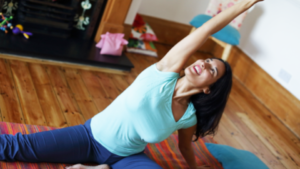
Cathy Welch shares how Well Woman Yoga supports women through all kinds of life transitions
As an experienced childbirth educator it felt very natural to move into teaching first Pregnancy Yoga and then Postnatal Yoga – extending my relationship with the women on my courses and offering a gentle and holistic way to support women through a time of great change. Women would attend during pregnancy, then postnatally with their babies and then return when they were pregnant again and so the natural cycle just propelled itself. It always felt very sad when we said farewell for the last time and I was unable to offer them a class that was just for them, to continue to nurture and encourage them as their children grew and their lives readjusted. In my own yoga practice I was also craving something gentle, yet powerful and also a practice that would support me through my next transition – the menopause.
I was also craving something gentle, yet powerful and also a practice that would support me through my next transition – the menopause. One day I found a Birthlight advert for Well Woman Yoga training and I immediately knew, just by the title, that this was what I had been looking for.

One day I found a Birthlight advert for Well Woman Yoga training and I immediately knew, just by the title, that this was what I had been looking for. Having already done the fabulous Postnatal Yoga with Francoise and Belinda I was confident that the Well Woman course would not only give me the tools to work with women in a very special way, but it would also give me a range of practices that would be equally beneficial for myself. How right I was! First of all I did the face to face Well Woman Diploma in London over two weekends and I have since added Fertility Yoga training and the Menopause module (both online during lockdown) as I knew that these ‘top ups’ would deepen my knowledge and develop my practice further. I just loved all the training and continue to revisit my notes and the training videos to keep my practice fresh and to find new ideas to incorporate into my classes.
My oldest class member is 83 and the youngest in her early 20’s
I started small with a Well Woman Yoga class online and it very quickly filled up with a whole range of women looking for exactly what I was offering – something gentle, supportive and created to meet the needs of the group. Feedback told me that they all loved the way they were able to listen to their bodies and work within their own abilities and limitations. The chance to practice with a group of women where they felt safe and nurtured was really important to them and it very quickly became my favourite session of the week. The majority of these women are still attending 18 months later. Over the year I have gradually added an additional online class and recently two face to face classes. Once women come once, they usually keep coming. It becomes their favourite time in the week too and it is an honour and privilege to offer such special classes across a broad spectrum of individuals. Some of the women are the ones who attended classes when pregnant and with their new babies, others are in their menopausal years, working through fertility challenges or in their ‘senior years’ and learning to live with the physical and emotional challenges that this presents. My oldest class member is 83 and the youngest in her early 20s. Never have I been more grateful for a training course and never have I been able to make such good use of it afterwards – and all of this just feels like fun, pleasure and connection for me too. Once again Birthlight has got it spot on.
Cathy Welch

Childbirth Educator & Homoeopath
In addition to my work as a homoeopath I have been a childbirth educator for over 25 years and yoga teacher for 15. I am now living in Wiltshire and my practice primarily focuses on women’s health and the times of transition in their lives – menstruation, fertility, pregnancy, postnatal challenges and all the way into the menopause and beyond. This does not exclude other family members but it does reflect the the most common reasons I have been consulted about and the professional path I have followed. Now using a combination of homoeopathy, yoga practices and nutrition I continue strive to both educate and support my patients to live healthier lives.
Website: www.womenswellnesswiltshire.com
Booking site: www.bookwhen.com/cathysyoga

Spot interview with Liese van Dam
Ayurveda Practitioner & Yoga teacher- Birthlight trained teacher for Perinatal, Postnatal, Baby Yoga and Well Woman Yoga
Teacher at Delight Academy of Ayurveda, Amsterdam
Praktijk voor Yoga & Ayurveda
www.liesevandam.nl
So Liese, like many of us in the beginning, you had pregnant women show up in your regular Hatha yoga classes and you didn’t really know what to offer them, so you ended up in the UK training with Françoise in 2006 after coming across one of her Pregnancy yoga books. Why did you decide to train with Birthlight?
Reading Françoise’s book, it became clear to me that she talked about what would be beneficial for a pregnant woman, this was different to what I had found so far. The Birthlight practices were not just an adaptation of a regular yoga pose, but really focussed on what a woman needs on all levels during pregnancy. I have always been interested in a person-centred approach, so the choice was easy.
I had already started studying Ayurveda and from my training I understood that Vata Dosha – air and ether – was the dosha that needs the most attention during pregnancy and the practices I learned from Françoise were perfect for balancing this, so it became clear that the two approaches were very complimentary.
Over the years you’ve trained in Perinatal, Postnatal and Baby Yoga and Well woman yoga alongside continuing with your Ayurveda practice and further study. Tell us about how you use Ayurveda and your Birthlight training today?
I have had an established Ayurvedic practice for many years, where I have been helping people with all sorts of health problems using Ayurvedic nutrition, lifestyle and herbs. I also working with many women in preparation for pregnancy, during and after pregnancy, as well as support for menstruation and menopause. I love combining the Ayurvedic approach with Birthlight practices.
I also use Ayurveda to support issues with menstruation – huge things can be done.
Ayurveda is about how to support life. I always start with diet and lifestyle, then if the issue is not solved maybe use some medicinal herbs. However, herbs only work well when the diet is right.
At this moment I focus mainly on teaching and have paused individual consultations for the moment.
How would you sum up what Ayurveda has to offer women through their lifetime?
Although this is not a quote from the ancient Ayurvedic texts, it does sum up for me an important aspect of life which Ayurveda has taught me:
‘Pay attention to the whispers, so you don’t have to listen to the screams.’
Cherokee Proverb
The body gives so many messages as to what needs attention. Ayurveda taught me to listen to many of these messages and how to act on them. This for me is true wisdom and being in connection with life.
– liese van dam
How can Ayurveda inform Yoga practice?
Ayurveda has the most detailed information about anatomy & physiology; however, this is quite different from anatomy & physiology from a western perspective. Within the Ayurvedic paradigm the soul, mind and emotions are intimately connected with the physical body. They are always considered within the approach. Practices from an Ayurvedic perspective are always focussed on supporting the whole of life and protecting the whole of life. To learn and know about these connections can really deepen what you do in a yoga practice and how you experience it.
Maybe you could elaborate a little more about slowing the pace, making smaller movements -what we call ‘micromovements’ at Birthlight, having a more inward focus than what people may have experienced before?
From an Ayurvedic perspective we say that Vata Dosha is the most important dosha because it is the only dosha that can move. It governs transport and movement and it also moves the other doshas, as they cannot move on their own. This means that Vata dosha can become out of balance quite easily. This can happen due to lifestyle, which could include a fast-paced yoga practice, but also during pregnancy, the postnatal period, as well as the menopause. These are specific moments in a women’s life when Vata needs extra attention. One of the things that can happen when Vata is disturbed, is that Vata moves in a centrifugal movement outwards, and once it has gained momentum it is very difficult to stop. This can result in someone feeling ‘all over the place’, ‘frazzled’, confused or unable to focus. Yoga in general and specifically the micromovements in Birthlight – where the movements are very small – allows Vata dosha to move inward. Apart from the wonderful effect the micromovements have on muscles and ligaments, this has a focussing effect on the mind. So, the mind – which is also governed by Vata dosha – has a big role to play in this, because by following the movements with your mind’s eyes, this centrifugal force starts moving inwards. When Vata becomes more balanced, it can do its job inside of the body, bringing focus to the intelligence and power within.
So that relates to all our grounding practices, which we know are good for the mind also, not to go into a big spin because when the mind is all over the place, we can’t notice what’s going on inside or be able to tune inwards. Calming Vata Dosha is calming, centring, reconnecting with the self and all those aspects.
In fact, the grounding practices support Apana Vayu – a subdivision of Vata which is present in the pelvic area. The Apana Vayu ‘holds’ and supports the other four Vayus when it is in balance. The Apana then serves like an anchor for the breath. So, grounding practices will also have an effect on the breath, allowing it to be more smooth, regular and deep. When the energy in the pelvis is in balance and the breath is balanced then both pelvic energy and breath will serve as an anchor for the mind. So yes, all those aspects are involved. Because when the breath is smooth, deep and regular this is a sign of Vata being more in balance. Sound practices also really help to balance and centre. And to connect with deeper layers of yourself. What I really like in the Birthlight classes is that all this is not directly spoken about. The practices are fun and by doing them it happens; the women connect more deeply with themselves. By learning more about Ayurveda you will get an even deeper understanding about how that works.
Yes, and actually women often mention this in their feedback about the positive benefits they experience from their classes. They appreciate having time and ways to connect with themselves, their baby and the other women in the class. If we did talk about it some people might be put off because it might sound like mumbo jumbo or be deeply challenging to consciously do that.
Exactly! Ayurveda is often seen as something weird or a bit airy-fairy, especially because some things – like Vata Dosha – cannot be seen. However, Ayurveda is in fact very grounding and with the practices helps people to really get down to earth! Some people have some difficulty connecting with Ayurveda, since it originates in India. However, the principles are universal, they can be applied to anything in the outside world including a yoga practice, but also to western nutrition. Ayurveda teaches about the five elements inside of the body and in the environment around us. It gives many insights about the relationship between the outside and the inside. Looking at the world in connection with ourselves in this way allows us to use any remedy to help balance and heal, from yoga, to nutrition, to kitchen herbs, to bodywork. And we don’t have to mention the word Ayurveda for this to work!
What message would you like to share about Ayurveda?
Something which I notice with many people is that the Ayurveda regimen is often seen as very strict. When you look at all the ‘do’s and don’ts it can indeed be very overwhelming. Instead of wanting to change everything at once it is more advisable and balancing for Vata to see what you can apply or change what feels comfortable to apply now. Just one or two things which you apply consistently is great and once these things have become second nature, then add something else. You don’t have to go into a straight-jacket and apply all the do’s and don’ts and then lose all enthusiasm about your food and life.
Can you apply Ayurveda without being vegetarian…?
Yes, absolutely! In fact, in classical Ayurvedic texts about 50 types of meat are described including the specific effects on the body.
Meat builds tissue very fast and is incredibly nourishing, so sometimes an Ayurvedic Practitioner might say, especially for example, to a postnatal woman, that they might consider using meat in a broth. Only if she wants to of course, if not, there are plenty of vegetarian alternatives to nourish the body. Within the science of Ayurveda there is also place for a wholesome and healthy vegetarian diet.
We have an explosion of veganism in the UK, Ayurveda is not exclusively vegan is it, can you apply Ayurveda without using dairy?
Yes, there is also an explosion of veganism in The Netherlands too. Ayurveda is for sure not vegan, however there is much Ayurveda can advise in case someone is vegan. What I see from working with clients and especially students, is that it is important to look specifically at any particular diet and see if it is truly healthy. What is it exactly that someone is eating? Because these days we have ‘vegan ‘as a marketing slogan but this doesn’t mean it is healthy by all means. For example, what kind of fats are being used, are you substituting milk with a plant-based milk, if so which kind? Rice or almond will have different effects, and whether you make it yourself or buy it in a store will also have a different effect on health. Homemade with fresh, organic ingredients is always best of course. But when time doesn’t allow this, then it is good to have a close look at the package in the store, as the ingredients can vary a lot, some have preservatives, some have added sugar.
For those wishing to live a vegan life, Ayurveda can give much advice to implement a vegan diet which goes far beyond omitting animal derived products. Ayurveda focusses on guiding the individual to a truly balanced and wholesome lifestyle.
We’re looking forward to Birthlight training participants enjoying your new modules on our Perinatal, Postnatal and Well Woman Yoga Training courses. And you’ll be offering some CPDs for us, the first is in January on Self-massage: a powerful tool for self-healing link
This is another element that Ayurveda employs to create well-being and balance, it is easily practised as it can either be done ‘dry’ over the clothes, directly on the skin with oil or as dry-brushing. Each version has different effects on the body and mind.
What are your three Ayurveda tips for Winter as it approaches?

Liese van Dam teaches on the Ayurveda practitioner training at Delight Academy of Ayurveda in Amsterdam in the Netherlands focussing on Nutrition & the 2nd year curriculum alongside Male & Female reproductive health, she also offers courses and workshops at various yoga schools

Ayurveda Practitioner & Yoga teacher- Birthlight trained teacher for Perinatal, Postnatal, Baby Yoga and Well Woman Yoga / Teacher at Delight Academy of Ayurveda, Amsterdam (Praktijk voor Yoga & Ayurveda)
Liese van Dam teaches on the Ayurveda practitioner training at Delight Academy of Ayurveda in Amsterdam in the Netherlands focussing on Nutrition & the 2nd year curriculum alongside Male & Female reproductive health, she also offers courses and workshops at various yoga schools

Booking Now Open for the course on 22nd January 2022

There is now a great deal of research about the benefits of yoga during pregnancy: as a practice which targets body and mind together with a focus on the breath, it is not surprising that yoga has gone centre-stage with relaxation and anxiety reduction.
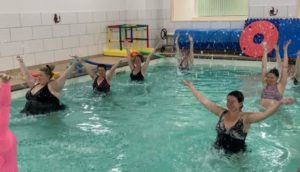
Add water and its relaxing properties, and Birthlight’s expertise on birth anatomy and the kind of yoga that works best for pregnant women: this makes for a plentiful formula! Aquanatal Yoga is indeed designed to help expectant mums to prepare for birth but also to enjoy this very special time in their lives with a lasting foundation of wellbeing.
Water helps pregnant women breathe diaphragmatically when they most need it as babies push up against their ribcage and their heart pumps more than twice the normal amount of blood. Babies inside appreciate this ‘breathing for 2’: good breathing is like giving them nourishing sweeties that also make them healthy. Birthlight Aquanatal Yoga differs from other forms of antenatal aquacise by being done immersed as much as possible -no worries for non-swimmers, they can be accommodated: this increases water resistance to create cardio workouts which would just not be possible on land without a lot of previous training. Our remit is to make yoga accessible to all women, – and we mean ALL women- in water, with creative uses of props that are found in all swimming pools.

Aquanatal yoga includes practices for breathing, relaxation, strengthening, stabilising, stretching, adapted swimming strokes, and connection with oneself, baby and the other women in the class
.
Invariably, the teachers we train at Birthlight and the pregnant women who attend their classes send us positive feedback. We do not make any promises, but alleviating pelvic pain or helping babies get into an optimal presentation before birth are frequently reported as bonuses. Yoga does it! Becky Minihan, herself an accomplished swimmer, baby and children’s swim teacher, shares her experience. We wish her and her baby, and dad too, all the best in the coming weeks.
I love teaching Aqua Natal Yoga, and having the ability to invite expectant mums to the pool. The class helps ladies to physically and emotionally prepare for birth and motherhood, and I have seen great friendships form in this group too.
The training from Birthlight is wonderful. Aqua yoga was the first course I attended and I have since been back to complete my diploma …
Becky Minihan
The training from Birthlight is wonderful, Aqua Yoga was the first course I attended and I have since been back to complete my diploma and Aquatic Nurture for Newborns. Francoise’s knowledge and advice is amazing and her courses always leave me inspired to make a difference. You get ongoing support after completing the courses too; Birthlight are always an email away and the group Whatsapps are useful when sharing ideas with peers and completing the coursework.
Since becoming pregnant myself, I have taken part in my own Aqua Natal Yoga classes and can now see first-hand how fabulous the class is! Feeling weightless in the water and safely exercising has been something I have looked forward to each week. The breathing techniques have really prepared me for labour too! In particular I have been really enjoying a water walk of backwards tree pose into warrior pose, it allows me to control my breath and have a full stretch out in the water. I also enjoy the adapted swimming stroke of the beetle swim, and I did extra when I found out baby was breach and I’m sure this resulted in managing to turn baby!

Founder of “Dolphin Babies”
Becky Minihan is based in Oldham
www.dolphinbabies.co.uk swimming from bump to baby
www.dolphinacademy.co.uk swim school

Book Now for the course starting on 4th October

The Birthlight school first changed my perspective on teaching yoga to women in 2014-15, when I studied pre- and postnatal yoga with Kirsteen Ruffell. I had been teaching traditional hatha yoga and yoga nidra for seven years, and found the ‘Birthlight way’ to be a game changer – the micro-movements, the intertwining of rest and gentle movement, the emphasis on pelvic health, the creativity of the ‘walks’, the encouragement to use the practices in my own way and integrate them into my teaching to best serve my students… it was empowering, exhilarating.
“I … found the ‘Birthlight way’ to be a game changer
Susanne Haegele
The Well Woman Diploma Course with Françoise Freedman was a logical next step, since I am perimenopausal myself and have had issues with hypothyroidism for years. I took the course in 2017-2018. It’s a thorough training – intensives on both ends, and lots of demanding coursework in between. Indeed, not all participants in the first part of the in-person training were able to complete their coursework before the second part, due to other commitments, but the diploma was given to them later, when their coursework was completed. I was able to set up the required sessions with an individual student and a small group and to write up all my observations, as well as completing the other course requirements. It was challenging at times, but it worked – since graduating, I have felt confident enough to teach the content in many different settings.
To give you a recent example, I am currently supporting a private student who is perimenopausal and suffers from a debilitating auto-immune condition. Different breathing techniques, gentle moves and restorative postures help her activate her parasympathetic nervous system, in particular her vagus nerve, which has helped with her sleep issues and therefore improved her quality of life. She now has a little sequence which she practices in the evenings, and says she feels more empowered to contribute to her own healing process.

The Well Woman programme allows you to support women in all stages of their life, from painful menstruation to post-menopause. It offers tips for fertility and pelvic floor issues, and can be complemented with more specific short courses, such as the one on menopause or on support for women with breast cancer, which I both found very rewarding, too.
These teachings offer something that is lacking in most other yoga schools – explanations about how their cycle affects women physically and mentally, about adrenal fatigue, unstable pelvic joints incompatible with traditional asana alignment cues, and much more. We learn to really look at the student, to start from their posture and their own telling of what’s going on with them, in order to devise sequences which can help and support them.
The Well Woman course changed my own practice and the way I teach. Based on this training, I created workshops about menstrual pain, pelvic floor issues, menopause, fertility, and hormonal balance in general, which were enthusiastically taken up by students in London, Paris, and Spain.
I even wrote a book, the English version is called Hormonal Harmony, A Natural Guide to Women’s Wellbeing (available in the UK through Waterstones and in the US through Barnes and Noble).
Spending time with Françoise, who really walks her talk, was equally precious as creating bonds with other course participants from all over Europe, some of which I am still in touch with. There is a Well Woman Facebook group, where we can still post questions that may occur as we teach.
This is a really unique course, which I have been recommending ever since. (Bookings for the October 2021 course are being taken now – see below!)

Birthlight Qualified Teacher
Experienced hatha yoga and certified Birthlight teacher. Passionate about helping women to help themselves. Author of two books about natural ways to help women thrive. ‘Hormonal Harmony’ and ‘J’accompagne ma ménopause avec le yoga’. Based in Mallorca and also teaching online in French on Yoga Connect. More info>>

Taking bookings now for the 15th October course!

The role of the mother’s biochemistry in foetal development is well known. Good nutrition and avoiding toxins are advocated in all maternity care programs. There is less awareness however about the information relayed by mothers to their unborn babies about their perceptions of the world around them, including their attitudes about life. 15 years ago, Bruce Lipton pointed out how a mother’s emotions such as fear, anger, love and hope among others, can biochemically alter the genetic expression of her baby by releasing ‘signal’ molecules into the blood. These blood-borne emotion-related signals activate specific receptor proteins on the surfaces of cells in tissues and organs. Physiological responses to environmental signals affect regulation of the nervous system, endocrine glands and the cardiovascular, respiratory, digestive and excretory functions.

The mother’s blood borne emotional chemicals cross the placenta and effect the same target cells in the foetus as those in the parent. The growing baby cannot know what evoked the mother’s emotional response but receives the emotions’ physiologic counterparts. As parental responses to environmental stress are repeated, they promote a behavioural expression in the developing foetus. Specialised cell and tissue protein receptors serve as “filters” that register past signals and prepare babies to function in their parents’ environment in a kind of “pre-programming”.

Bruce Lipton importantly noted the now better-known fact that momentary expressions of anger, fear, extreme anxiety, or depression do not distort the physiology of the developing foetus. What puts both pregnant women and foetuses at risk is the presence of continuously held so called “negative emotions” or destructive attitudes.
20% of pregnant women are reckoned to be affected by mental illness in the form of General Anxiety Disorder or Depression. The clinical diagnosis and treatment of perinatal mental health conditions is of utmost importance to our social welfare. Yet reducing the chronic emotional stresses which chemically impact foetal development goes beyond effective health care. Body-focused prenatal education such as yoga can impart seeds of the self-confidence and self-esteem where it matters, in pregnant women’s nervous systems, changing habitual patterns of breath and physiological responses to stressful situations. Besides acknowledging that negative emotions are toxic to developing foetuses, we need a greater awareness that calm breath, relaxation, empathy and friendliness also trigger chemical signals that babies not only receive but pass back on to their mothers in the form of endorphins. Creating positive feedback loops also influences gene expression. Parental nurturing cannot be assumed as a given or diagnosed as defective. ‘Nurturing the mother so that she can nurture the baby’, as Marshall and Phyllis Klaus so aptly put it, is our collective responsibility in preventive care. Moreover, it is a beautiful and rewarding task which enriches everyone involved.

Francoise Freedman (Birthlight) & Shweta Panchal (Minded Institute), Livestream online (UK)

Director, Birthlight
Dr Françoise Freedman is the Founder and Director of Birthlight. She is a pioneer, Senior Yoga Teacher, acclaimed writer and lecturer of Social Anthropology at the University of Cambridge.

Is it fair to say that my WW Yoga training has changed my life? I’m not someone prone to emotional outbursts, but in this case, the answer is most definitely YES!
I first met Françoise in 2007 when I was pregnant with my 2nd son – I was part way through a 200hr Yoga teacher training programme when I found out I was pregnant. I didn’t want to put a hold on my yoga studies so enrolled on the Birthlight Pregnancy Yoga course. The walks, rolls, breathing practices and companionship helped me immensely through that pregnancy, but life then took on its own journey and I moved away from this way of practicing.
More than 10 years later, now as a practicing teacher and osteopath with my own clinic, I took a one-day workshop with Francoise, and something ignited. I joined the Well Woman training in London in 2019. Here I found a group of bright, engaging women and as we studied over 2 modules, we explored the wonderous practices of WWY together, opening up with stories of our journeys in life, love, loss and more.
I’m perhaps not an obvious WW teacher. My nature is strongly ‘pitta’ – hot, fiery, competitive – and I was brought up to work hard, take on a challenge and to strive, drive, succeed. Throughout my life I have found myself surrounded by men – from my first degree at an engineering-focused University with a group of male friends, to 16 years working in ‘peak macho’ culture in the City of London. As a mother, I’ve birthed 2 sons (now 17 and 13) and I’ve always been comfortable with a life of rough, tumble and testosterone.
But over recent years (I’m now 49), I’ve recognised a deep and long-standing desire to be ‘softer’ – to encourage the feminine, to be more approachable, to deepen female friendships – and to acknowledge & nourish the deep strength that lies in womanhood. Francoise encourages openness in training and practice, and through studying, exploring and teaching WWY, I have embarked on a journey of self-discovery.

Like all Birthlight courses, there is deep knowledge and wisdom wrapped in these caring practices. WWY can be engaged with at many levels – anatomical, philosophical or esoteric – but there is real rigour in the teaching. The coursework is demanding, but this was instrumental in my exploration of the work and how it can be implemented as teacher for the wellbeing of my students – and I’ve seen remarkable results. But more importantly, as a yoga student myself, lots has shifted.
18 months after starting the course, my long (20 year!) history of gynaecological problems caught up with me and I needed a hysterectomy. The practices of WWY under Francoise’s guidance (from micromovements to mudra, from affirmations to asana) have supported me as much as the surgeons’ steady hand. From prehab strengthening to post-operative nourishment, I have personally experienced the power of WWY. It has held and accompanied me from one phase of womanhood (Anji with a womb!) to another – into the foothills (I hope) of wise-womanhood.
There are other manifestations of change – I wear a LOT of bright colours these days (even pink!); LOADS of amazing female friends have found their way into my life and I’ve celebrated, valued and nourished these friendships more than ever; my relationships with my female relatives have also benefitted – I’m less challenging, more accepting, more open hearted than before.

As a yoga student and teacher – change here too. My yoga practice is now more ‘round’ rather than ‘straight’ which, it turns out, actually suits my body and has helped me find better health in my body and mind.
As a teacher, I have been able to share the open and accepting practices of WWY with my students, who love them as much as I do, whether in a group or as a private lesson. I encourage using Yoga as a way of ‘finding health’ rather than causing strain, whether through resting, asana, breathing, reading or more. My regular group classes include women of all ages and stages, who revel in the sheer pleasure of having permission to move their bodies in the “way their bodies move”, rather than a prescriptive ‘one size fits all’ structured practice. We have time to explore movement, to understand anatomy and develop an understanding of what works and what doesn’t – for each of us. As an osteopath, working 1:1 with students in my clinic or online allows an individual therapeutic focus, to encourage vitality and improve health.
It’s been remarkable to find this work and I know it will be a learning of a lifetime. I hope it gives you as much as it has to me.

Osteopath, Yoga Teacher, Educator & BackCare Specialist
Anji Gopal is an Osteopath, Yoga Teacher, Educator & BackCare Specialist. She runs the BWY Module ‘Yoga for BackCare); runs an innovative programme at an NHS hospital for Persistent Low Back Pain patients; teaches applied anatomy on the Triyoga teacher training programme and teaches weekly Well Woman and Yoga for BackCare classes.
Anji’s Well Woman Yoga classes start at TriYoga Ealing in studio and online on Friday 10th September 11.15am.

Well Woman Yoga Diploma – 3 Modules

I first found Well Woman Yoga in 2011. I had been teaching yoga already for 22 years.
In 2009 I donated a kidney to my son, aged 15. Needless to say, this was an enormous transition on all levels for me-not least because I was 51 and at the same time my body was shocked into a sudden, intense menopause. Later I also developed a surgically induced hernia. Curiously in 2010, I felt completed to start teaching women only and knew it needed to be a very particular approach. I wanted it to incorporate therapeutic sequences and asanas, mudra & bandha, mantra, pranayama and yoga nidra. Although I had always used these techniques in classes and personal practice, it became crystal clear that I needed to do this much more.
At this stage I had not heard of Well Woman Yoga. I didn’t even know I was looking for it! However,the adage rang true that when the student is ready, the teacher appears.
And how ready I was!!
I did not know what to expect from the training. Yet it just felt as if I had come home – that everything just seemed to fit what had been missing and that this is what I was meant to be doing-not just as an approach to sharing and teaching but also so, so important for me and my holistic recovery approach to yoga.

However, importantly, a lot of what is learnt is unique and particular to Birthlight. And this is what makes it so special. It is not found anywhere else.
Francoise’s teaching is one of great sensitivity and caring and very knowledgeable. I felt very nurturedand nourished as well as encouraged throughout all the studying. I will always be grateful for this.There is also a great strength when women come together to share their joys and pain, achievements and wisdom. It can be the start of a voyage of self discovery.
However, importantly, a lot of what is learnt is unique and particular to Birthlight. And this is what makes it so special. It is not found anywhere else.
Women experiencing endometriosis, fibroids, PCO, sciatica, migraines, anxiety, pudendal neuralgia, M.S, cancer, domestic abuse, loneliness, menopause challenges and so many more – it has been my honour and privilege to share the gifts of yoga with them.

Yoga teacher, massage therapist and Reiki practitioner
Bernadette has a wealth of experience, and offers a range of yoga courses and workshops, massage treatments and therapies.
More Info/Booking