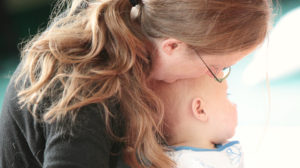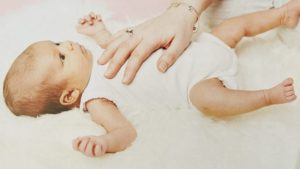
Please signup for a free Birthlight Baby Yoga session at the Baby Yoga Festival for the G20 (registration form below).
Birthlight has been the pioneer of Baby Yoga since the ’80s with books, DVDs and training courses around the world, founded by Françoise Freedman, a medical anthropologist and yoga teacher. This year Birthlight has been nominated as the UK representative for the “Yoga: One Earth, One Family, One Future” cultural event of the G20, hosted this year by India, organised by United Consciousness. Birthlight promotes Yoga to “nurture new life” from conception to 3 years and to support women’s health and wellbeing . We are also celebrating 25 years since we appeared in the Telegraph newspaper in 1998 and we are hosting Baby Yoga festivals in G20 countries and beyond. A lot has changed since then but Baby Yoga continues to bring parents and babies together in circles of mutual respect, deepening understanding and bonding.


BABY YOGA? You must be joking, how on earth can babies do yoga? Surely this is unnatural and dangerous, one of these yoga fads that discredits yoga as a reputable ancient practice brought to the West by famous Gurus after years in their Himalayan caves. Babies are not on ascetics’ radars nor even under them.
But they had mothers, sisters and perhaps daughters, women who massaged babies to help them grow strong and beautiful in a tradition going back to the dawn of humanity. In India, until recently, massage strokes and rhythmical movements akin to yoga were part of baby care in homes across social and religious divides.
At Birthlight, we have renewed the connection with the nurturing home practices in which Yoga and Ayurveda are anchored in tandem. Breath, touch, voice, relaxation in close contact develop confidence, trust and mutual understanding between parents and their new babies.
Over and above anything, in par with milk, babies need to be greeted, acknowledged, celebrated: loved on their terms.
“… but if Postnatal Yoga classes separate them from rather than connect them with their babies, something goes amiss”
— Dr. Françoise Freedman, Birthlight Founder
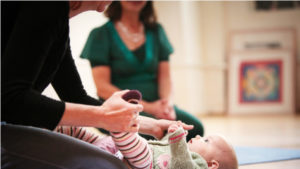
Baby Yoga gathers embodied practices that modernity has caused us to reject or neglect. We start with what we call ‘relaxed handling’, finding ease and comfort in the ways we hold, lift, lower, and carry babies. Installing a baby in a car seat, walking upstairs or downstairs with a babe-in-arms and even changing a nappy can be done not just mindfully but with relaxed gestures that can make all the difference, as they are repeated day in, day out.

Isn’t the purpose of yoga to develop our self-awareness so that gradually we reduce stress-building patterns, we breathe more freely, relax and sleep more deeply, are more present in our interactions? If there is one relationship that is likely to push all our buttons at once, it’s the unknown terrain of learning to care for a newborn baby. But if we let them, babies can be our best gurus, teachers of unconditional love and masters of incomparable ‘Infant Joy’ whenever we get it right.
I did not invent this. I was not taught by yogi but by Amazonian Indigenous parents whose parenting culture is one of attentive gentleness throughout the region. But I recognised the principles of yoga, and since the global urban culture most of us have babies in is open to yoga, it seemed important to get off the mat and “remember’ ancient body rhythms. We still own these rhythms, deep in our body memory. Setting these rhythms free in connection with babies is BABY YOGA.
Whether parents are in a paternal or maternal role or both, discovering and accompanying in wonderment how babies grow by attuning to them is a special privilege. Newborns show us how they continue their foetal movements after birth and use them to create their earthlings’ spinal curves. Movement integrates babies’ senses and nervous system in delight, provided it’s age appropriate. Relaxation is key to infant feeding and once babies can feed well, feeding relaxation can ease daily tasks with a restorative, energy renewing practice.
Don’t mothers need Postnatal Yoga? They certainly do, but if Postnatal Yoga classes separate from rather than connect them with their babies, something goes amiss. With a little imagination and flexibility, postnatal yoga can be inclusive and transformative with mutual benefits for mother and baby.

BABY YOGA reconnects us to the roots of Yoga. By learning to nurture the miracle of life with each new baby, we access the spring of spirituality in a humble, physical, practical way that does away with any pretence and self-delusion. Day by day, babies smile more, showing us how we are on the path.

Birthlight Tutor & Founder
Dr Françoise Freedman is the Founder and Director of Birthlight. She is a pioneer, Senior Yoga Teacher, acclaimed writer and lecturer of Social Anthropology at the University of Cambridge. More>>

(by Gill Bann, Birthlight Baby Swimming Tutor)
I have two passions in my life Yoga and Gardening and when teaching pregnancy yoga valuing the physical and emotional nurturing for pregnancy, birthing and beyond comes dear to my heart.
In yoga Nidra practice we learn to sow the seed of change, perhaps the most effective means of training the mind is found in Sankalpa, which you make for yourself.
Sankalpa is a Sanskrit word which translates as a resolve or resolution.
This takes the form of a short mental statement which is impressed on the subconscious mind when the mind is calm and quiet. It is a determination to become something or to do something in your life for the positive, a force of will if you like.
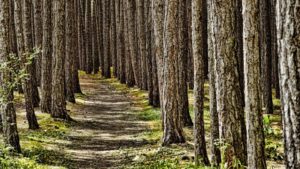
So last year I thought I’d turn this into a physical resolve as well . Started gathering native tree seeds from ancient forests around Ireland ( gardening side coming out ) these forests are few and far between. I handed out these seeds to any Mum-to-be that wanted to nurture a tree for their baby as they grow their own baby. The seed of an idea to grow a tree for your baby was planted.

I received a very positive response from all Mum’s and partners in couple groups but as this grew I was asked where to plant these as some parents live in flats or have no land to plant. ( I hadn’t thought about that ) So I wrote to anyone who may listen …. Politicians, local authorities, media etc. to find land which we could turn into baby forests, a safe place to nurture these trees where they won’t be cut down in the future, hence Future Baby Forests.
As most ideas grow this has snowballed. I have an ongoing project with thousands of children from Summer Schemes planting the seeds going for nature walks and then planting out saplings in the future years so they have ownership of the land. I have hectares of land earmarked for future planting in my Borough as this connects with the government initiative to plant more trees.
I’m in the process of organising every 20 week scanned woman the opportunity of a free packet of native tree seeds!
And the latest woodland tree project in conjunction with supporting bereaved families the Forget-Me-Not Liaison Group by the loss of pregnancy the death of a child which is dear to my heart.
So, as from little acorns grow… I am passionate for a greener future for following generations in Northern Ireland and hopefully beyond, watch this space! Anyone interested in taking up the baton around the world feel free to contact me at Birthlight.

You may read the newspaper article which appeared in the Northern Ireland World newspaper.

Gill Bann is a Birthlight tutor in Baby Swimming and Aqua Yoga.
Gill qualified as a Hatha Yoga teacher in 2014 and wanted to combine her two passions – swimming and yoga. As a result, she discovered Birthlight. She trained with Francoise Freedman in Aqua Natal Yoga and Aqua Yoga Therapy before she moved on to become a Birthlight tutor. Gill has tutored in China and Russia and is passionate about spreading the positive practices of Birthlight in Northern Ireland

In the mid 1990’s, I was a children’s nurse in Birmingham, running a baby ward. Although I loved the children and families, I was disillusioned with the bureaucratic behemoth that was the NHS. I decided a change of direction was required.
Having already developed a love of aromatherapy, I was delighted to be accepted onto a new degree starting locally. For 3 years I studied full-time whist working part-time as a bed manager at the children’s hospital. In 2001, I graduated with a first class degree, BSc(Hons), Complementary Therapy – Aromatherapy and a determination to move into complementary therapy full-time. It would take another 4 years working P/T as a children’s Laser Nurse Specialist and P/T as an aromatherapist before I could realise my dream. In 2002, my partner and I found, and bought the building that was to become my complementary health clinic.
My partner and I never had children. Not quite a lifestyle choice, more of a misunderstanding(!), but I loved working with children. So how could I combine aromatherapy and working with children? Massaging other people’s infants and offspring is not really appropriate, so next I studied baby massage that I could teach to parents/carers. It was during my baby massage diploma at Manchester Metropolitan University that I heard about baby yoga from a tutor.
Baby yoga – seriously? I was fascinated. I immediately started to explore Birthlight and knew it was an area I really wanted to explore further. I enrolled on a residential baby yoga P1 training course at Princess Diana’s old prep school in Diss, Norfolk in early 2004. Our tutors were Francoise and Sally and I absolutely loved everything about it. Francoise and Sally were inspirational and this was also where my own yoga journey really began. I had dabbled in yoga before, but now began regular practice. I finished my baby yoga diploma later in 2004.

I was eager, if somewhat apprehensive, to start teaching baby yoga classes. I already taught baby massage and it was through these parents that I began to gather together groups to teach. It was also when I realised that my vision of a complementary health clinic was changing radically. My plans to rent the first floor as residential accommodation and convert the ground floor to treatment rooms all changed once I stated training in baby yoga.

I needed baby yoga and yoga in my life. And so the room that had once been a betting shop was converted into a small yoga studio, the area that was once a laundrette became reception with plenty of room for buggies and pushchairs and a ramp for disabled/buggy access onto the building. The ‘party loo’ (so named because its big enough to have a party in) had ample space for disabled loo and a wall mounted baby change and was a decent sized space in which adults could change into yoga gear for the adult classes. The first floor became 3 serviced consulting rooms for other therapists to rent, with one disabled access consulting room on the ground floor.
The clinic and yoga studio opened in December 2005. I split my working time approx. 60% teaching baby massage and yoga, 25% aromatherapy and eventually around 15% of my time was as a baby massage and aromatherapy tutor. In addition to my daytime baby yoga classes, we had adult hatha classes, adult Kundalini classes and after a few years, Iyengar yoga. With my OCD tendencies, Iyengar yoga quickly became my preferred style of yoga.
Word of mouth brought many parents to me for baby massage classes. I kept baby massage classes to a short 4 week course, encouraging the parents to then go onto baby yoga. I rented the studio space to local NCT teachers for the NCT antenatal classes which was also a good way of making prospective parents aware of the baby massage and yoga classes, as were the antenatal yoga classes taught by fully qualified yoga teachers. I found teaching classes with babies of mixed ages challenging, so developed an ‘inbetweenies’ class specifically for the mobile babies. I had classes 4 weeks-6months/non-mobile babies, then the inbetweenies for the mobile babies and subsequently, once I had undertaken the SMART yoga training, classes for walking babies/toddlers too.
Teaching baby yoga has been one of the happiest, most joyful and most satisfying jobs I have ever done
Teaching baby yoga has been one of the happiest, most joyful and most satisfying jobs I have ever done. I have been able to incorporate many of my children’s nursing skills and I have never, ever got bored teaching it. My clinic is sited very close to the University of Birmingham and QE Hospital Birmingham, which is part of one of the biggest NHS trusts in the country. As such my ‘target’ group of parents tend to be middle class professionals and academics and frequently from a wide variety of ethnicities and different countries. In one class back in 2018, I had parents from 7 different countries; England, Sweden, Lithuania, Columbia, Germany, Portugal and China! Baby yoga can be taught even when your parents do not speak much, if any English.
These young women are mostly well educated in successful, professional careers. They are used to being in control and in charge. They have done all the research about their pregnancy and birth and child development. But when faced for the first time with the precious human being that is their child, it is a very different matter. All the reading and research in the world does not prepare you for the brick wall that is sleeplessness and a small, screaming infant who initially, you have no clue how to help. Baby nurturing is a completely different set of skills to learn that needs to be learnt by doing, not just reading. The techniques we can teach in baby yoga can go a long way to helping these new parents. One thing I aim to teach every new parent I meet, it is ‘Tiger in a tree’ hold! And never underestimate the value of the empathy and support that these mothers get from each other. It is priceless and I believe, a huge part of the importance of the baby yoga classes.
I have also taught baby yoga to classes funded by schemes such as Sure Start. Valuable lessons I have learnt in these environments;
For many months, via a local charity I was also a volunteer teaching baby massage and baby yoga skills to parents of children with special needs which was a privilege.
I instigated baby yoga classes for Dads and partners who worked during the week. Once a month on a Saturday, late morning (so as to reduce clashes with sporting fixtures) those parents who have to work in the week can come along and ‘see what the mums get up to’. They can come on their own, with their partner, or the partner’s can wait in reception if required for breast feeding, but wanting to let the dad take the class on their own with the baby. The all- male class is a fascinating dynamic – very different indeed to the mums classes.
My first ever dad’s class, the dads did not know each other and the studio had something of the atmosphere of a dentist’s waiting room at the start of the session! 10 very apprehensive men not saying a word to each other or their children. How wonderful to see their reactions develop during the class. Especially in those who at first seemed nervous and awkward with their little one. When their child beamed a big smile as dad bicycled their legs or chuckled out loud when swung in his arms, the dads’ reactions to their baby’s response were truly heart-warming to see. The connection between child and parent is indeed a spiral of joy.
I have developed my own style of teaching over the years. Now, rather than formal lesson plans, I have a basic plan at the beginning of each week for all classes and a general plan of how I will aim to develop their baby yoga skills throughout the weeks. But I always allow the classes to be flexible and mostly led by how the babies react during the class. I have learnt so much from other baby yoga teachers over the years both on CPD courses and informally. I have enjoyed developing the odd new song for classes and have collected an eclectic mix of soft balls and washable soft toys to use in classes over the years. Silent, soft toys are helpful to occupy the babies when their parents are in deep relaxation. But I must say the most valuable tool I use when I do use them, is without doubt a pot of bubbles. Best baby distraction ever and a great tool for teaching toddlers about their breath.

There are babies I have had in my classes who are now in their teens and families where parents have bought their 1st, second, third and once even 4th and 5th baby to classes. I have taught parents with twins. One parent brought their child to my classes from when baby was 4 weeks of age right up until he went to school at 4 and a half! I have taught parents and aunties and grannies and au pairs. Many of my baby yoga parents from over the years have become friends.
In April 2008, my life partner Allan died after a very short illness. He was 55 I was 45. We had been together 22 years and I was devastated. But my business was only just over 2 years old. I could not stop for long. 2 weeks after Allan’s funeral, I returned to work. The parents were as supportive of me as I had been to them and were generous in allowing me cuddles with their children. The joy of teaching baby yoga helped heal my grief-stricken heart.

Over the years I have faced many other challenges and several close family bereavements, but also plenty of happiness. I met a wonderful man in 2013 and we married in 2014. Yoga and baby yoga have helped me though it all. It has been a hard decision to retire from running classes, but one that is right for me now. I shall though be forever grateful to Francoise, Sally and the entire Birthlight community for enabling me to be part of this wonderful world.
Yoga gives me inner strength, an inner peace and baby yoga is definitely good for the heart.
Julia Richardson (née Fearon) Feb 2023
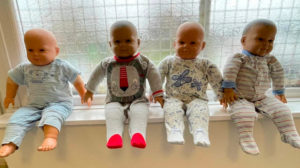
PS. Julia’s dolls will not be retiring but have gone to new homes to carry on sharing Baby Yoga


Birthlight is extremely honoured to have received an Invitation from Dr. Vikrant Singh Tomar, Global Convener of United Consciousness to represent the United Kingdom for the coordination series of events on the theme of G-20, called “One Earth- One Family- One Future Through Yoga”, during India’s presidency in G20 this year.
United Consciousness has been officially Entrusted with the responsibility of C-20 International Coordinator for “Vasudhaiva Kutumbakam’ – One Earth, One Family, and One Future,” with a series of events based on this theme in the G-20 countries, called “One Earth- One Family- One Future Through Yoga”. The curtain raiser event for this series was conducted for the representatives of all G-20 nations on the 30th of January 2023. The event was presided over by Dr. Vinay Sahasrabuddhe, Hon’ble President, Indian Council for Cultural Relations, Ministry of Foreign Affairs, India, and Mentor C-20.
To have Birthlight’s contribution in promoting yoga acknowledged in this way gives us immense pleasure. It is also a huge responsibility. As the representative of the UK, we will contribute with a Baby Yoga Festival across the 20 countries in G-20, starting with an event in London. Baby Yoga spreads joy in a simple way and it can be a profound introduction to Yoga for new families. Baby Yoga promotes Connection, Holistic Health, and Mental Well-Being Through Yoga locally and across the World.
We would like to invite you to kindly disseminate this announcement through your local networks and parent-baby groups to raise awareness of Baby Yoga and the many ways in which it enhances family wellbeing. Wherever you are, if you wish to be part of our “One Earth-One Family-One Future” Baby Yoga events in any way as a Yoga teacher, a parent or in another capacity, please contact us . Thank you! More details to follow.


#OneEarth-OneFamily-OneFutureThroughYoga

Mary Freedman spoke with Mara and Natalia about their experience of Birthlight Aquanatal Yoga classes with Birthlight’s founder Françoise Freedman. Mara attended sessions throughout her first pregnancy while Natalia, in her second pregnancy and hoping for a VBAC (vaginal birth after caesarean), joined them for two sessions towards the middle and end of her pregnancy.
Mara’s experience:
Mary: Did you have any previous experience of Yoga before doing Birthlight Aquanatal Yoga?
Mara: I have been doing yoga since I was around 22, trying different traditions of yoga, primarily Ashtanga and Iyengar, both in Mexico and in the UK. Then I developed my own version of what felt right for my body and I practised at home, particularly after the pandemic. But I had never, ever tried aqua yoga. That was a real discovery.
Mary: How did you find it different… I mean Ashtanga and Iyengar are quite big poles in terms of practice. How did Aqua yoga fit into that? How has it been different?
Mara: On the one hand it has been a real discovery and something completely new. I also feel that all the languages of the body are when the body is being taken care of and there is a feeling of somehow expanding and growing: in that way they are all one language. But, being in the pool was incredible because your sense of weight is so different , as is your sense of space and even the borders of your body become a bit blurred. So I felt there was less emphasis on control, which is so common in let’s say Iyengar – a tradition where you are always staying in a pose for a very long time – and Ashtanga which is almost bordering on exercise because it’s so intense. Aquanatal Yoga was not at all about control: in fact it was about letting go. And it was also about breathing rather than about posture, although posture matters. I felt that it was very intimately connected with breathing. And there were moments where it was really playful. I think that’s partly the way in which Francoise teaches it, which I felt was really about flowing and floating with the water; learning forms of being in the water that on the one hand tried to stretch the body and make space for the baby, but also were just playing and enjoying it. It was very pleasurable.
Mary: Have you found any changes in your experience of the practices as your pregnancy has progressed?
“I was really discovering my body and also discovering the baby”
mara
Mara: Yes, very much. Partly because I feel that during the pregnancy, I’ve also gotten to know my body differently and more. So in the early practices, which coincided with the early stages of pregnancy, I was more nervous. I remember not even being able to feel the movement of the baby and Francoise blowing onto my belly so that I could feel a sensation like a butterfly: she was trying to make me sense how I might feel the baby later on. And I was really discovering my body and also discovering the baby. I felt that in the later classes, which also coincided with the latest stages of pregnancy, I was much more familiar with the baby. We had established a kind of means of communication, mostly through movement. I was also much more at ease with everything: with the pregnancy and with how my body had changed. That made me feel more relaxed and free in the water. Plus, the repetition of certain movements helped me move from copying them to appropriating them and seeing what worked better for me. At times (Françoise) would say: “This works better if you are in Butterfly for certain people but maybe for you it’s better with an extended leg” – so I also knew that certain postures were not generic for everybody, but were actually targeted to your own body, your own baby, and the combination of both.
Mary: From my experience – both teaching and doing Aqua Yoga while pregnant – the practices can feel quite different as your weight shifts during pregnancy. That sensation of freedom and weightlessness in the water definitely becomes more emphasised when gravity is suddenly a lot more present than normal! Are there any practices that stand out for you, that you really enjoy?
Mara: I’m not sure what their names are! There was one that was about turning, that was really about letting go. I think a lot of the moments of real discovery for me were letting go and undoing. Françoise would often say that giving birth is about not doing (or undoing) rather than about doing. And that made sense when I was doing that movement in which the belly leads the turn and you really don’t have to do much; you just have to play with your weight while also being so light. You just lose yourself and you lose your sense of space and it’s really, really beautiful. And when you come back it’s almost as if you are awakening from a dream. [It was actually very beautiful when we did it with Natalia in that pool. I really enjoyed that.] I also like the ones that make space. I had this tendency to close my torso and hunch my shoulders because my breasts just kind of took over and it was really good to make space! I felt like that it really left an imprint in my body after doing the stretches in the water. Then, when I would come back to the land, I would work differently and feel more open in general. The relaxations are the best though! The relaxations were my favourite part always. It’s as if you are listening to the water and you feel really connected to the baby. At some point, Françoise said: “You are the baby”! And that idea is true: I mean, I am the baby in a kind of paradoxical way. But it was also like imagining the watery environment where the baby is now and the way in which sound travels in the pool. So those were my favourite moments!
Mary: I feel you! So I guess you kind of touched on this, but maybe you could sum up what you think is particularly valuable about being in the water?
Mara: I mean, this idea of being in the same environment as the baby was for me, very, very present. Also the weightlessness which the water allows is important because it allows you to unlearn certain postures and movements that you are used to doing on land. So in the water you kind of begin again. And that gives you a freedom to explore new things as well as to correct potentially bad habits that are so difficult to unlearn when you are in your normal environment. For me the breathing is challenging and it’s something that the water also takes to another level because you immerse yourself. Those slides (glides) were really challenging, but once they started working they were really rewarding. Something I’ve learned that I’m trying to take to the moment of labour is the idea of using the air until the very end, emptying your lungs even from the back. Also the idea of deep breaths that are ultimately very relaxing and would allow the baby to go through the birth canal – well, potentially! That’s my hope!
Mary: Yes, with ease! Finding the relaxation that then gives you this extra space at the end (of the breath) is very beautiful! Finally, what have you noticed about Birthlight Aquanatal practices in particular compared to other kinds of pregnancy and birth preparation classes?
Mara: I have done some classes of Birthlight yoga with people who have been trained in the Birthlight tradition, so I see a lot of affinity because I feel it’s all the same language, developed by Françoise. But I think the most palpable difference to me is Françoise’ very playful and instinctive way which leads to a unique experience in each class. It never feels like you are repeating the same thing, or that you’re following some kind of script: every time is different, every time is a discovery. At first I wanted answers and things I could repeat -something that’s very common in antenatal classes, almost like a manual as to how to become a mother with lists of things to buy or things to do! Birthlight Aquanatal Yoga was not at all about that. It was almost like….you didn’t really know what the direction was but you knew you were in the right direction. It wasn’t ‘“Today we’re going to be doing this” but really feeling how you were and responding to your needs on that day and in that moment, and knowing that ultimately birth giving is something you can’t entirely plan! (I understood that) you need to be open to having an open script and be receptive to that because if you’re very tied to one single plan or one single idea, that actually might end up leading to frustration, trauma or other forms of suffering. That was the real profound learning for me. It prepares you for the uncertain somehow – which is birth itself – and helps you to connect to your body, because it’s ultimately about connecting and listening to your body at the moment of birth-giving.
Mary: I’m so glad to hear your thoughts! I’ve had the privilege of seeing the Aquanatal practices develop and also practising them, and much of what you have said is also key to my understanding and experience! It’s a journey that’s not just yours but also your baby’s! When you cultivate that awareness of the way in which you are moving in the water, you feel that dynamic: as you move, the baby is also moving inside you. It’s a journey of both of you together and you have to be open and listen to that to be able to move together in that dance!
Natalia’s Experience:
Mary: How did Aquanatal Yoga compare to other forms of Yoga or movement practices you have experienced, especially during pregnancy?
Natalia: In my previous pregnancy I did Pilates and Yoga for pregnancy. This time I only did Yoga, but I was also using other therapies like osteopathy. My first impression was that the water really enhanced my perception – I was almost hyper aware of certain parts of my body, particularly those I would need to engage for birthing or preparing for birth, like my hips or pelvic area. It helped me to cultivate a different kind of awareness. The buoyancy of the water lifts pressure off joints and muscles – especially when you’re floating – so it makes you feel effortless and yet more supported than you would on the ground! (For example) if you do squats on the ground, you feel the pressure and it’s like you’re sweating over it but in the water (they) feel so mild and easy! At other times the water adds pressure: for instance, when you’re pushing the water away with your arms and legs you have to work against the water. And that’s also very interesting! So, I guess I became aware of my body in different ways.
Something that really fascinated me was the multi sensorial aspect: water enhances senses that you wouldn’t necessarily be paying attention to while you’re doing yoga on a mat or in a room. I really loved the sound of the water and in fact that’s something that I ended up using at birth. I didn’t go into the (birthing) pool, but water was very much present through sound. It created a very interesting effect for me during the practice – almost as if I could feel a little like the baby might be feeling. Sometimes we were massaging the bump with the water, and I felt like I was sharing part of that experience! The water is warm and comfortable, so you feel a bit like you are in the womb – there is that sensation of comfort. I love taking long baths with hot water and I wondered why I wasn’t doing (Aquanatal Yoga) more often!
Mary: Beautiful! I know you have mentioned something about your experience of Aquanatal Yoga during the sessions. Could you say a little more about the effects of those practices during but also after the sessions you attended?
“After the sessions I felt quite invigorated”
Natalia
Natalia: It was interesting because just immediately after the sessions I felt quite invigorated. I felt that it had taken away some of my lumbar back pain – which is constant – and helped with spinal alignment, taking pressure away and leaving me feeling very energized! Then I felt this blissful kind of fatigue – like I was dozing off and needed to go to bed. In fact, the first time I did take a nap! I’m glad Françoise said: “You will need a nap and make sure you take it!” and I’m glad that I did. I slept for almost 2 hours which was amazing because I was experiencing some pregnancy insomnia at night. It was so nice to feel like I could just let go and embrace sleep and the sleep itself was overwhelmingly beautiful and just took me over. It was that blissful fatigue that you experience after having done some proper work – obviously I had worked hard and could feel the vigor of that practice but that then relaxed my body enough that I could get some necessary sleep!
Mary: It’s the same with babies when you bathe them. They go through that same process where the sleep is really good afterwards – which is always very helpful!
Natalia: Yes, right! I did feel that water is demanding, but in a very relaxing way because of the weightlessness. You’re not very conscious of how much you’re working until afterwards, but (you feel it) in a very blissful way. It’s not a constrained fatigue. More like you can let go and just have some proper sleep. I guess I felt like a baby!
Mary: So nice! Although you only attended a couple of sessions, are there any practices that really stand out for you?
Natalia: Yes! There were many (practices) that I found incredibly instinctive, like scooping my hips in the water, but that felt very different or were more pleasant because the element had changed, my focus was switched on and everything was enhanced. Two things stand out for me: one of them is spinning the whole body with the noodle without doing anything – I found that quite hard to do! Apparently, I wasn’t too bad at it, but I found it really hard to let my body do something with the help of the water but without actually doing it (actively). That was eye-opening! It helped me understand how much effort I was making, even without realizing it. It doesn’t get any easier because you understand it, but it’s interesting what you learn from the process! (The spinning was) supposed to be relaxing but I found it a lot of work to turn in that way and when I finally got it, it was very rewarding! It was so relaxing to see my body do it without me actually pushing it.
Another thing I really liked was something we attempted at the end of my second session with Françoise, when she asked us to push and glide* across the pool.
* ‘Push and glide’ is a practice in which you inhale and then push off from one side of the pool, gliding flat in an extended position along the surface of the water until beyond the end of that breathe, exploring what happens when you allow your body to relax at the end of the breathe rather than come up for air straight away.
It made me feel very, very relaxed (even) while breathless. Having to go through it (the end of the breath) without despairing made me feel that I have this inner strength: I can keep going. There’s this imminent end and (yet) I’m fine, I’m fine! I’m actually not breathing, but I’m absolutely fine. And it helped me imagine how labour might be: that there would be times when it would be incredibly challenging and I’d feel I was about to scream (or) lose my temper, but that I could do it and that actually I was fine. I was relaxed and I was doing it, you know, I could totally embrace it. And it’s not that I needed to make anything happen because I was already making it happen. Gliding made that analogy really stand out for me, although I don’t know if that was the intended purpose of the exercise!
Mary: Yes! You see that there’s this extra space in you and it’s such a quiet space as well. And you find that you can relax into it and then it does that thing that you get sometimes between contractions where time just is completely different.
Natalia: Absolutely…
Mary: I think being familiar and comfortable with that is so useful because that makes it a familiar space that you can find during labour. And especially for the first time, labour is so unfamiliar!
Natalia: Exactly!
Mary: When your body recognizes that feeling and knows (how to) relax with it, to be with it, and has the confidence to do that rather than panic it’s amazing. I was lucky – I did a lot (of Aquanatal Yoga) before my first child was born and I think it really prepared me very well. It also made me quite muscular because I was doing it in a pool that was deep, so all the practices were very strong! But I remember almost sleeping in-between contractions – not sleeping but just being somewhere else and deeply relaxed.
Nataila: Absolutely. I think because my second birth was actually my first labour (because I didn’t really go to labour the first time), it really helped. Even if I only did it once in the pool, I felt like it helped me to understand that I could always push it a little more and I would be fine; that I could totally relax into it and embrace that moment of uncertainty or breathlessness or pain. And that it would be easier if I relaxed than despaired and started contracting, losing the relaxation that would help to get to the end. Also that there was an end! Like at the end of the glide there is the other side of the pool and you will come out and you will breathe! You hear a lot about that when you do hypnobirthing and that’s basically what you’re practising imagining. But doing it in the pool really got the point across to me. It was so helpful to do it around ten days before my actual birth – I remembered the sensation very, very, vividly!
Mary: I was so pleased for you, amazing! (Natalia had a VBAC without any intervention and received her baby into her own hands after a long labor)
Natalia: Yes, it was quite empowering! Even if there were a few lulls in the process I managed not to be demoralized but keep going, keep drawing on that inner strength. Actually it made me feel like I should practice apnoea (as in push and glide) more! It’s so wonderful what it does to your mind: it sort of shakes some of (your) premises, makes you see things differently and helps you understand a few things about your own body, your own resilience, etc.. It was only two sessions but as I told my partner when I came back, it was one of the best things I’ve done! It’s amazing in terms of preparing: eye opening and empowering. I wish I’d done it longer. I certainly want to practise it more, even for other aspects of my life!
“Eye opening and empowering”
– Natalie


In this post from our archives Françoise shares some of the experiences that led her to develop Aqua Yoga.
As far as I can remember, water was where I felt happiest, carefree and connected to life in the most cosmic way. My very first Aqua Yoga move was rolling from beaches, along the Loire river and on the Atlantic coast in France, into shallow water long before I could swim. It was different from rolling in the grass. Reaching the water created a different dynamic and opened another register of sensations altogether. Years later, wallowing in river pools after doing the washing and duly soaping the children in a group of Amazonian rainforest mothers-to-be and mothers, I found that my pregnant body spontaneously rolled in the same kind of way, recalling those early childhood frolickings. I watched the other pregnant women stretch, laugh and roll too in the water. Sometimes we looked for carachama, fish with hard backs that hide under rocks or in crevices under water along the river banks. This required a lot of different water skills. In Amazon rivers or lakes it’s not possible to float oblivious of creatures that may object to you or see you as prey, but there are special pools under waterfalls where shamans hold ceremonies. These are safe waters for healing and inner transformation. By living intensely with forest people in an environment where doing lengths in strokes as a swimmer was a rare treat and yoga-on-a-mat type of practice was not possible, developing the rudiments of Aqua Yoga was my best way to be comfortable in a locally appropriate and culturally approved way. The otters, both large and small species, the pink river dolphins and the speckled small alligators all became excellent teachers of water movements. I even had the privilege of watching jaguars swim majestically across rivers, in the special silence that their presence causes in the surrounding forest. The giant anaconda, which can reach 25m in length –the stretch of half an Olympic pool- remained elusive, perhaps shape-shifting into a rainbow as in the myths, but this was perhaps just as well; it’s not prudent to meet him/her un-introduced, particularly when pregnant.
The otters, both large and small species, the pink river dolphins and the speckled small alligators all became excellent teachers of water movements. I even had the privilege of watching jaguars swim majestically across rivers, in the special silence that their presence causes in the surrounding forest.
– Francoise Freedman
I cannot really explain on Aqua Yoga training courses that my first teachers were animals, as this would seem rather strange to most people and a tad too wacky even for radical midwives. But all over the Amazon region, forest people think that animals are persons too and indeed have special teachings for us humans about ourselves and the world. Yakumamay, the forest reserve that I helped to set up with two communities in Peruvian Amazonia, is named after the female anaconda as ‘grandmother of the waters’. When I travel there, I get news about the various families of otters and alligators which are now expanding there because they are not hunted, becoming nearly tame. I am still learning about glides and rotations from otters and the dolphins, superb in their displays of many forms of rotation in water, and, a bit more cautiously, from the alligators.
To us, the simple and gentle yet dynamic moves of Aqua Yoga and the inward focus that is gained on the wave that is our breath are safe and easy ways to access our connection with the place deep in ourselves where we know how to give birth and our babies perform their spiralling labyrinthine exit from womb to world.
– Francoise freedman
In the same way as Watsu and Ai Chi have been developed from Shiatsu and Tai Chi specifically as water practices, Aqua Yoga is Yoga with+ in the water. Like these other water activities based on Eastern philosophies and practices, it is a specific adaptation of Yoga for practice in water that uses breathing, movement and water together. The aim is to work and strengthen the ‘bodymind’, that is the integration of mind and body working as one, consciously using the breath as the bridge connecting and uniting the two. Besides relaxation, awareness of breathing flows (vinyasa) creates an inward focus that promotes healing and transformation. Principles of Yoga such as non doing, a non-judgmental and non-competitive attitude, inner balance and tranquillity are supported by working with the properties of water. Water both protects and connects us, inviting us to be more intuitive, more perceptive about our emotions and feelings. Serene floating moves can alternate with powerful releases of anger –including underwater primal screams- according to individual need. Relaxation can be so deep as to bring tears of grief, healing and joy all together.
Dolphins, whether in seas and oceans or in Asian and South American rivers, are protagonists in lore about pregnant women, to whom they are said to be attracted. My forest hosts kept warning me that dolphins might lure me to their underwater cities in which they lived like my people of white foreigners. Dolphins are dangerous, they said, but they are also supreme masters of living in the moment, relaxing, letting go with the breath and moving freely, all learned practices that women’s bodies need to have internalised during pregnancy in order to make effective uses of them during labour in our culture. When I try and explain the purpose of Aquanatal Yoga to my Amazonian forest friends, they are relieved to know that pregnant women are in safe pools. To them, the Aquatic Connection with Yakumamay and her animal water babies needs to be protected due to its power and associated dangers. To us, the simple and gentle yet dynamic moves of Aqua Yoga and the inward focus that is gained on the wave that is our breath are safe and easy ways to access our connection with the place deep in ourselves where we know how to give birth and our babies perform their spiralling labyrinthine exit from womb to world.
We have 2 upcoming Aquanatal Training courses in the UK:

Northern Ireland in April

Sussex, England in August

Le baby yoga de Birthlight arrive en France!
C’est avec un grand plaisir que nous annonçons l’arrivée de la formation Birthlight en Baby Yoga à Paris en juin 2023
Le baby yoga, c’est quoi?
C’est une pratique douce et accessible inspirée des principes de yoga et de techniques corporelles et de portage traditionnelles, aux bienfaits multiples tant soit pour les bébés que les mamans/parents, et facilement transférables dans la vie quotidienne (au-delà du tapis !).
Par le biais de touchers, mouvements, étirements doux et portés évolutifs, le baby yoga favorise et consolide le développement moteur, cognitif et émotionnel de bébé. Ces pratiques variées aident à tonifier et assouplir le corps de bébé, libérer les tensions physiques, apaiser les inconforts digestifs, réguler le système nerveux, (ce qui peut améliorer la qualité du sommeil) et développer l’équilibre, la coordination et la perception de son corps et de l’espace.
Par ce même biais, quand bien souvent, dans nos sociétés modernes, la majorité des nouveaux parents n’ont jamais eu l’opportunité d’apprendre à porter et s’occuper d’un bébé avant d’accueillir leur propre enfant, le baby yoga de Birthlight offre également aux parents l’opportunité de se familiariser avec différentes techniques pour soulever, porter, bercer bébé de façon ergonomique et aisée, et ainsi de gagner en confiance dans leurs compétences de parents.
Toujours effectué dans le respect de l’enfant, le baby yoga permet aussi aux jeunes parents de mieux comprendre leur enfant, et de profiter de moments précieux de complicité et de partage avec leur bébé de façon douce et joyeuse, favorisant ainsi l’épanouissement de la relation parent/enfant.
Par ailleurs, l’intégration de pratiques simples et douces de yoga postnatal (étirements, respiration, relaxation) pour les mamans/parents permet également de réduire les tensions physiques et mentales communément associées au rôle de maman et nouveau parent, pour plus d’aisance et d’apaisement.
Le baby yoga offre une belle continuité avec le massage bébé, et convient aux enfants âgés de 3 mois jusqu’à 18 mois.
Pourquoi Birthlight?
Birthlight est une organisation reconnue internationalement fondée par le Dr Françoise Freedman, anthropologue, professeur de yoga, et pionnière dans le domaine du soutien périnatal et des jeunes enfants par le biais du yoga et du yoga aquatique. Elle est l’auteur de deux ouvrages, “Yoga pour Bébés” (2000) et “Baby Yoga” (2010)


Choisir Birthlight, c’est choisir une formation de grande qualité établie internationalement depuis 2000, basée sur la recherche et plus de 30 ans d’expérience d’enseignement, et qui vous permet – sans dogmatisme – d’appliquer et d’adapter les contenus de formation pour soutenir au mieux les publics avec lesquels vous souhaitez travailler.
Intégrant une mise en situation pratique avec des familles et leurs bébés pendant la formation-même, ainsi que l’accès à une communauté internationale d’instructeurs Birthlight avec laquelle échanger, la formation permet aux stagiaires de se sentir véritablement équipés à animer des classes ou ateliers dès l’issue de leur formation.
A qui s’adresse la formation?
A tous les professionnels de la périnatalité et de la petite enfance (sage-femme, puéricultrice, enseignant de massage bébé, etc), aux professeurs de yoga, ainsi qu’à toute personne souhaitant devenir professionnel de l’accompagnement au bien-être de bébé, de l’enfant et soutenir, renforcer et valoriser la parentalité.
Au terme de la formation, vous serez en mesure d’animer des cours ou ateliers de baby yoga pour mamans/parents et leurs bébés, et/ou d’en intégrer les pratiques dans votre activité professionnelle existante.
Enregistrez votre intérêt ici

Tell us you are interested in Birthlight Baby Yoga classes coming soon in France!

25 years ago Françoise’s Baby Yoga classes were in full swing and in December that year The Daily Telegraph published an article introducing the public to the benefits and fun of this new type of class even if at the time “Baby Yoga classes may sound like something from the barmier fringe of the alternative health market…”. Oh how things have changed! Francoise’s book “Baby Yoga’ was published in 2000 and set the scene for others to follow. What hasn’t changed, as you’ll see in the comments from the class participants back then, are the benefits Mums and Babies get from the sessions; “I have learned how to relax. It has helped me make a connection with the baby.”, reports of babies sleeping better, crying less and the amazement at the quiet and stillness of relaxing together!
Yoga-for-Happy-Babes-1998
Birthlight would like to announce it’s collaboration with Aqua Education Academy.
Each member of the collaboration will bring together their experiences as qualified Therapists and Practicioners in the Early Years world to help transform the understanding and importance of the early water experiences for babies and their families.

If you have any questions or are interested in taking one of our courses then please contact us.