Founder and Director of Birthlight. She is a pioneer, Senior Yoga Teacher, acclaimed writer and lecturer of Social Anthropology at the University of Cambridge. Françoise interlaces Read more
World Breastfeeding Week is definitely worth universally celebrating -and promoting! - as a key factor for human health and wellbeing The 2020 theme, ‘Breastfeeding for Read more
Dianne Garland is an international speaker having travelled and taught in all corners of the world, including India, China, America, Europe and the UK. In Read more
Nurture: nourishing with care and love for growth and abundance. I was fortunate to share the lives of Amazonian indigenous people who showed me nurture Read more
Introducing new babies to water: the risks of chlorinated swimming pools and the benefits of home tubs In the UK, parents do not need to Read more
The Science, Magic and Nurture of Planet-Wide Baby Holds I have only recently come across ‘The Hold’ promoted by Dr Hamilton, a paediatrician in Santa Read more
Are you thinking about training to be a Baby Swimming instructor or sending staff from your swim school to upgrade skills? Here are 5 reasons why Read more

So much has changed in our lives and around us, so fast, since the beginning of the UK lockdown. I hope that you are finding Read more
Birthlight training has a very personal origin. It all started with a small group in Cambridge. In the 1980s, as a young mother, at the Read more
Motor skills that help human adults enjoy sport and fitness begin in infancy. In the first two years of life, many of the primitive and Read more


Founder and Director of Birthlight. She is a pioneer, Senior Yoga Teacher, acclaimed writer and lecturer of Social Anthropology at the University of Cambridge. Françoise interlaces her academic research at Cambridge with Birthlight’s mission. She combines her expertise as a senior yoga teacher, swimmer and birth attendant with new ideas to open up fresh thinking and develop innovative Birthlight yoga practices. She is recognized as the “Grandmother of Water Babies” around the world for her groundbreaking ideas and developments in baby swimming and baby yoga. She is an accomplished writer and has published ten books internationally: Aqua Yoga for Pregnancy (1998), Baby Yoga (2000), Postnatal Yoga: Strengthening Body And Spirit After Birth (2000), Water Babies: Teach Your Baby The Joys of Water – From Newborn Floating to Toddler Swimming (2001), Yoga for Pregnancy, Birth and Beyond (2004), Yoga for New Mothers (2005), Yoga & Pilates for Everyone (2005), How to Teach Your Baby To Swim (2010), Yoga for Mother and Baby (2010) and Step-By-Step Yoga For Conception, Pregnancy, Birth and Beyond (2013).


Get to know Birthlight founder Dr Françoise Freedman a little better. Françoise recently shared a little about her inspirations, what she’s working on at the moment, what being a parent means to her, and some sage advice for pregnant women. Read on to find out.

Tell us a little about yourself…
I feel extraordinarily privileged: a wild childhood in rural France, the most enriching education in Paris, Cambridge and the ‘rainforest school’. A beautiful family, a rewarding academic career and the gift of yoga and swimming that I love to pass on through Birthlight.

How was Birthlight born?
Birthlight came to me as the backend of my PhD and postdoc research in anthropology. Coping with an unplanned first pregnancy, the group nurture I received from local Amazonian women was a revelation and resulted in a great birth experience. An initiation from a shaman midwife during my planned second pregnancy committed me to share the knowledge with ‘my people’.

What are you working on at the moment / what will you be working on that you’re most excited about?
I am completing a book on Water Parenting (Pinter&Martin) that guides parents to learn from their babies about swimming. With my anthropologist’s cap on I am also writing about how ‘baby swimming’ and water birth appeared in our global culture at the turn of the millenium.

‘Watch your breathing’ is quintessential yoga because awareness promotes positive change. Breath is the gateway to our emotions in pregnancy.

~ Françoise Freedman

If you could give one piece of advice to a pregnant woman, what would that be?
‘Watch your breathing’ is quintessential yoga because awareness promotes positive change. Breath is the gateway to our emotions in pregnancy. Babies in the womb learn maternal patterns. Gentle exhalations are supremely powerful to transform anxiety into calm strength
before, during and after birth.

What does being a parent mean to you?
Being a parent is a never-ending expansion of unconditional love through small things that matter: the words and silences, the body language, the adjustments when one’s buttons are inevitably pressed, the resulting joint growth. Each phase has its magic. Grandparenting is full of surprises.

World Breastfeeding Week is definitely worth universally celebrating -and promoting! – as a key factor for human health and wellbeing

The 2020 theme, ‘Breastfeeding for a Healthier Planet’, links infant feeding with ecology.

Breastfeeding is linked to all 17 of the United Nations Sustainable Development Goals not only because it makes good basic economic sense, but also because it confers strong immunity and with it, a cascade of long term benefits and life choices.

Breastfeeding – a key to sustainable development

Since the beginning of the current pandemic, the World Health Organization (WHO) has recommended early skin-to-skin contact and breastfeeding for babies of mothers who are COVID-19 positive,based on the low risk of transmission of COVID-19 infection to newborns vs. the high risks associated with not breastfeeding and of separation of mother and baby (ref1).

This was controversial until 22nd July when the authoritative Association of American Pediatrics, after a review of all available evidence, recommended that mothers with confirmed or suspected COVID-19 and their well newborns could room-in and breastfeed. (Ref2)

Breast Care

At Birthlight, we have campaigned for a non-judgmental attitude and indiscriminate support of bottle-feeding mothers in postnatal and mother&baby yoga classes. Our aim however is to encourage breastfeeding from pregnancy through practices of breast preparation drawn from both Ayurveda and the Amazonian indigenous traditions of care. ‘Toughening’ my nipples while pregnant was a daily ‘must do’ that the older women supervised carefully as part of my antenatal education. Proactively, breasts and nipples can be ‘readied’ to facilitate the onset of breastfeeding, reduce soreness in early days and weeks and prevent or stop mastitis. This works! So why don’t we do it?

[embeddoc url=”https://birthlight.com/wp-content/uploads/2020/08/birthlight-prenatal-breastcare.pdf” download=”all” viewer=”google”]

After birth, yoga adds breast awareness and ‘instant relaxation’ to Breastfeeding. While many breastfeeding resources point to the importance of a comfortable aligned posture and adequate baby support for feeding, it is not so easy to work it out. Alignment, baby support and relaxation are really one, but how to coordinate them is the question. Birthlight ‘relaxed holds’ help spontaneously to find ease and bring up wind effortlessly.

Active Bonding

Active Bonding’ is the name we give to a simple set of practices that engage newborns physically and emotionally in the early days, weeks and months. The bond with our babies is not like an instant glue; babies do not ‘imprint like ducklings and ‘love at first sight’ is rare if it ever happens. As we hold our newborns skin to skin and learn to handle them ‘relaxed’, this facilitates sensory integration and the innate pleasure of communication that they crave for to grow well. They feed better and sleep more easily. As humans we share playfulness around infant feeding with other mammals. Feeding, playing, sleeping interweave in the spirals of joy that expand as we get to know our babies, day by day.

Throughout breastfeeding, keep your breasts comfortable and healthy by draining lymph using the short routine shown on the video clip. Repeat it at regular intervals, just as the older Amazonian women recommended to me. This practice is particularly helpful when breasts are engorged and there is a risk of mastitis developing.

Breastfeeding contributes to establish and strengthen the bond between mother and baby through the release of the hormone Oxytocin in conjunction with Prolactin. There is a great deal of research on the wonderful effects of Oxytocin the love hormone. We have been lucky to have Kerstin Uvnäs Moberg (www.kerstinuvnasmoberg.com), a world authority on this subject, as a speaker at several international Birthlight conferences, and to enjoy her support of the Birthlight approach to breastfeeding.

The Oxytocin effect

After a separation of mother and infant after birth or when the initiation of breastfeeding is fraught with difficulties. ‘Active Bonding’ through touch, eye contact and gentle movement can supplement the closeness that was missed in early days or weeks. Embodied interactive practices help to integrate feeding and relating to babies in a body language they best respond to as innate communicators. The same embodied practices taught to fathers create a unified daily style of care that newborns clearly recognise and enjoy.

Breastfeeding is supremely versatile. Culturally, we do not resonate with sisters or grandmothers breastfeeding our babies, but we have lovingly developed ‘adoptive lactation’.

Breastmilk saves lives and every year new properties are heralded. Breastfeeding ranks low on medical school curricula but high on public health priority scales. This week is a call for flagging it where it matters, at community grassroots.


References:

Ref1: https://www.who.int/docs/default-source/maternal-health/faqs-breastfeeding-and-covid-19.pdf?sfvrsn=d839e6c0_5&download=true

Ref2: https://services.aap.org/en/pages/2019-novel-coronavirus-covid-19-infections/clinical-guidance/faqs-management-of-infants-born-to-covid-19-mothers/


Dianne Garland is an international speaker having travelled and taught in all corners of the world, including India, China, America, Europe and the UK. In 2005 she launched her company Midwifeexpert.com. She can be contacted to book either classes or discuss availability via [email protected]


Dianne Garland is an international speaker having travelled and taught in all corners of the world, including India, China, America, Europe and the UK. In 2005 she launched her company Midwifeexpert.com. She can be contacted to book either classes or discuss availability via [email protected]

Dianne Garland and Françoise Freedman have known each other since the early 1990s when Dianne pioneered a water birth suite in Maidstone maternity hospital. They both presented at the Millenium Water Birth Conference (2000) in Portland Oregon, US, convened by Barbara Harper, founder/director of Water Birth International. Both Dianne and Barbara were speakers at the 2016 ‘Light in Water’ international conference organised by Birthlight in Girton College, Cambridge.

Following Françoise’s daughter’s home water birth on 25th May 2020 in Cambridge attended by a Community Midwife, partner and mum, and after supporting several home births in Latin American places where maternity services are severely compromised by Covid 19, here is a spot ‘grandma’ Zoom chats with Dianne. Although retired, Dianne is working harder than ever on shifts in Dartford Hospital and educating both parents and professionals internationally in Zoom sessions at low cost .

Q: Dianne, is water birth more or less available since the lockdown?
A: It really depends on the hospitals’ policies, even in the same town. There is less availability when hospitals are very busy. Some fears have resurfaced with Covid, for instance fecal contamination. But there is no evidence for this (Ref1). The virus is not passed into the amniotic fluid nor into breast milk.

Q: Is there a silver lining? What positive changes have you observed in the NHS?
A: As reported in the media, breastfeeding is up and so is skin to skin. In Darftord, newborns recover their birth weight quicker, resulting in less readmissions.

New mums are fed nutritious food cooked by families, rather than eating hospital pre-chilled heated food. Particularly for Asian women, it is great that they have food they are used to.

Relationships have improved in the maternity hospital, with managers and consultants pitching in with the midwives and doctors. This is just how the NHS should be…

Dads are missed when they have to go home, but the flip side is that new mums on the ward bond with one another, rest more and have quality time to bond with their babies.

Q: Is the inevitable Covid Baby Boom a silver lining?

A: We will see this in December…

Q: How can we keep Water Birth available and safe for mums, babies and staff?

A: BY SUPPLEMENTING CUT SERVICES IN PARENT EDUCATION AND OFFERING SUPPORT RESOURCES TO MIDWIVES AND BIRTH COMPANIONS. This is where Dianne converges with Birthlight and Birthlight resources.

  • By having evidence-informed and equitable care: Mary Renfrew’s 2014 paper nails it (Ref 2). Let’s remain pragmatic. The history of HIV can help us.
  • By offering reassurance about availability (Check Royal College of Midwives, Birthrights and Maternity Midwifery Forum updates)
  • By keeping the laughter (Dianne always laughs a lot)

Dianne Garland, AUTHOR OF REVISITING WATERBIRTH:AN ATTITUDE TO CARE (Second edition, Springer Nature 2017). She is a midwife and pioneer in waterbirth in the UK.


Dianne’s Resources

Since COVID 19 became a pandemic many changes have occurred within maternity services, not least of which is cancellation of face to face classes. In light of these issues I (Dianne) started Zoom sessions to support parents with information and discussion about the options available during birth, and for professionals’ support and professional information to continue offering waterbirths.

Parent education class, consists of a 2 hour class discussing physiology of labour, where to have your baby, all birth options from the use of water to epidurals (including pros and cons of each). I highlight the importance of your birth environment, writing a birth preference plan and understanding the new science of babies Microbiome and optimal cord clamping. During the session there is plenty of opportunity to ask questions. The price is £5 and includes the slides to review pre and post session.

Professional session – Waterbirth during Covid 19 – Keeping Birth staff, mothers and babies safe.

It is open to all health professionals (Midwives, doctors, students, doula and complementary / antenatal teachers).The session lasts one and half hours covering the most robust international information available about waterbirths during the pandemic. Positive aspects include the known benefits of using water for mother and baby, latest research and moving forward with waterbirths.
The price is £5 including slides and relevant professional documents.

The above classes may be booked on Dianne’s website.


Birthlight resources:

  • Aqua Yoga for Pregnancy and Birth (illustrated book £9.99) – order by contacting us at Birthlight.
  • Aqualight Booklet series showing home exercises in the bath or birthing pool 1. Waterbirth prep. 2. Postnatal recovery in water 3. Introduce newborns to water (special offer £4 each or 3 for £10) – order by contacting us at Birthlight.
  • Aqua Yoga Harmonizing Exercises in Water for Pregnancy, Birth and Beyond – order by contacting us at Birthlight.
  • Aqualight: Make the Best of Your Birthing Pool Before, During and After Birth (Birthlight Booklet Series) Paperback – 1 April 2008 – order by contacting us at Birthlight.
  • An online Zoom course “CPD Aqua Yoga for waterbirth preparation” ( open to mothers to be and their birth partners, doulas, midwives) will be available soon. Please let us know if you are interested by contacting us.

Nurture: nourishing with care and love for growth and abundance.

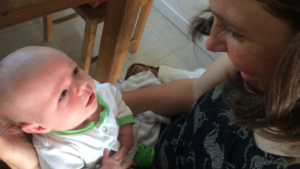
I was fortunate to share the lives of Amazonian indigenous people who showed me nurture in action with their babies and their plants. Daily splash baths for babies, a practice that many groups share in the Amazon basin, are not just for keeping babies clean. Bathing, touch, movement, handling in water are seen as necessary to ‘grow babies beautiful and strong’. Acts of care are not chores like the washing of clothes, that women often do in the river after bathing and feeding their babies and rocking them to sleep in baby hammocks. Baby baths are an enjoyable, creative activity, somewhere between ritual and art. They add to life day by day.

When childbirth was moved to hospitals in civilized nations, so was the newborn’s first bath. It became part of the maternity care protocol to bathe newborns soon after birth. Training videos for this still commonly found ‘procedure’abound on the internet, ignoring horrendous screams and distress cues. In response to research showing the beneficial properties of the vernix caseosa, the whitish substance that protects newborns’ skin, many hospitals round the world have now delayed first baths for 24 hours. There is also a marked trend towards giving babies more consideration: the research on early communication pioneered and popularized by Marshall Klaus (The Amazing Talents of the Newborn) and Berry BrazeltonLearning to Listen)is finally seeping into maternity professionals’ curricula and general awareness.Some maternity nurses, sensitive to babies’ plight, have recently developed ‘gentle protocols’ for use by other professionals. Yet it is still seen as ‘normal’ that many newborns have strong negative reactions to being bathed. They are labelled as ‘hating the water’.

Do they really have an aversion to water? Absolutely not. Newborns are mostly straightforward creatures. They tend to scream when their basic needs are not met, or are ignored, and even violated. This causes them pain. Let’s rethink the first bath into the joyful experience that it can easily be.

First, have we checked the basics? Water and air temperature to suit newborns’ comfort needs (37-38ºC, dip your elbow in the bath if you do not have a thermometer handy). Make sure there are no drafts you might not mind but babies will feel. For bathing a newborn, at first a basin or an old-fashioned simple baby bathtub may be most comfortable. If you have bought one of the fancy baths with integrated reclining seats, keep it for later. You do not want to bathe your newborn strapped into a kind of car seat!

Second, is your newborn sensitive to being undressed for nappy changes? If so, s(he) could benefit from a muslin wrap for a swaddle bath that will create a comfort zone between the room and the bath. Is your baby starving or just going into deep sleep? Then it may not be the best time for bath. Newborns can be fed before being bathed, and the bath will not slow down the healing of their cords.

Third, two inter-related factors are most important for success. They are mentioned less often on the ‘baby care’ internet sites. One is the quality of your support. If it is not relaxed, your baby will pick this up. It is normal for a new parent to feel tense while handling a slippery new baby, particularly if you are nervous around water safety. To make your hold more secure, have one hand loosely cupped under your baby’s head and the other hand under his/her seat, with your thumb and index finger circling one of the little thighs. Once in the water, this grip can be undone. Only keep your seat hand if you feel you need it for your reassurance. Gently relax the head hand, letting the water providing the support for your baby. The other factor is communication. Newborns understand far more than we think they do.They need to be introduced to the bath and yes, consulted about it (as about many other things we do). It may seem contrived to have a running commentary about how you are preparing the bath and how you feel. Forget about self-conscious hang ups, your baby loves the sound of your voice and talking also slows down your breathing and keeps you calm. Looking at your baby’s face, perhaps with eye contact, and responding with facial expressions will start the dialogue that research shows babies crave for from birth. If you have been brought up thinking that newborns are not fully conscious beings, new research has revealed this is not the case: newborns are arch communicators. We adults are usually inept at deciphering their body language.

Living within a mostly visual and verbal culture, Western parents need to engage in ‘dialogues’ with their babies while developing the non-verbal communication skills that my Amazonian hosts pitied me for lacking. They patiently and systematically set out to teach me their style of parenting, for my baby’s sake. I am forever grateful to them for this. First baths matter because we now understand how positive memories can superimpose some of the traumatic ones which may have impacted babies’ limbic system before or during birth.

Water is a healing matrix, the source of life on our planet. In our global lifestyle, water is a way to renew our connection with elemental forms of being. Giving birth in water is a recent cultural innovation that insulates women and eases physiological labour. Baby swimming is our way to recreate the unboundedness of the ocean as we hold and float with infants in small pools of warm, safe clean water. First baths with a focus on joint parent-newborn relaxation, rather than sheer hygiene, support the transition from womb to world in a gentle and organic way. As new parents return home sooner and sooner after hospital births, they can take ownership of this transition with home baths. Remember, parents are the experts.

Techniques of newborn baths are simple. If we let the babies guide us, we see whether they are in a relaxing sensory integration mode, simply enjoying the medium. Some newborns perceive the opportunity for stretching and enjoy kicking back from the edge of the tub. In the bath, the challenges of feeding are removed: communication takes center stage. If you have a home bathtub, or if you have hired or purchased a birthing pool, a family bath can provide a special opportunity for siblings to greet the new baby in water. The Birthlight booklet Aqualight for Newborns (2008) shows practices done with a 9-day old baby and his parents in a first shared bath experience.

Many parents ‘discover’ their babies’ presence in a way that they can less often do while handling them on dry land. Besides being asuperb developmental opportunity for newborns, joyful first baths can be unforgettable bonding moments at the early stages of parent-baby relationships.

Birthlight’s short course ‘Aquatic Nurture for Newborns’ (2 days) is now available online. Contact us or call us on 012233 62288 for further information.

Introducing new babies to water: the risks of chlorinated swimming pools and the benefits of home tubs

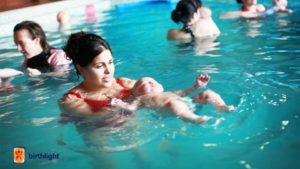
In the UK, parents do not need to wait until their babies have completed their immunization. The NHS gives the go ahead for babies to go swimming before vaccinations that generally start at two months (1). This has triggered a competitive streak about how early is early for baby swimming. The winner so far is a one-day old baby, going to his baby swimming instructor dad’s pool exactly 31 hours and 46 minutes after his delivery by Cesarean section in the local hospital (2).  In the feature, images show happy bonding, excitement and dad’s confidence. This lively little guy takes it all in his stride and is very interactive, as newborns can be even if they are still close-sighted and cannot hear until the amniotic fluid has completely drained from their inner ear. One could argue that it’s like an aquatic ‘skin to skin’, which has been shown to have a range of benefits for new babies held against their mums’ or dads’ chests soon after birth. For women who have c-sections or difficult births, the recommendation is to wait until they have had their six-week check, hence the benefit of their partners introducing the newborns to water earlier.

Having taken my first born to swim in a large, little heated and noisy municipal pool aged three weeks, I can recall my swimmer’s urge to share the joy of being in water with my baby, as well as the exhilarating need to reassure myself that everything is possible with a baby. Now, as a grandmother, I have a little more of the old fox’s cautions and think that cubs really need to be protected from the wide world in the weeks following birth. No, taking a baby younger than two weeks old to a busy chlorinated pool is definitely not commendable. There are good reasons to wait a little longer and choose alternative options for stimulating bathing. There are two main inter-related factors to consider: the physiology of newborns and the by-products of chlorine in heated indoor pools.

Delaying the first bath is now recommended, why?

Until recently, newborns were whisked away to be washed and most of them were given a bath within the next 24 hours. Following recent research on vernix caseosa, the thick white cheese-like substance that covers babies’ skin at birth, the advice is now to allow this coating to be absorbed rather than being removed, as this confers immunity advantages. As babies get ready to be born, pulmonary surfactant produced by the maturing fetal lungs increases in the amniotic fluid. The mixture or vernix and amniotic fluid swallowed by the fetus has been found to have strong anti-microbial properties and to inhibit the growth of common perinatal pathogens such as B. streptococcus and E. coli. The natural protection conferred by the vernix on babies’ skins particularly important for pre-term babies -who, interestingly, are usually born with a thicker coating than babies born at or after 40 weeks.

Dr Amy Myers has recently made a plea for routine newborn baths to be delayed for 24 hours or ideally 48 hours, whether in hospital or at home (3). In addition to the vernix argument, she explains that there is a risk of a drop in blood sugar for newborns due not so much to getting cold as to the release of stress hormones caused by intense new experiences, even exciting and enjoyable ones. Babies may then become too sleepy to feed and risk an even lower blood sugar level, resulting in neonatal hypoglycemia. 8.5% of newborns bathed early in the study she conducted suffered from low blood sugar, but this was reduced by 4% if the bath was delayed 12 hours. The World Health Organisation recognizes this risk and recommends delaying the first bath for 24 hours to keep babies warm, ideally close to a parent’s body that constitutes a natural thermostat (4). Dr Myers’ main finding was that delayed newborn bathing resulted in an increase in breastfeeding initiation rates. The initiation of breastfeeding in the first week is a complex process and the less external irritants mother and baby are exposed to, the better (5).

Does umbilical cord care matter?

Birthlight Aquatic Nurture for Newborns Course

Baby bath with a difference … by Francoise Freedman

Until recently, submerging the cord stump before babies’ cords had fallen off, roughly 10 days after birth, was a matter of controversy. New mums were shown the art of ‘top and tail bathing’ in shallow baby baths or in kitchen sinks. Deeper baths were only advised after the cord had fallen off. This advice holds worldwide across cultures, one among very few practices around childbirth that seems to be a universal human hallmark. Yet in the last generation we have broken with traditions prevailing since the dawn of humanity not just with reproductive technologies but by crossing ancient cultural boundaries upheld by most peoples:  we have innovated with water birth, lotus birth (no clamping of the cord until it falls off spontaneously), eating our placentas and… newborn baby swimming. Research studies show conflicting results (cord separating earlier if baths are avoided in the first ten days (6)) but this is shown not to be the case in an authoritative controlled study showing that ‘Tub bathing is a safe and pleasurable alternative to sponge bathing in healthy, term newborns’. Moreover positive thermo-regulating effects of early warm baths on babies born before full term (8)). Yet the cord stump is a sensitive area where new tissue is forming, prone to inflammation and granulation. Over 50% of babies are prone to infections. While bath water might not be an issue, treated pool water might cause the absorption of toxic substances, such as by-products of chlorine, through the cord stump.

Newborns’ delicate skins

The skin of the newborn serves a pivotal role in the transition from the aqueous intrauterine environment to extra-uterine terrestrial life and is integral to the vital functions of mechanical protection, thermoregulation, cutaneous immune-surveillance, and maintenance of a barrier that prevents insensible loss of body fluids. We know from research that infant skin is in a developmental stage structurally up to 3 months of age. Even chubby babies’ skin is thin – it is three to five times thinner than an adult’s skin – and very permeable. It has fewer elastic fibres than adult skin and the epidermis is made up of smaller cells, which increases the absorption of water and other substances into the body. Furthermore, the surface area of a baby’s skin is far greater than an adult relative to body weight.  The skin can absorb irritants, allergens and bacteria from the environment. Therefore, a substance that penetrates a baby’s skin will end up being considerably more concentrated than in an adult’s body.

The by-products of chlorine

Chlorination, sometimes in conjunction with other technologies, is by far the most widely used means of disinfection for pools worldwide. It is supported by the World Health Organization (WHO) and other bodies such as the US National Swimming Pool Federation and CDC. The UK Pool Water Treatment Advisory Group has set guidelines for pool management and disinfection to ensure that people can gain the health benefits of swimming in safety. Minimum levels of active chlorine must be present, often by law, to ensure effective disinfection to prevent transmission of infection. As regards disinfection by-products, WHO considers that “the risks from exposure to chlorination by-products in reasonably well managed swimming pools would be considered small and must be set against benefits of aerobic exercise and risks in the absence of disinfection”. But these risks are evaluated for children and adults, not for young babies.

Retrospective research on the possible harmful effects of chlorine in pools on infants has established risk factors rather than conclusive causal links, due to confounding factors in children’s genetic make-up and lives, but these risks are real and cannot be ignored. When chlorine destroys contaminants in pool water, it creates harmful disinfection byproducts (DBPs). These are formed when the chlorine in a pool reacts with organic matter such as skin or hair. Other by-products of chlorine are volatile chloramines and trihalomethanes. DBPs cause irritation to eyes, skin and mostly to the tissues of the bronchiae and lungs. While babies’ immune systems are developing through exposure to their environments, DBPs can have adverse effects but these have not yet been investigated. A main effect of DBPs, sometimes interpreted as “chlorine allergy” is “irritant dermatitis” causing the skin to become irritated and producing itchy and dry skin, bloodshot and burning eyes, dry hair and overall discomfort. This is not really an allergy but more something like a chemical burn), caused by hypersensitivity to this irritant. (10)

All researchers call for more studies on the effects of chlorine products on the respiratory tract of babies and very young children, as the three major studies indicate that children who swam in chlorinated pools in infancy have an increased risk of allergic sensitization and asthma through to adulthood. Chlorine by-products, particularly chloramines, irritate and sensitize the respiratory tract and can be particularly damaging to infants’ lungs, which are still developing. Prospective longitudinal studies are needed to characterize and confirm an association between chlorinated pools and outcome in allergic and respiratory diseases as children grow up. Parents need to be aware that these risks are likely to affect a significant ratio of baby swimmers. But we take lots of risks as parents and our homes and the world is increasingly polluted with irritant substances. Now, we all want to reduce risks too.  Does taking babies very early to chlorinated pools, before their skin has had time to thicken and mature, increase risks? There is no research available (yet) but based on physiology and common sense reasoning, the answer is probably yes.

Benefits versus risks

Do benefits of bonding, most specially with dads, the excitement of an activity that is socially highly rated among new parents outweigh the possible health risks of chlorine by-products? There may be cautions and compromises that help lower risks of taking babies to local pools after their cord has fallen, which may be a safe initial threshold to give new babies the best possible foundations for immunity. Parents can be pro-active and ask about the levels of chlorine in the pools where they intend to take their new babies. WHO considers that adequate disinfection can generally be achieved with around 1 ppm (mg/l) free available chlorine in the pool though up to 2 –3 ppm may be needed in hot tubs because of higher temperatures. Regulations in Europe generally set an FAC range for pools between 0.4 ppm and 1.4 ppm. WHO considers that combined chlorine (mainly chloramine by-products), in the pool water should be kept below half the FAC level to maintain bather comfort, notably freedom from eye irritation. As regards chloramines in the air, WHO has set a provisional guideline value of 0.5 mg/m3 expressed as trichloramine. (11)

Good ventilation can be the most important aspect of pool management regarding the use of chlorine in warm pools. A constant inflow of outside air, appropriately warm, can help dissipate the potentially harmful chlorine by-products.

The filtration system is also important to ensure rapid turnover in the pool so that fresh water remains constant. Old systems may not offer this guarantee. (12)

The hygiene facilities also need to be considered. Are the showers warm enough to encourage bathers to wash before swimming and rinse afterwards? Are there baby-friendly facilities?
Even if the pool water and air temperatures are suitable, changing rooms can be draughty places in some UK pools. Many babies dislike showers. Some pools provide baby baths that are more effective and pleasant to rinse off chorine from very small babies’ bodies right after baby swimming rather than back home.

Alternative forms of water treatment are limited but pools that use them are worth considering for parents of infants who may be more sensitive to chlorine than average. Saltwater system pools are not chlorine free but use lower levels of chlorine. A salt cell, which is contained in the filtration equipment, changes salt to chlorine by a form of electrolysis. This naturally generated chlorine goes right to work in the filtering system and is partially converted back to salt before it returns to the pool. (13)  Many people with chlorine sensitivities can tolerate these lower levels of chlorine, which is one reason why salt-cell pools have grown in popularity in the last decades. The newer ozone filters—are becoming more common in spas and pools. Ozone-filtered water is clean and very baby-friendly. Concerned parents with sensitive infants can try to find a pool with an ozone filter, which can sanitize water without producing chlorinated by-products. Regulations however raise costs and complicate the management of ozone treated pools, which is why not more baby-friendly pools in the UK are ozone treated.

Home tub options for the early weeks

Unless the social draw of the pool proves irresistible and the teacher’s skills make the experience so worthwhile that risks are counter-weighed by all the endorphins generated in sessions for new babies in your local pool, why not consider a home tub? If there is a history of asthma or other respiratory illness in the family, this may be a choice you make to protect your baby in the delicate growing first couple of months.

If you do not have a bathtub at home, inflatable birthing pools or paddling pools are relatively cheap and can fit even in small flats. They provide a facility for a family bath with one or two parents and/or siblings. The bath can be an intimate or a more social occasion with the sounds, visual stimuli, scents and feel of home for the baby. Feeding can be done in the bath. There are reduced risks of temperature loss or overheating through moving the baby around, dressing and undressing. While parents (and siblings) are seated in the home tub, the first gentle moves can be tried slowly once the baby starts relaxing and showing signs of enjoying being in warm water. The water needs to be changed every two days. The costs involved are manageable for most families. There are new water treatments such as Grander water technology, using a minimum of chemical additives. (14)

Considerations of early immunity are increasingly important for adult health. The more is discovered about the microbiome, the more it seems that we need to give priority to natural means of consolidating babies’ immunity. The brave new age of breaking boundaries and records with babies may be over. Newborn babies’ physiology is orchestrated in very complex ways: more inter-relations are being discovered each year. The awareness that irritants such as chlorine might be harmful later in our children’s adult lives opens a space of greater responsibility for parents in the early weeks.

Birthlight Aquatic Nurture for Newborns Course

Baby bath with a difference … by Francoise Freedman

1. https://www.nhs.uk/chq/Pages/1035.aspx?CategoryID=62&SubCategoryID=63

2.  2014.  http://www.dailymail.co.uk/news/article-2771342/In-deep-end-baby-s-barely-day-old-Father-introduces-newborn-son-joys-baby-aquatics-trip-swimming-pool.html#ixzz58ECIEjQG
 
3. https://www.amymyersmd.com/2017/08/four-reasons-delay-babys-first-bath/#easy-footnote-bottom-2
 
4. http://apps.who.int/iris/bitstream/10665/259269/1/WHO-MCA-17.07-eng.pdf?ua=1

5.  https://www.lllc.ca/thursday-tip-how-delaying-first-bath-helps-breastfeeding

6.  Tulay Ayyildiz et al. 2015. The Effects of Two Bathing Methods on the Time of Separation of Umbilical Cord in Term Babies in Turkey. Iran Red Crescent Med J. 2015 Jan; 17(1): e19053.

7. Bryanton et al, J. J Obstet Gynecol Neonatal Nurs. 2004 Nov-Dec;33(6):704-12. Tub bathing versus traditional sponge bathing for the newborn.

8. Loring, C et al. Tub bathing improves thermoregulation of the late preterm infant
J Obstet Gynecol Neonatal Nurs. 2012 Mar;41(2):171-9.

 9. A Bernard et al. 2007. Infant Swimming Practice, Pulmonary Epithelium Integrity, and the Risk of Allergic and Respiratory Diseases Later in Childhood. Pediatrics · June 2007, VOLUME 119 / ISSUE 6.
Wiesel, C.P et al. Childhood Asthma and Environmental Exposures at Swimming Pools: State of the Science and Research Recommendations. Environ Health Perspect. 2009 Apr; 117(4): 500–507. Published online 2008 Sep 30. doi:  10.1289/ehp.11513
C Voisin, A Sardella, F Marcucci, A Bernard European Respiratory Journal 2010 36: 41-47; DOI: 10.1183/09031936.00118009. Summary & Comment in Pediatrics October 2011, VOLUME 128 / ISSUE Supplement 3

10. http://www.acaai.org/allergist/allergies/Types/other-allergies/Pages/chlorine-allergy.aspx.

11. (Pool Management Guidelines: http://www.pwtag.org).

12. The turnover rate in the thoughtfully built Swimworks pools in Rugby and Leamington are under 45 mins, meaning constant fresh water. The Pool Water Treatment Advisory Group (PWTAG) advise
high turnover rates  in their 2017 Code of Practice but of course this is only possible in newly built pools (Christian and Jo Wilson, personal communication).

13.  http://www.livestrong.com/article/245224-what-are-the-benefits-of-a-salt-water-pool/

14.  http://www.grander.com.au/swimming-pools

The Science, Magic and Nurture of Planet-Wide Baby Holds

I have only recently come across ‘The Hold’ promoted by Dr Hamilton, a paediatrician in Santa Monica, California. It has been seen by many people, but I missed it.

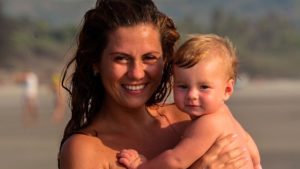
The Hold is very similar to a practice I learnt from Amazonian indigenous people during my first pregnancy. This is now one of our Birthlight ‘Relaxed Baby Holds’, on land and in water. It can be observed all over the world, particularly in Asia, as a traditional way of holding babies. But new parents in world cities seem to need to be taught how to nurture their babies with calming holds. Dr Hamilton developed The Hold in his clinic to soothe babies after examinations or treatments made them cry. He seems to have developed this hold empirically rather than having learnt it, which is interesting.

Leen Heusdens, midwife and trauma therapist in Holland, recently expressed her concern about “The Hold” after I posted one of Dr Hamilton’s You Tube videos in my excitement of recognising similar features to our Birthlight relaxed forward-facing hold.

We engaged in an exchange about the calming effect of ‘The Hold’ and whether it could be compared to a ‘freeze’ in a helpless response of the baby. Just like when a mother cat (or a human) holds a kitten by the back of the neck and they go limp and ‘freeze’ in a superb quiet after climbing up the curtains or squealing. This got me wondering some more about how this hold works and whether the calm it produces might have a negative side as a ‘freeze’ effect. After watching the video demonstrations again, here are a few thoughts to stir debate with Birthlight teachers who may show the relaxed forward-facing hold routinely to parents.

Leen is right in saying that some aspects of a freeze are there. The babies on the videos go quiet and kind of ‘limp’ when held by the Doctor (by the way it would be good to see how the parents pick the practice up, as we only see the masterly demos).

The Hold is taught in 4 clear points:

  • Fold across the chest
  • Secure arms gently
  • Grasp diaper area
  • Rock at 45 degree angle

Several practices in combination produce a calming effect. 1-2 crossing the midline with the arms (an effective simple practice that is the cornerstone of calming very young babies as shown to parents in the Brazelton NBO). As far as I am aware this is not done in the traditional forms of The Hold, but it is part of baby swaddling practices that are widespread with different modalities across cultures.

Point 3. At Birthlight, we call this ‘seat hold’. Placing a hand under a baby’s seat is comforting, with a soothing effect on the baby’s central nervous system through the base of the spine. If the baby is held upright, however, this hold can have a stimulating effect, as used in Russian gymnastics encouraging babies to do a sitting balance on a parent’s hand. At Birthlight, we only use this stimulation later, when the babies have gained head control and spontaneously initiate an upright stretch. Some French psychoanalysts objected to ‘seat hold’ because it might warm up babies’ genitals. But as Dr Hamilton puts it, ‘grasp diaper area’. There is actually no need for grasping, seat support on an adult hand is quite secure.

Point 4. The ‘rocking’, perhaps more like a ‘jiggle’. I like Dr Hamilton’s little circles, we do this too. On the videos, it looks like ‘jelly on a plate’. It’s quite vigorous. In time we have had a great deal of discussion about whether this could be harmful if pushed too far into ‘shaking’ (as the ‘shaking syndrome’ in baby abuse). For this reason, our ‘jiggles’ are slower and gentler. We also teach “little drops” that most babies respond to with pleasure. This is done by parents bending their knees slightly a few times while holding the baby (by the way this also has a calming effect on the parents!). Without ignoring the ‘shaking’ risk, parents benefit from being shown that babies like being moved by a human action rather than by a mechanical device such as rocking cradles or cots that jiggle babies to sleep at the push of a button.

Does the 45 degrees angle matter? Yes. It can be a little more or less, but it definitely needs to be an oblique position. Horizontal only works if the baby’s body rests fully on the parent’s arm (as in “Tiger in the Tree”). Vertical only works if the baby is nested close to the parent’s chest/shoulder, with one hand of the parent supporting the baby’s seat and the other supporting the head (as in “Shoulder Hold”). Due to cultural conditioning by conventional images of babies held in arms (“Cradling Hold”) parents tend to resort to this lovely hold, perfect for eye to eye contact and verbal communication, when babies cry. But this is precisely when ‘cradling’ does not work so well: parents get more and more distressed as they try and rock their crying babe in arms.

Ashaninka young family, Upper Amazon, Peru. Hold similar to the Birthlight forward safety hold with seat hand and banister + grip hand (Photo by Mike Goldwater / Alamy)

What is it about the face down position that calms? If people all over the world, not just in the Amazon or in modern baby clinics, are using The Hold, there must be something universal about it. Something physiological. In his 4 points Review, Dr Hamilton does not mention how he supports babies’ heads under their lower jaw with the thumb and index finger of his other hand. (By the way we recommend that parents use their left hand to support the baby’s seat if they are right handed and the right hand if they are left handed).

This support is what made Leen react, because it may trigger a ‘lock’ in the baby’s posture leading to a ‘freeze’ response. At Birthlight we have had lots of internal discussions among tutors and teachers about the support of the baby’s head in this outward facing hold. Pressure on babies’ lower jaws acts on the Trigeminal nerve, the largest of the cranial nerves. This is a very complex nerve that extends not just to the face but to other parts of the nervous system. I would like to know more about this in relation to a ‘freeze’ reaction, perhaps in relation to Stephen Porges’ research on the polyvagal system. Holding the baby’s lower jaw may also interfere with the Tonic Labyrinthine primitive reflex, impeding movement of the neck in relation to the ‘seat hold’.

For these reasons, we have abandoned the practice of holding babies under the lower jaw (1). For the forward-facing relaxed hold, we have long promoted a progression from “safety hold” (securing the baby’s arm between thumb and index finger while the parent’s lower arm creates a nice “banister” for the baby’s chin to rest on). This is an adapted version of what I learnt from Amazonian people. As head control is gained, the “safety” grasp (also used for safe support in the unlikely case that the parent’s seat hand might slip) is replaced by an open hand support under the baby’s chest. Then the hold is truly relaxed and so is the baby. The base of the skull, where the cranial nerves transit with so many implications for infant development, is kept free while the baby’s head is safely supported.

The exchange of posts about The Hold made me think some more about Cultural Fusion. We cannot just take traditions from other parts of the world at face value. What works for Amazonian rainforest people, who are very nimble, body-aware and used to handle babies from childhood, may raise unsuspected issues when conveyed in a more rigid way to western parents. As much as possible, we need to understand the anatomy and physiology of practices that humans have either transmitted down generations or ‘rediscovered’ empirically from babies’ responses. Baby Calming is a complex cultural affair. Think about the rocking ban imposed on European and North American parents during the first half of the twentieth century and how it has been progressively re-instated as a beneficial baby calming practice. There are strange pendulum swings in the history of baby care.

Recent studies looking at the neurobiology of culturally common maternal responses to infant crying (2) are concerned with elucidating the foundations of core parenting practices when infants are distressed. We now know that holding babies actually affect their DNA (3). Is there a continuum of response from calming to ‘freeze’? or is the onset of a ‘freeze’ response sharply clearcut? There do not seem to be clear answers to these questions, or I may not have identified them yet. If anyone reading this piece has relevant information, this would be very helpful. In the video that rationalises why babies are calmed by ‘The Hold’, commentators mention both the possibility that the baby recalls proprioception in the amniotic fluid and, interestingly, that the baby might welcome a stimulating change of orientation from horizontal to oblique, with a different vista. This conjures up my wonder at Amazonian babies’ calm alertness while being carried for hours in precarious slings on very rough terrain, nursing and sleeping when needed along the way. In the same way that mothers knew when the babies needed to empty their bladder or bowels and just held them a little distance away for the purpose (most often), they -and fathers and siblings too – had an amazing register of holds and transitions between holds that we westerners need to learn from, adapt and understand better. ‘Holding the Baby’ may turn out to be one of the most exciting challenges for Cultural Fusion.

Find out more about Birthlight’s constant refining of ‘Relaxed Baby Holds’
Relaxed Holds on land are shown in detail in the Combined Birthlight Nurturing and Baby Massage Course.

Francoise Freedman
Birthlight Founder & Director

Are you thinking about training to be a Baby Swimming instructor or sending staff from your swim school to upgrade skills? Here are 5 reasons why you should go to Birthlight

After enjoying having my four children swim like fishes before their fourth birthdays, each in their different styles, as a former swimming instructor and competition swimmer, I wanted to share my passion with other parents and swimming instructors. Our pioneering program based in Cambridge, England soon grew national and international. Birthlight caught the attention of a publisher and my book Water Babies was translated in 12 languages. In 2003, we originated the training manual for STA, with the first national accredited teaching qualification in the UK for parents with their babies and toddlers in the water

Birthlight now has a set of great trainers, from different parts of the world. Together, we continue to develop and upgrade our program in the light of the latest research and based on our evolving experience. Now a grandmother, I have gone back to the drawing board while accompanying my grand-daughter, now 31/2, all the way to swimming unaided. Over the last two decades, I have fully enjoyed watching our original practices become mainstream in the ‘baby swimming’ world and experiencing our evolution from guiding infants in water to a fully child-led practice. A gentle, respectful and playful way extols the best outcomes in little ones’ confidence and development: it’s tried and tested, all winners and no losers.  Little did I know that the inspiration I received from Amazonian rainforest people with my first baby would spread so wide. By promoting a carefree connection in water, we address a crucial parenting need in our global urbanised lifestyle.

If you want to embrace the power of “gentle” with babies in water without losing sight of swimming competence, here are 5 reasons for training with Birthlight

1) We are one of the earliest pioneering methods of baby swimming and yet we remain cutting edge innovators with unchanging core values.

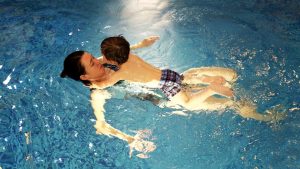
Since the 1980s we have conveyed the concept that parents did not have to ‘teach their babies and small children to swim’ but use the properties of the water for playful movements leading naturally to swimming. Working with early reflexes and following their timely integration as autonomous movement develops is most rewarding in a developmental perspective. Ever since we started adapting interactive games to developmental phases as experienced by all babies but also uniquely by each baby, we have reached a better understanding of what’s possible and how to achieve it with each parent and baby/toddler pair. We observe, share, read research and discuss it to create ever better approaches to even the simplest of movements that can give little ones confidence and happiness in water. This matters for a life time.

2) We have created a unique repertoire of holds and parent/baby interactive moves for various age groups and abilities.

Instead of teaching a one for all set of practices, we differentiate the needs of newborns, young babies under 4 months, 5-10 months old pre-walkers, water confident toddlers and beginner toddlers, and so on all the way to pre-school. What are the activities that you can only do if a parent/baby pair responds in this or that way now?  We cover all angles because we have such a variety of practices. Consider supporting non-swimming parents who are petrified but wish to overcome their fear of water for the sake of their infants? Beautiful. Our practices can flow into one another when progression is invited. They are not a static list but focus on the pleasure of movement in water. There’s no such thing as infants who do not want to be in water, only pleasure that’s not been released yet. Variations and sequences, some with buoyancy aids, some without, create endless fun and enriched communication through weeks, months and years of enjoyable shared sessions.

3) We value and care for each new Birthlight instructor, with an understanding of their operating culture and milieu

Our training courses are intense in many ways with a lot of information and a lot of pool practice, ideally with visiting babies rather than just with training water dolls.  We have high quality standards and we believe that to be excellent instructors you need to be mentored as you implement the training in your first teachings in the form of case-studies. For us, seeing your record forms or videos of your teaching is the last but important step of your training assessment, when we confirm that you are fit to be a Birthlight instructor. And if that means taking a little extra time and writing about your teaching over the recommended word count, please do it! After all, the mere act of evaluating your performance unlocks your power of observation that is then transmitted to all the parents you attend to in water. Whether parents can’t swim or are Olympic swimmers, Birthlight creates a culture of “water parenting” that cuts across all divides of race, class and culture worldwide

4) Our focus is on the joint experience of parent and infants in water

Imagine that in the water, parents and babies fall in love with one another. They do. If you map out your classes with this at the forefront of your mind, the magic will quickly set in. This is your Birthlight perk, that many imitators have tried to bottle up but never quite grasp it unless they train with us. We pass “it” on in our contact hours of teaching in the pool, which are more extensive than in most other programs (two daily pool sessions).  We encourage you to take time to journal on questions such as, “What new skills do I want to introduce while this parent/infant pair is apparently making no progress on a developing plateau?” and “How can I encourage and incentivise a baby-led approach with a headstrong parent keen on water survival skills?” Well, there is a place for these too, as they save lives, but babies and parents can learn them together.

5) And finally… everything we do is science-based and translates research into developmental practices, but our playful parent-baby groups make it all seamless, easy and accessible

In today’s world new parents do not know very much at all about their babies and often misunderstand their behaviour. Being in the water together is a great opportunity to discover babies’ amazing abilities and to learn new parenting skills. You, as a trainee instructor, will gain the knowledge that you will impart to parents in a practical way in the pool. Few words: the practice does it… but you will understand the “how” and “why” and gain the ability to explain it if need be. It’s the time to remind new parents that their infants are there to be enjoyed. Neuroscience has given us a better understanding of how each exchange of smiles or laughter works a treat for creating new brain cells and extending dendrites in infants’ fast-growing nervous systems.  Delete inherited ideas about babies and parenting. Our Birthlight theory modules are specifically adapted for swimming instructors with little time to spare but they impart a lot of carefully collected relevant knowledge. Lots of topics to geek out about, but always related to making your classes more fun and effective.

Françoise Barbira Freedman
Birthlight Founder/Director

Françoise received the prestigious Virginia Hunt Award in 2009 (World Aquatic Baby Children Association)

So much has changed in our lives and around us, so fast, since the beginning of the UK lockdown. I hope that you are finding new sources of creativity each day with your families, rhythms for daily activities and an upbeat spirit. Uncertainty is unfamiliar to most of us, but it is part of many people’s lives and we need to be grateful for the tools of communication that connect us all, and for the supplies of food and clean water we can access. I recall being marooned with two families on a forest island during the rainy season in the Amazon while pregnant, watching the water level rise and food rations dwindle to nothing. Everyone kept calm and took turn to tell funny stories. One priority at this time is certainly to help pregnant women with reducing anxiety levels while maternity services are adjusting. NHS midwives continue to provide kind compassionate and skilled care and there are independent midwives out there. Some of you are doulas too. But there is a lot that can be done to support and help parents to be prepared for eventualities. With my daughter Mary in the 35th week of her second pregnancy, online resources for home birth are very helpful for getting our three-generation household ready. For reliable information, pregnant women can be directed to the RCM dedicated area of the website which has everything you need to know about coronavirus and pregnancy, from clear, maternity-specific clinical guidance to advice for the pregnant women you have been teaching before the lockdown.

While the focus of the RCM and RCOG posts is on birth, the greatest need for support is that of new mothers and families cut off from their local support networks. Online support such as that offered by some Birthlight tutors, such as Bryony Vickers, is invaluable at this time to help with postnatal recovery both physically and mentally with a personal approach. Apps are fine, but there is nothing like a familiar face for reassuring guidance in the most vulnerable time post birth, particularly for first time parents.

While some organisations are denying their qualified teachers to create short demo videos online for baby massage and gentle yoga with babies, we trust Birthlight teachers, particularly those with pre-locked down established classes in Sure Start centres or in their communities, to reach out to families in their homes. There may be some details missed but our training quality standards will hopefully guarantee safe demos. It is necessary to offer a disclaimer with each video, reminding parents of their responsibility, and to double check that your insurance certificate is up to date. If you are insured with our Birthlight insurers BGi, your certificate carries some public liability but all precautions to ensure safe practice must be taken. You are Birthlight trained, but due to insurance restrictions we cannot take responsibility for the videos and other online teachings that you offer members of the public in your name and we are not able to list them for wider access. Thank you all for your initiatives for benefitting new families.

We are still in the process of navigating our way through the lockdown and accommodating to the inevitable financial toll on Birthlight as a small charity. Since our last newsletter to you, a restructuring of Birthlight as an organisation has become inevitable to reduce complexity and with it, expenditure. In this rapidly evolving situation, our priority is to develop our Birthlight training resources as sets of practical online practices directly accessible. For teaching members’ use, practices will be also be made available with updated information and extended links to research, analysis and commentary. Coming soon: Online guide to happy first baths for the Fourth Trimester.

Watching exercise programmes including yoga offered via the internet, some great fun but mostly done without a focus on the breath, reinforces the appeal of our Kitchen Yoga and Chair Yoga practices before and after birth, and for women’s wellness. Breathing in an aligned posture does wonders for the body-mind and for keeping endocrine glands in balance. This is what yoga’s most precious gift as a form of exercise. Within a few minutes, we can connect back to calmness and our inner light, affecting all around us. Toddlers and little children get it so well. Take time to remember one Birthlight practice that women or families participating in your classes invariably found enjoyable. The blissful wave of silence following them will come to mind. Perhaps an instant relaxation? Or one of the “funny walks”? or an Asana given flow and grace with a rebozo that delights babies?

At a time when the British Wheel of Yoga is limiting its insurance to teachers of Mother & Baby Yoga as a sub-category of Postnatal Yoga, there is a case to be made for the Baby Yoga that Birthlight has pioneered with safe and developmentally sound moves with a focus on the baby. Postnatal Yoga, that we were the first to promote, is certainly beneficial for women if taught in a gentle progression over the early months. But integrating babies safely, particularly very little ones, in postnatal yoga, cannot be left to improvisation. Sound yoga teaching is required, with an understanding of babies as they develop in a multi-faceted way and learn interactively with parents through movement, imitation and communication.

While we prepare online resources, we do want to make sure you feel supported within our Birthlight network. We value your feedback on how we’re doing, what you think we’re getting right, what we may have missed the mark on – please let us know by contacting us. If you have recently attended a training course and are concerned about your coursework, please do not worry. We will extend times for submission as needed. This could be a good time to complete worksheets and essays?

Keep well & warmest wishes,
Dr Françoise Freedman

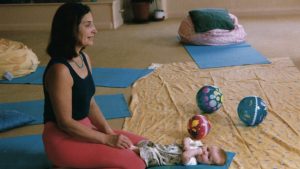
Birthlight training has a very personal origin.

It all started with a small group in Cambridge. In the 1980s, as a young mother, at the prompting of a few friends, I interwove the strands of the rich life I have been blessed with in a small experimental class. I was an enthusiastic yogini (trained by Iyengar teachers) and meditation had become an important practice. I held a research and teaching position at Cambridge, but my home life was infused with the practical parenting skills learnt during two years of anthropological fieldwork in the Peruvian Amazon region. Sharing the knowledge and skills picked up during my first two pregnancies there, as two more babies came along and I was clearly handling them in ways that differed from the current norms, became my challenge.

The easiest path was to translate Amazonian parenting in a yoga form. Having been a competitive swimmer, the adaptations of yoga in water and my experimentations of swimming with each of my babies inspired from rainforest life had to be included.

There was a lot of excitement about all the practices I was trying to integrate: carrying babies was exotic, taking babies to a swimming pool was a matter for calling the police. Yoga for pregnant women, and even more so with babies, seemed a dangerous thing in a way that is difficult to imagine today.

True to my apprenticeship with an indigenous midwife and her shaman husband in Peru, I frequently attended births both in hospitals and at home, long before the term Doula came into use. I became known for supporting water births, sometimes in hiding. The adapted tub that I transported across town on the roof of my car was quite a sight. Each birth was a learning. Exchanges with experienced midwives and some medical professionals, as I recalled observed indigenous practices, were enriching.

Contacting, meeting and befriending pioneers with alternative approaches to birth and babies, searching for cross-cultural practices and analysing historical norms of risk and safety were part of the process. At the time, I was developing the first Anthropology of Childbirth course in the UK within Medical Anthropology at Cambridge University. My post-doctoral research had also led me to review global maternity services and to evaluate different approaches to care and management.

This academic work, central to my activities during all my working life, informed our local weekly sessions at the Friends Meeting House in Cambridge and in local swimming pools. We also set up monthly discussion groups with expert researchers and practitioners, followed with small conferences mixing “town”, “university gown” and hospital. We did not miss a pretext to celebrate and fundraise for community support around maternity while stimulating interest in a focus group.

Birthlight was incorporated as a UK charity in 1999 with the help of Margaret Adey. Our lawyer and first trustees were drawn in as ‘birthlight mothers’, other trustees were practitioners who had become involved in Birthlight. These were and remain warm connections.

An invitation to design the pioneering Pregnancy Yoga module within the Yoga Therapy Diploma created by Dr Robin Monro (Yoga Biomedical Trust) in 1994 led to the training of wonderful cohorts of experienced yoga teachers in London and to setting up London classes at the Royal Homeopathic Hospital, with referrals from Great Ormond Street Hospital. Marion O’Connor, who taught there with me and co-led corporate trainings, re-joined Birthlight as a training tutor later on, after nurturing a family of three.

Since early days in Cambridge groups, I developed a therapeutic option to support women post childbirth, leading to the eventual yoga therapy training module called Well Woman Yoga (2004), now a teacher-training course in its own right. To this day, I am grateful to Robin Monro for his open-minded vision of Yoga Therapy.

Press and media interest got us on the front pages of all main UK newspapers. Together with my books and DVDs, articles stirred demand for training courses. I enjoyed writing illustrated books, but I also wanted to pass on knowledge gathered while developing the practices. I cannot do anything that is not research-based, and I am fastidious with checking background science.

It had taken nearly twenty years of teaching continuously before our first teacher trainings in Baby Yoga, Infant Aquatics and Aqua Yoga were offered to make yoga-based practices more accessible to parents to be and new families as a healthcare community service. The quality of teaching won the support of trainers in national organisations such as the British Wheel of Yoga and the Swimming Teachers Association.

The first training courses attracted mostly health professionals working with babies, before yoga teachers and swimming teachers joined in. From 2002, our Birthlight tutor team developed at our bi-annual residential courses at Riddlesworth Hall in Suffolk, where we held simultaneous land-based and aquatic trainings.

Two of the foundational principles of Birthlight are openness and adaptability. The experiences of pregnancy and birth are social levellers and bring people together across cultures, ethnic origins, creed and class differences. We have always believed that our practices and yoga should be for everyone, irrespective of fitness, and be part of day to day life. We pioneered ‘chair yoga’, ‘kitchen yoga’, ‘yoga walks’, overcoming accusations of breaching an authentic yoga tradition.

In the first generation of Birthlight training tutors, Sally Lomas and Amanda Gawthorpe, who then developed their own groups and schools in Cambridge (Joyful Babies and Joyful Dolphin), stand out not only as trainers and teachers but as representatives of Birthlight in international conferences. In a second generation, Kirsteen Ruffell co-developed Postnatal Yoga with Francoise, leading to the still evolving micro-movements of Yoga with multiple applications post birth. The Therapeutic Aqua Yoga group co-led by Carol Anne Procter andKaty Offer together with Francoise has been instrumental to the development of innovative aquatic programmes.

At all times, individual ongoing self-development has been honoured and encouraged in Birthlight. Tutors who followed other paths, (Uma Dinsmore Tuli, Shawn Tomlinson, Ingrid Lewis, Gill Milsom, Philomena Geary among others) or retired (Marion Symes, Eryl Holt, Liz Doherty) remain in the hearts of their students and current tutors. The memory of Wendy Gadsden, a midwife trainer of many midwives who passed away in 2017, is with us all.

The expansion of Birthlight abroad since 2012, with a second and now a third generation of tutors, required a more complex organisation. During Sally’s time as Director of Training, the tutor team grew from16 to21, demanding a clearer organisational structure. In 2019, Kirsteen and Carol Anne became Training Coordinators for land courses and aquatic courses respectively.

In 2017, the Trustees of Birthlight had already identified the need to move to ‘blended courses’, building up the pre-reading elements of existing training courses as online modules. The Covid19 pandemic has given great urgency to this development. At the same time, the structure of Birthlight as a training provider organisation needs to be changed. A new model is proposed to draw all of us, the Birthlight community, closer to the original vision that brought us together over the last three decades.

Motor skills that help human adults enjoy sport and fitness begin in infancy. In the first two years of life, many of the primitive and postural reflexes that cause babies to move involuntarily are integrated and replaced by voluntary movements. In water, new babies’ salamander-like movements that create an illusion of swimming continue to be developed over time through experience and practice.The progression to unaided swimming has age-related patterns yet it is unique for each child. In water, mastery of the body in space is not hampered by gravity; the physical sense of self and security in space expands as infants connect, separate and reconnect with a loving parent. When elective rather than imposed, the experience of submersion enriches babies’ feeling of being in the world with a powerful blend of movement, sensory integration and focused intimacy with accompanying parents.

Birthlight has been at the ‘gentle’ end of the baby swimming spectrum from the start, rejecting the teaching of swimming through conditioning, even of the non-violent kind.

A passion for applying the findings from neuroscience about the importance of a loving bond for optimal conditions of learning and brain growth in the first two years of life has been a leading inspiration. With attention to detail, interactive practices were developed to ‘open the gap’ in a fun and secure way between parent and baby in water. Our motto ‘do not hold them (the babies), let them hold you’ echoed the way in which Amazonian parents and older children encourage little ones to hold on while crossing rivers. ‘Swimming with babies’ rather than walking in shallow pools with them, helps babies feel motion in water. Most often, this is pleasurable, because babies love movement in connection and movement is a great part of how they get to understand the world around them. If parents swim with babies, sooner or later, babies fall off and go under. Usually this is no big drama when they can be picked up gently. This contrasts sharply with deliberate practices of submersion, even those done with careful use of warning verbal cues (‘one, two, three, go’) or physical cues (lift or face blowing).

After campaigning against the violence done to babies in underwater photoshoots aiming at getting trophy images of illusory early swimming, Birthlight moved resolutely towards enhancing a loving communication between parents and their babies in water. Rather than showing parents how to ‘teach their babies to swim’, the goal shifted to one of ‘Water Parenting’, observing baby cues and learning from the babies how best to support them for enjoying moving in water together. Mouthing the water, which most babies do spontaneously, introduces the transition from the ‘gag reflex’ to the ‘diving response’ with babies’ involvement as they watch parents blow bubbles and even go under opposite them.

Observation, imitation and reproduction are the foundations of elective submersion, when the infant chooses whether or not to go under. Promoting this readiness to submerge in many different ways matters for freedom of movement and body balance in water. Toddlers start propelling themselves in water in quite a few different ways, with and without buoyancy aids. When they are happy to submerge, their bodies are far more streamlined than when they struggle to keep their heads above water. Formal swimming lessons at age 3 to 4 now start with body alignment, face in the water. For toddlers who have been free to explore the underwater world, this is a doddle.

On pool beaches or steps where babies can crawl and stand at the same time as they learn to walk on land, exploration inevitably takes them under. Learning to right themselves in shallow water and to turn to grab the edge after jumping in are key water survival skills, learnt through play with parents.

Swimming is already programmed in the natural joy of free movement that infants experience in water. This is why we need not fuss about submersion. It’s not something that’s necessary or even very important in baby swimming. It’s just something that’s likely to happen. From the closeness of the ‘cradle hold’ to daring seat balances, from the safety of the ‘little harbour’ created by mum or dad’s arms to take off in the big water, progressive practices allow babies to feel in control and confident with their bodies. We do not really teach our babies anything. We allow, support, make space, perhaps encourage, always love and reassure and comfort in case of distress. In this way, water teaches us parenting.

Technique, achievement and excellence in performance in the transition from holds to aided and unaided swimming imply elective submersion. The radiant face of a tot who manages to swim a few meters into his or her parent’s open arms is a joyful sight. But getting a timid infant to jump from the pool wall without holding to his or her parent’s finger can also be a triumph. Helping parents to unlock their babies’ potential in an active, body-based dialogue with them in water, with total acceptance, is magical. Let’s not miss out by dumbing down these amazing fast-growing brains by imposing a dogmatic swing of the pendulum from forceful submersions to a ban on submersion.

At Birthlight, we are happy to be associated with STA (Swimming Teachers Association, UK and international -ISTA) and ASSA (Australian Swim Schools Association) because of their double focus on saving lives and creating an enjoyment of swimming for life. Our focus on ‘nurture’, supporting parents to help their babies feel at home in water, is close to the technical objectives of psychomotricity as experience-based learning through relational experiences in a suitable environment. In this sense, the early aquatic education that teachers provide enhance water parenting and baby swimming together. Submersion is not a matter of ‘whether… or’ but rather one of ‘how best’.

Dr Françoise Freedman

Dr Françoise Freedman received the prestigious Virginia Hunt Award from the World Aquatic Babies & Children (WABC) in 2009 for her contribution to early swimming.