Happy International Women's Day! These 3 simple instant practices can be used to stir up or wake up Shakti Prana, the feminine energy force. The Read more
Diana Chedana is the latest Tutor to join our team as a Birthlight Baby Swimming Tutor. Here she shares her story and introduces Oovi, the Read more
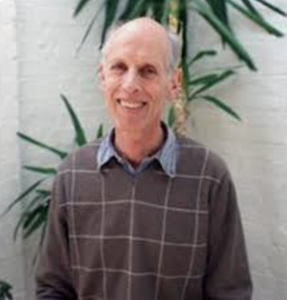
It has taken me some time to grieve for the passing of Dr. Robin Monro, who left us on November 14th in his mid-90s, before sharing a Read more
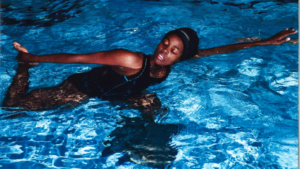
First published in Yoga & Health Magazine August 2013 Among recent developments in Western Yoga, Aqua Yoga seems particularly counter-intuitive. What about gravity and the Read more
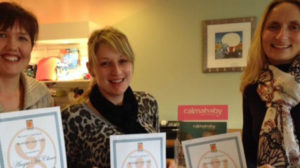
Birthlight Aqua yoga congratulations
Thank you so much Sally Lomas and Birthlight for the wonderful course in Aquanatal yoga. Kelly Bromley, Angie McClean and myself had all completed our Read more
Birthlight Aqua Yoga
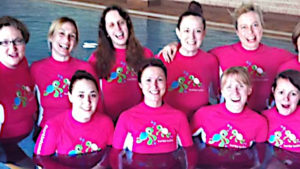
Birthlight was chosen by the swimming company Turtle Tots to provide Aqua Yoga training to all their swimming teachers. The training of Turtle Tums has been a great success Read more
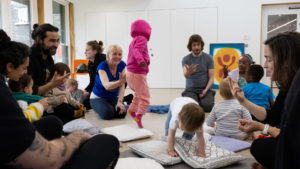
#oneearthonefamilyonefuture #internationalyogaday2023 #europeanyogafederation #unitedconsciousness For The International Day of Yoga 2023 we are sharing a film we recently made about Baby Yoga after filming at Read more
baby yoga birthlight
15th December 2004 – the day I became a mother and the start of my journey with Birthlight. Officially, my Birthlight journey began a few Read more
#babyyoga #GermanBabyYoga #BabyYogaGermany Since 2023, the Baby Yoga training is offered in German for the first time with Johanna. Here you can find out how Read more
mom cradling baby
#BabyCommunicationWeek23 #AmazedByBabies #brazeltonuk Friday - Brazelton Baby Communication Week: Baby Care as Unconditional Love Parenting from a yoga perspective: a school of unconditional love. There is always Read more


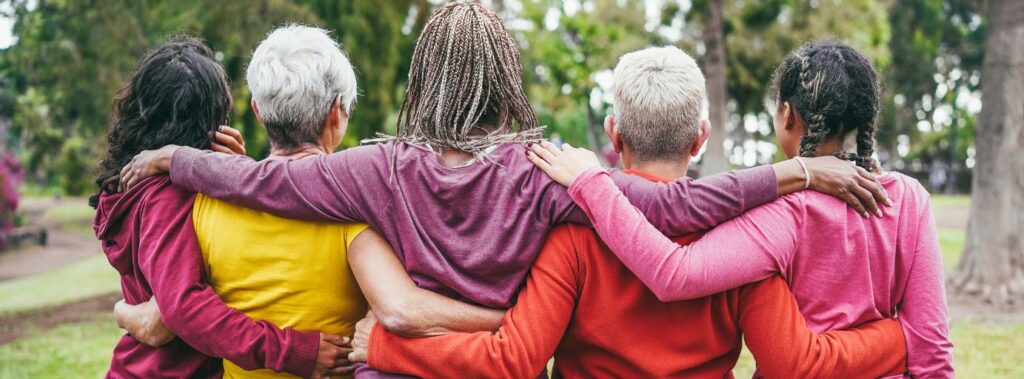
Happy International Women’s Day!

These 3 simple instant practices can be used to stir up or wake up Shakti Prana, the feminine energy force.

The first one is to be grounded, and we plant our staff.  

So we take an imaginary staff and we go HHAA!, planting it in front of us.

  • Bend your knees and feel the four corners of your feet. Look straight ahead.
  • Feel the power of the three lower chakras and the Hara.
  • Plant your imaginary staff in front of you with a strong “Ha!” sound as you exhale.
  • Repeat
  • One day you might plant an actual tree and feel that strength, the strength of our Hara.
  • Release and wobble.

Second Practice: Be Strong to Release with Strength

  • Make fists and engage your whole body to avoid losing power when releasing.
  • Feel the contact with your pelvic floor and glutes.Take a deep breath in. 
  • As you exhale, release with a “Ha” sound. This is a soft exhale, but still maintain your strength.
  • This practice helps women release without losing their power.
  • Repeat a few times, then release completely.

Third Practice: Heart Connection

  • Connect the base of your palms together Namaste or Anjali mudra in front of your heart. Keep your fingers fingers soft.
  • Look straight ahead with the drishti (focused gaze) of yoga. Feel awareness 360 degrees – the front and back of your heart.
  • Feel strong in connection – “We are connected.”
  • Connect mentally with your loved ones.
  • Release, then bring hands again into Namaste position.
  • Find your gaze more easily with practice.
  • Press the base of your palms more strongly.
  • Keep awareness of the pelvic floor.
  • Feel connection with all your loved ones and all living beings from this beautiful world.
  • Release.

Diana Chedana is the latest Tutor to join our team as a Birthlight Baby Swimming Tutor. Here she shares her story and introduces Oovi, the center in Taipei that she and her husband have set up and been running since 2015.

My teaching journey began in 2006 when I was  pregnant with my first child. It was during this time that I discovered Birthlight courses through the book ‘Yoga for Pregnancy, Birth and Beyond’ by Françoise  Barbira Freedman. The prospect of courses like baby swimming and baby yoga  excited me, especially as I was on the verge of becoming a mom. Partnering with my  friend Judy, we reached out to Birthlight and initiated our first training. This was  motivated by the absence of such classes in Taiwan at that time, as we aspired to gain  the knowledge necessary to engage in these activities with our own children.

We were so lucky that in 2007 Liz Doherty and Shawn Tomlinson were able to come  to Taipei, Taiwan to teach us level 1 of the training.  In the following year 2008 after my second child was born I visited Cambridge, UK to  take my level 2 training with Sally Lomas and Shawn Tomlinson. Over the past two years, my husband and I have cherished our interactions with our  kids through swimming and yoga. Through these activities, I’ve personally witnessed  the positive impact they have had on the development of our three children. The picture on the left is me and my family (they are much bigger now ☺)

Me & my 8months old son during the Baby Swimming training, Our 1st Baby Swimming Training in 2007, Our 1st Baby Yoga training in 2007″

“At our center, our aim is to establish a cycle of joyful parent-child relationships through our classes. We envision Oovi as a place where more parents can share experiences akin to ours. These experiences will, in turn, serve as inspiration for more families to embrace the joys of parenthood and savour the beauty of every precious moment!”

While caring for my children, I passionately extended the reach of Birthlight programs through my part-time baby swimming and baby yoga classes. When I initiated my baby swimming and baby yoga classes in Taipei back in 2008, only a handful of parents participated, often discreetly without informing their in-laws, particularly for baby swimming classes. Traditionally, parents refrained from enrolling their children in swimming classes at such a young age, fearing they might catch a cold and doubting the benefits.
As time went on, spurred by positive word-of-mouth from parents who had attended the classes and increased media coverage, more parents gradually joined the classes. The growing interest was accompanied by a keen enthusiasm for obtaining the necessary training. Eventually, Judy and I joined forces to promote Birthlight courses in Taiwan, facilitating the introduction of Birthlight training sessions to the country from 2009 until the present day. Over the past 13 years, we have consistently hosted these training sessions annually, with the exception of the challenging times brought about by the Covid pandemic.

Here is a glimpse of the training sessions we’ve hosted in Taiwan since 2009:

Baby Swimming with Amanda, Baby yoga training with Sally, Baby Yoga training with Liz

Toddler swimming training with Julia, Special needs baby swimming training with Shawn, Baby and Toddler Yoga training with Marion

“I consider myself fortunate to have navigated the challenges of raising our three
children alongside my husband. The Birthlight courses played a pivotal role in
infusing our parenting journey with joy. Now, we are eager to extend this joy to other
parents by sharing our experiences.”

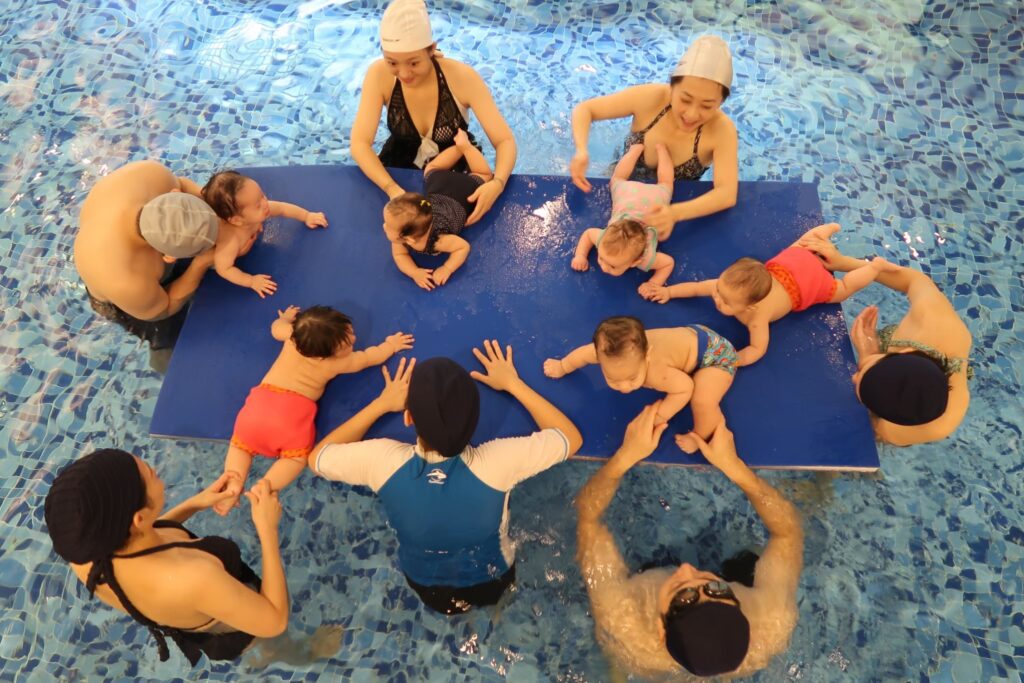
In 2015, my husband and I embarked on the journey to establish our own family activities center, Oovi. Providing a warm pool and child-friendly facilities, Oovi is specially designed to cater to newborns through preschool-aged children. At Oovi, our emphasis lies in creating a profound ‘Full-hearted parent-child interaction.’ We meticulously plan every aspect, from the environment and equipment to space, lighting, design, color matching, and beyond. The dedication to detail is evident throughout, enhancing the overall interactive experience. All our instructors hold Birthlight certification, offering specialized Birthlight programs including Baby & Toddler swimming, Baby Yoga, Baby Massage, and Aqua Yoga. Our center open Monday to Sunday and these classes are offered every week.

Below are some of the training photos that we hosted in Oovi and some photos of classes at Oovi:

Oovi Instructor’s CPD with Sally, Baby Massage training with Françoise, Aquanatal Yoga training with Françoise

Toddler Swimming, Baby Massage, Baby Yoga, Baby Swimming and Aquanatal Yoga classes all at Oovi

Here is some of our parents’ feedback about Oovi’s classes:

我們來體驗 1-2 歲隨班的親子游泳,覺得非常棒,透過各種有趣的活動帶動孩子能
自願入水,正是我們家需要的,老師上課步調也很適合我們家,運動得很開心,馬
上報名正式課程!
We attended 1-2y old baby swimming classes and find it fantastic! Through various engaging activities, the child willingly enters the water, which is exactly what our
family needs. The pace of the teacher’s class is also suitable for us, and we enjoy the exercise. We’ve immediately enrolled in the course!

海星老師很細心引導,小朋友上了 8 堂課後,進步很多,在水裡很自在,潛入水中
也會閉氣了。其他老師們也很親切專業,環境乾淨舒適
Teacher Hai-Hsing is very attentive in guiding. After attending 8 classes, the child has made significant progress, feeling comfortable in the water and even learning to hold his breath when submerging. Other teachers are also friendly and professional, and the environment is clean and comfortable.

非常舒適的游泳環境,人數控管良好,整體動線也非常舒適,館內的設施都非常安
全與適合小嬰兒學習游泳,老師上課很有耐心也很有專業度,能觀察小朋友的狀態
並有耐心的引導家長一起讓小孩更放鬆的體驗。櫃檯人員都很有耐心,同時對於課
程的說明也非常充足,能讓父母很放心的享受游泳體驗
A very comfortable swimming environment, well-managed attendance, and overall layout are very comfortable. The facilities inside the facility are very safe and suitable for infants to learn to swim. The teachers are patient and professional, observing the children’s condition and patiently guiding parents to help children relax and enjoy the experience. The front desk staff is very patient, and the explanation of the course is also very sufficient, allowing parents to enjoy the swimming experience with peace of mind.

Oovi Family Activity Centre, Taipei, Taiwan https://www.oovi.com.tw/about

Read more about Birthlight Baby Swimming

Read More about Baby Massage, Baby Yoga and Toddler Yoga

Read more about Aquanatal Yoga

Read more: Diana Chendana introduces Oovi Family Activities Center in Taiwan 

It has taken me some time to grieve for the passing of Dr. Robin Monro, who left us on November 14th in his mid-90s, before sharing a small tribute to him not only as a pioneer of therapeutic yoga in the UK but also as a respected dear mentor to whom I feel personally indebted.

 I was privileged to say goodbye to Robin in person, on 10th November in Sheffield. He was fully lucid, and the light of his soul shone through his eyes. Even on his hospital bed, he was a Yogi, filling the room with vibrant life.

As I drove back to Cambridge in the golden Autumn afternoon, images of the complex bonds that linked me to Robin came to my memory. Long before meeting him in London as the founder of the pioneering Yoga Biomedical Trust (1983), I knew of him as a molecular biologist who had recovered from asthma with yoga. While his decision to leave the prestigious Cambridge Medical Research Council, where he had done research with world leading scientists, was frowned upon as odd, his passion for yoga elicited curiosity and even admiration by some. In his groundbreaking and single-minded dedication to yoga therapy research and applications, Robin continued to work all his life as the scientist he was by training and at heart. He fought indefatigably to lay the foundations of yoga as an effective, research-based form of complementary therapy and, in some cases, an alternative to biomedical treatment. 

The Diploma course in Yoga Therapy he created in the early 1990s rallied practitioners who shared Robin’s vision of a yoga that could contribute to health while remaining a spiritual practice, rooted in Indic philosophy while being evidence-based. Long pre-dating the mandatory anatomy and physiology components of later yoga teacher training courses, Diploma students were invited to delve deep in the dialogic study of medical textbooks side by side with Indian texts such as the Hatha Yoga Pradipika and Chakara Samhita. Robin privileged breath as the essence of yoga and valued Pranayama over and above the practices constituting the Wheel of Yoga. His lifelong close association and deep friendship with Dr Sri Krishna gave rise to retreats which all participants surely remember warmly for their nurturing breath practices, chanting and silence. 

Robin Monro had a magnetic personality, that drew people to him in the pursuit of his goals, invariably several at once, conveying a feeling that contributing to a higher cause warranted full engagement and would benefit all involved. Indeed, this was the case, whether finding a London locale on a shoestring, creating a prestigious Board for the Trust, assembling unprecedented course materials or setting up the original Council for Yoga Therapy in the UK. In his egoless, persistent but always humble, generous and kind quest, Robin’s integrity prevailed. In 1991, Robin invited me to offer his students a demonstration session of ‘yoga for pregnancy’ that became a training weekend and later a Diploma module before a standalone Birthlight course was launched. Yoga for Pregnancy bridged a gap between health and sickness that is still a matter of contention among yoga therapists and maternity practitioners. Yoga can certainly enhance the human reproductive process, but to what extent can we differentiate between healthy developments and pathologies? The budding field of IVF opened a space for addressing psychosomatic aspects of subfertility and infertility, while yoga soon became recommended as a “safe” way to cope with common ailments of pregnancy and to prepare bodies and minds for childbirth and parenthood. Superficially distant and aloof like many other British men of his generation, Robin showed heartfelt warmth and empathy to the pregnant women and, soon after, to the new mothers and babies (an unprecedented yoga audience) who flocked to the loft of the Royal Homeopathic Hospital and to the Islington Yoga Therapy Centre. As the father of two beloved daughters, Surya and Afron Monro, he had a deep respect for maternity. Robin invariably inspired confidence and affection to his many patients and colleagues, whether Indian or Western, irrespective of their gender. As a practising yoga therapist, Robin was acutely aware of rising pathologies associated with women’s reproductive cycle. After 2000, The concept of Yoga for Women’s Health made immediate sense to him as a furthering area of application of yoga, not because he could foresee its market expansion – he just did not think in that way- but simply to alleviate perceived suffering.

Many taboos of then conventional yoga were broken under Robin’s watchful evaluation of participants’ responses: danced Asanas helped pregnant women to remain mobile until late in their third trimester; pregnant couples felt their foetuses’ responses to chanting; chair yoga proved invaluable for thoraco-lumbar alignment; the comfort that cushions and bolsters afforded for relaxation overcame purists’ objections as benefits prevailed. 

While the first Birthlight classes in Cambridge in the 1980s had been held in the sitting room of Robin’s ex-wife Rhea Quien, an artist and therapist, before moving to the Friends’ Meeting House, I maintained a friendship with the family that has endured to this day. Working with Robin in London changed my life, adding a yoga training hat to my enjoyment of teaching and caring for women, and to my academic research vocation. At the Yoga Biomedical Trust, I became acquainted with many yoga practitioners who became esteemed colleagues and friends, not least Doriel Hall, co-author of 1997 ‘Yoga for Pregnancy’ prefaced by Robin. SEPY (Scientific Evaluation of Pregnancy Yoga) was launched as a London-Cambridge initiative under the aegis of the Hinduja Foundation, which funded the first international research event on Yoga at Cambridge University with Dr Elizabeth de Michelis in 2001.  

https://modernyogaresearch.org/wp-content/uploads/2016/05/2001_modern_yoga_workshop.pdf

Always true to the ever-deepening thrust of his understanding of yoga based on both his professional and personal practice, Robin offered the conference audience an extraordinary pioneering presentation of the yoga therapeutic relationship as a model for holistic care. A few neuroscientists could then appreciate the kernel of an interpretation that would be developed later, notably through the work of Heather Mason’s Minded Institute. At present, parallel and inter-related research studies on the neurophysiology of maternal mental health warrant more than ever the centrality of yoga as an accessible, safe and cheap intervention to reduce the burden of anxiety and depression for mothers-to-be and new mothers. 

Robin Monro had a broad, ecumenical understanding of yoga and yoga therapy. He had no problem moving from erudite details on the physiology of breathing to the neuronal mechanisms targeted with yoga for reducing various types of low back pain. Never pedantic, he enthused with Sat Bir Singh Khalsa about the exponential rise of yoga research worldwide. This could not have been predicted at the time of publication of Robin’s groundbreaking co-authored book “Yoga for Common Ailments” (1990). Remaining firm in his research direction until he passed, Robin Monro will undoubtedly continue to inspire many followers with his open-minded conviction that the paths of yoga and science can and must be pursued jointly. Beyond the fads of studios and gyms, further applications of yoga in a clinical perspective are warranted as new understandings of physiological mechanisms are unveiled in our human bodies and psyches. The affinity I shared with Robin ran deep and I miss him greatly.  

As Birthlight courses took off independently, all participants are indirectly indebted to Robin Monro’s vision of yoga therapy even if they never met him.   His non-sectarian, empiricist dedication to yoga as a therapeutic resource that can spare suffering and enhance wellbeing is a profound legacy for health care and self-care, bridging hospitals and communities.


 I reach out to all the readers of this tribute to Robin who took part in one of the early trainings in Prenatal, Postnatal, Fertility Yoga or Yoga for women’s health that he so generously encouraged under the umbrella of the Yoga Biomedical Trust.  Whether you are still working with yoga or you have moved into other life-paths, I would be very happy to receive your news.

Françoise Freedman

First published in Yoga & Health Magazine August 2013

Among recent developments in Western Yoga, Aqua Yoga seems particularly counter-intuitive. What about gravity and the grounding from the earth that makes us unfold the spine and find our elongation and strength? What about Yoga breathing in water? Besides, for many of us, water is associated with the fear of drowning rather than with floating bliss.

Yet across cultures humans have been drawn to water for healing, purification and re-creation for millennia. Ancient spiritual practices of initiation and divination were often located near springs, lakes or waterfalls deemed to be sacred. In these sites, immersion was ritualised. In both warm and cold climes, invigorating and relaxing baths have long been used therapeutically in natural pools with waters known to have special qualities. Roman baths, baptismal fonts and historical spas have been superimposed on some of these springs. In the last decades, the revival and expansion of spas around the world is not only due to modern technologies that make access to clean, warm pools possible. Spas also respond to our awareness that water can help us befriend our bodies and spirits, release tension and take care of ourselves in a relatively effortless way.

Forms of water exercise have also gained popularity in shallow swimming pools, either complementing Aquatic Physiotherapy or for gentle toning, avoiding impact and weight bearing. As Aqua Yoga defines its own space between relaxation in water, aquatic physio-therapy and aquatic fitness, it seems timely to explain why it is not another Yoga fad but an effective discipline that brings together the best of Yoga and water.

Like Yoga on land, Aqua Yoga makes extensive use of the breath in slow stretches. Rather than just using water resistance for muscle toning, in Aqua Yoga (and also in Ai-Chi, the translation of Tai Chi to water), an engagement is sought with water and its properties When we immerse ourselves and move in water, as beings whose make up depends on water, we enter a different world. 

“Contributing to the pioneering of Aqua Yoga has been and still is one of my life’s main pleasures”

Françoise Freedman

Ideally, each Aqua Yoga session, even in the corner of a busy public pool, can re-create the primordial ocean, the water matrix of Vishnu. Contributing to the pioneering of Aqua Yoga has been and still is one my life’s main pleasures. As a long distance swimmer with a love of water from childhood, I treasured the ecstatic experience of getting into ‘the zone’, the space-time when moving and breathing combined become effortless in a gliding rhythm. The day when I recognised the same feeling in a Yoga class with Eva Ruchpaul in France, I knew that Yoga and swimming could be linked not just as complementary ways of stretching, but rather as one combined Aqua Yoga practice. Among leading teachers at the time, only Yesudian to my knowledge was interested in the relation between Yoga, health and swimming.

Besides swimming, it is probably my ‘messing about on/in rivers’ and also in lakes and seas that has been a main inspiration for developing aquatic adaptations of Yoga. Exploring the translation of asana to water is something I have enjoyed doing with fellow Birthlight aquatic tutors, most particularly Amanda Gawthorpe and also Shawn Tomlinson, Sally Lomas, Julia de Lucchi and Emie Kitson. This has been a collective playful creation.

Whenever I am in water, wherever I travel, whether out in the wild or in tamed pool waters, I always try new Aqua Yoga moves. While I continue with my conventional sadhana on land, for my teachers of Aqua Yoga are water creatures: the mammals, fish, amphibians and molluscs that inhabit aquatic environments. When we talk about ‘flow Yoga’, we have a lot to learn from the ways in which these amazing creatures move from their core, rotate and flip from front to back and upside down. At present my fascination is with otters both in East Anglia and in Peruvian Amazonia where giant otters have barely escaped extinction. In adapting asana to water, classic stances can be used to create additional resistance in the application of twists, bends and side stretches but these poses can also be rotated in flow sequences with fluid changes of planes.

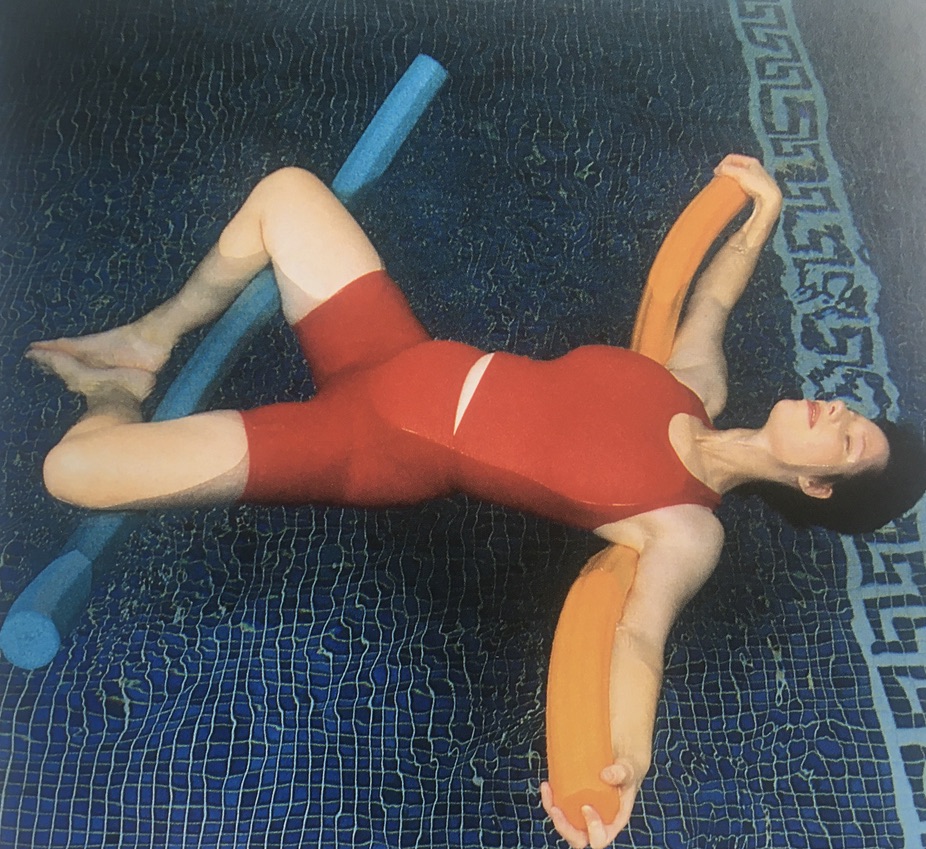
Ideally, in Aqua Yoga the properties of water are best used without using one’s footing. When the body core becomes the centre of gravity and the foundation for body balance, stretches take on a different quality through the whole spine. Side rotations and, if one is sufficiently water confident and other rotations allow fluid transitions from one position to another in seamless succession with the possibility of floating stretches or even upright stretches that can be sustained in moments of stillness.

The creative use of floating aids and, most particularly, of versatile water noodles, allows even non-swimmers to progress rapidly from stabilising themselves away from bars and pool walls, to the point when they can allow the water to support them. Adjustments are then made in function of core balance rather than in response to gravity. Admittedly, further awareness of adjustments to gravity is precisely what Yoga encourages, but I would argue that developing movements from the core, like a sea anemone, or becoming aware of the outreach of extremities, like an octopus, as well as learning to undulate the spine like dolphins or porpoises facilitate the integration of whole body movements even for very unfit people and in some cases for people with reduced mobility

Practising Pawanmuktasana in water offers a wide range of opportunities to gain ownership of body balance and helps to build or rebuild strength in supporting structures surrounding impaired or weak body parts. This results in tremendous personal empowerment beyond physical improvements. Even more than on land, asanas can be done along a continuum ranging from very dynamic and energetic, using extremities like paddles or fins, to gentle self-nurturing restorative practices supported by floating aids. The characteristic that, to me, most differentiates Aqua Yoga from other forms of aquatic exercise is the fact that all movements are done with the body immersed at least to the shoulders and ideally the neck.

Not only the resistance offered by water increases considerably with every inch immersed above waist level but also when we are immersed, we are involving all the muscle chains and the connections between the diaphragm more easily and effectively. When we breathe with our lower jaw and the base of our necks in water, the experience of full Yoga breathing is immediate. A short cut access to bandhas is also created. Pelvic stability is pleasantly associated with more Do’s than Don’t in the water, although care is always required for those affected with hypermobile joints, but the range of motion is far less a concern than on land.

Aqua Yoga is best practised in environments where water temperature ranges from 31 to 34 degrees centigrade. Average swimming pools with water at 29 degrees may require wearing thermal clothing or at least including vigorous movement to keep warm. Water above 34 degrees can be pleasant to dip into but less suitable to move in and unsafe for pregnant women and senior citizens. Showering at regular intervals and drinking water is recommended if the water feels either too cold or too hot. Aqua Yoga sessions are shorter than land-based Yoga classes, with an average time of 45 minutes including several minutes of floating relaxation. This may seem a short time but the flow of an Aqua Yoga class includes a similar range of practices as those covered in a land class over 90 minutes.

Most asanas can be adapted to water but to me this is not the point of Aqua Yoga. If asana can be defined as creating a dynamic motion of the whole body-mind in stillness, then in water this motion is externalised, as it is generated in an environment that is also in motion. Through mindfulness we gain awareness of our rhythms in relation to the water environment. For this reason, excessive use of supports or standing poses in shallow water defeat the purpose. There are aspects of classic Yoga that are not amenable to Aqua Yoga, for instance Shoulderstand and Headstand, except for a diving yogi/ni who can use hydrostatic pressure and control their breath to hold their bodies in underwater inversions. Practising these with Russian fellow water lovers has been a rare treat. As Aqua Yoga teachers, however, our role is more to design adaptations that are true to the essence of Yoga yet accessible to beginners, most particularly for those with injuries or disabilities that prevent them from doing Yoga on land.

As a swimmer I have particularly enjoyed developing practices that take elements of swimming strokes and blend them with Yoga moves and poses. In Aqua Sun Salutes, glides and either simple turns or tumbles at the pool wall link moves on different planes through rotations. Yoga Walks in water, for instance alternating water-adapted Trikonasana and Parivrtta Trikonasana with forward steps, can become glides when feet are lifted from the pool floor. Back-stroke can integrate floating or Supta Baddha Konasana, whether supported by noodles or free floating. These practices are equally enjoyable with supports for non-swimmers to whom they give increasing confidence at the pre-swimming stages and for proficient swimmers who enjoy new stretches associated with their strokes.

Aqua Yoga and Swimming for Life

Various Aqua Yoga teachers have found that their skills helped them teach adults or frightened children.

Madeline Allen (Swimcats)

‘When nervous or non-swimmer adults come to me to learn to swim, I always start with Aqua Yoga. This is to help them get the feel of the water, what it can do for them: support them, create resistance and be their friend. Starting with some Aqua Yoga movements allows the swimmer to learn to breathe and more importantly to relax in the water.

I usually start with them gently walking through the water, maki sure they walk opposite arm to leg. It is amazing how difficult this when you need to think about it. As they become more confident, we lengthen the stride until they have their chin/mouth on or in the water blowing bubbles. This slowly develops into a swimming stroke, over a period of time.

Glides offer opportunities to expand breathing capacity with simultaneous mindfulness and surrender. As the glide is extended the limit of someone’s present ability, there is a choice to resist anc come up or to relax further. When we find the courage to relax, the glide is extended further. This wonderful realisation can transform habitual breath holding and release fear in a simple way, creating body memories that transfer to other aspects of our lives. I have found this practice to be particularly effective in preparation for childbirth or for people affected by PTSD (post-traumatic stress disorder). While free divers now use pranayama to improve their performance, easy and safe applications of aquatic breathing can benefit everyone, including non-swimmers.

Aqua Yoga

Françoise Freedman

Dr Françoise Freedman is the Founder and Director of Birthlight. She is a pioneer, Senior Yoga Teacher, acclaimed writer and lecturer of Social Anthropology at the University of Cambridge. 

Birthlight Aqua yoga congratulations

Thank you so much Sally Lomas and Birthlight for the wonderful course in Aquanatal yoga. Kelly Bromley, Angie McClean and myself had all completed our part 1 Pregnancy Aquayoga, and have all been enjoying helping our pregnant ladies to prepare for the birth of their babies, both emotionally and physically.

Completing our Diplomas felt truly amazing. The course helped to refresh our minds and senses about what we really offer our ladies.

Since teaching the Pregnancy Aquayoga I have really become more aware of the importance of the ‘choice of birth’ that the women wish to have. Many of the women really embrace a ‘natural’ birth, choosing not to have interventions unless necessary, which is really heartwarming. I feel that as a teacher we are helping them to recognise that they, as a parent to be, have this choice and sometimes I have heard of first time parents feeling they are not offered any options and never looked into any other ways to have their baby; so with our position I feel a real responsibility to ensure these women have the information they need to make their own informed choices.

Since teaching the Pregnancy Aquayoga I have really become more aware of the importance of the ‘choice of birth’ that the women wish to have.

Vanessa Hardy
Birthlight Aquanatal Yoga Teacher

Many of the women give us their feedback after their baby has arrived, and the one major part mentioned is the use of the breathing to relax and focus but also the visualisation of the body opening to allow their baby to arrive. The women that have a caesarean birth also say the breathing helped them to relax and prepare for their birth and enjoyed the experience of their arrival even if it was not in their original plan.

How wonderful that births are celebrated and the women can feel emotionally fulfilled. Currently, at Calmababy, we teach 9 classes of Aquayoga a week, with a team of 4 teachers. This is not enough as we always have waiting lists of lovely ladies wanting to come along and enjoy the experience. We write and share all our lesson plans as team, meeting up for feedback from classes, supporting each other and sharing birth celebrations.

I hope to continue to teach for many years to come and look forward to supporting hundreds more pregnant women and hearing many more birth stories.

I can’t wait to begin some postnatal practice now to help mums heal, so they can enjoy their journey into motherhood.

Finally I would like to thank Alison Duff at Calmababy for guiding me onto this path. Your support and knowledge is amazing and the Centre is a very special place for Mummies, Daddies, children – the whole family – to come and enjoy being together and bonding. It is a real pleasure to come to work and to feel we are all helping to make a difference.

— Vanessa Hardy
Birthlight Aquanatal Yoga Teacher

February 2014

aqua natal aquanatal yoga at Birthlight

Birthlight Aqua Yoga

Aqua Yoga for Women’s Health, Pre & Postnatal Aqua Yoga

Birthlight Aqua Yoga

Birthlight was chosen by the swimming company Turtle Tots to provide Aqua Yoga training to all their swimming teachers. The training of Turtle Tums has been a great success and many mums to be are enjoying the benefits of pregnancy aqua yoga, with postnatal water classes to follow soon.

“Birthlight was the obvious aqua-natal yoga training partner for us … “

Gabrielle lixton of tutle tots

Turtle Tots is an award-winning and innovative swimming programme that begins with aqua-natal yoga for mums-to-be and continues with specialist and progressive swimming classes for babies, toddlers and pre-schoolers.

The bespoke Turtle Tums Birthlight training has been developed specifically for Turtle Tots, and courses are delivered by Birthlight’s Director of Training, Sally Lomas. Licensees are then able to teach the popular aqua-natal yoga classes to mums-to-be who are 14 weeks pregnant or more.

Gabrielle Lixton, co-founder of Turtle Tots commented “When we launched Turtle Tots three years ago, Birthlight was the obvious aqua-natal yoga training partner for us, with over 30 years of teaching experience and a unique, positive and supportive approach to pregnancy and childbirth. The feedback we receive from mums-to-be is incredibly positive, and of course they return for our swimming classes after they’ve had their baby!

— Birthlight 2013

Birthlight Aqua Yoga

See More About Birthlight Aqua Yoga

Aqua Yoga for Women’s Health, Pre & Postnatal Aqua Yoga

#oneearthonefamilyonefuture #internationalyogaday2023 #europeanyogafederation #unitedconsciousness

For The International Day of Yoga 2023 we are sharing a film we recently made about Baby Yoga after filming at our Baby Yoga Festival in London at the Museum of the Home. As B. K. S. Iyengar, said “Yoga cultivates the ways of maintaining a balanced attitude in day-to-day life and endows skill in the performance of one’s actions.” Parents, carers and other family members find the experience of baby yoga in a class and then at home an enriching way of being with their baby or toddler and interacting in a respectful, joyfully playful and physical way. This was part of several events and contributions from various countries where Birthlight Baby Yoga is shared and we’re also sharing a film made at a similar event in Bangalore in India- with special thanks to colleagues and friends at the Bangalore Birth Network.

Françoise pioneered Baby Yoga in the 1980’s and explained it very succinctly in the preface to her Baby Yoga book in 2000…

“Yoga with babies is part of my life. It has brought together my practice of yoga and what I learned about parenting from Amazonian forest people, both before and after I became a mother. I first thought of baby yoga as physical play, an expansion of the daily massage and bathtime at home for sedentary living in a northern clime. Sequences developed with each baby, and Luke, my fourth child, was such a happy yoga baby that friends soon joined in what was to become a little practice group. To this day, baby yoga classes keep this friendly atmosphere because doing yoga together induces shared pleasure, relaxation and closeness among those doing it.

“I believe that yoga with babies not only promotes health but also lays a foundation for non-violence and well-being.”

Françoise FREEDMAN

The two books that influenced me the most as a new mother were Jean Liedloff’s The Continuum Concept (1975) and Frédéric Leboyer’s Loving Hands (1977). Both introduce western parents to other traditions in which communication with babies is achieved through physical contact and active handling. Their message corresponded to my experience as a young anthropologist helping to care for my Amazonian sisters’ babies. When I gave birth in England, what I experienced in the hospital was deeply alien, and yoga with babies became a way of creating harmony between these approaches to parenting in my experience. As I gained further understanding of yoga through practising and teaching it, I became motivated to develop baby yoga in a way that was faithful to the core aspects of classic yoga. I believe that yoga with babies not only promotes health but also lays a foundation for non-violence and well-being.”


baby yoga birthlight

15th December 2004 – the day I became a mother and the start of my journey with Birthlight. Officially, my Birthlight journey began a few months before my gorgeous baby girl arrived and I am forever grateful to my excellent friend and former Birthlight colleague, Melanie, for generously offering me a block of free pregnancy yoga classes.

Yes, I was hooked on Birthlight before my baby even arrived. I just loved this circle of like-minded, supportive women all at such a transformational time in their lives. It was positive, comforting, reassuring, nurturing, exciting and wonderful for my changing body as my pregnancy developed.

My daughter was born in my sitting room beside the Christmas tree. The breathing, relaxation, and birthing advice that I had learnt in my Birthlight yoga class was undoubtedly the reason why I was able to deliver her at home. Looking back now, I realise that the essence of Birthlight was present that day; supported by my own mother, the arrival of my daughter into the world was an overwhelming, life-changing yet gentle experience.

In the years that followed Isabelle’s birth, two more gorgeous children arrived, and my yoga path unfolded. All my babies enjoyed baby yoga but in their different ways; the eldest was still and often sat watching, sucking her thumb. The middle baby was fast and furious and the last one just went with the flow, napping in the car between classes!

“Really enjoyed this toddler yoga training with Emma who is a wonderful tutor who guides and explains all elements of the course. My background is in childcare so was a little nervous doing the course but Emma soon put me at ease and I thoroughly enjoyed it.”

— — Participant in Emma’s Toddler Yoga course, September 2021

Fast forward almost 20 years and Birthlight is still an important part of my life. Yoga is too – my week is spent teaching yoga with babies, pre-schoolers, children, teenagers, and grown-ups too! It is a fun and varied role -not without its challenges – and I work hard to balance my work life with the demands of my teenagers and many four-legged family members too.

There have been so many memorable moments over the years – the time when one of my toddlers made a dash and grab for the sugar bowl as it arrived on the tea tray – in preference to the organic, sugar-free snack he had been offered by his mum. Driving to Cambridge to cover a baby yoga class and the horrible realisation that I had forgotten my dolly – had to use the corners of a cushion as arms and legs instead; taking our yoga classes outside following post-covid guidance and the frustration of trying to teach without singing or going near the babies. The unlikely yogi who started her yoga journey in baby yoga classes and – ten years later – still attends my weekly adult evening class. The reward of a full class of babies and the resilience needed when numbers are low, and things get tough; the joy of observing a group of women developing lifelong friendships; the terror of tutoring online in 2020. Seeing a baby on social media from my very first class in 2006 who had passed her driving test and – just this morning – watching another of my own babies leave school.

Teaching is my passion and returning to tutoring in person reminded me how rewarding it can be. Working with a wonderfully diverse group of ladies from Barnsley NHS and Sure Start was pure magic as the power of yoga weaved its way around us over a three-day training in April this year. On day one, they were hesitant and – dare I say it – a little sceptical about their ability to ‘do yoga’ but by the end of our training, they were all hissing like snakes, rolling their spines like cats and falling asleep during short relaxations!

I received a wonderful welcome from the ladies at Arke Sure Start, Northern Ireland, in May. The sun shone for our Baby Yoga training and their warmth was infectious; and we felt that connection to each other through our shared yoga practices and shared experiences. I think it is fair to say that a good number of these ladies will go on to further explore the benefits of yoga for themselves, developing a deeper understanding of their own bodies and in turn sharing the wonders of yoga with the families they work with.

“Excellent course, very interesting and informative. Emma was a fabulous leader, couldn’t recommend enough. Thank you”

— Participant in Emma’s Surestart NI, Training Course, June ’23

I continue to love the circles that we create – circles of women, of friendship, of shared experiences, mutual understanding, quiet compassion. I love the practice, philosophy and application of yoga the Birthlight way – quiet yet aware; soft but still strong; individual and adaptive; present whilst looking forward; open-minded and non-judgemental. I firmly believe that yoga is for everyone – from the massage and gentle moves and holds with the tiniest of babies, to the soft flowing yoga moves adapted for those in their later years.

May yoga the Birthlight way continue to expand spirals of joy for me – and those that surround me – for many years to come.

Emma

Birthlight Tutor in Toddler Yoga, and Baby Nurture Massage & Baby Yoga.

Emma has practised yoga since 2006. She is a qualified Children’s Yoga Teacher, Independent Yoga Network (IYN) Adult Yoga instructor and a BA(QTS) Hons qualified primary school teacher.  More>>


#babyyoga #GermanBabyYoga #BabyYogaGermany

Since 2023, the Baby Yoga training is offered in German for the first time with Johanna. Here you can find out how Johanna came to Birthlight and what fascinates her most about Baby Yoga: 

How did you come to Birthlight Yoga?

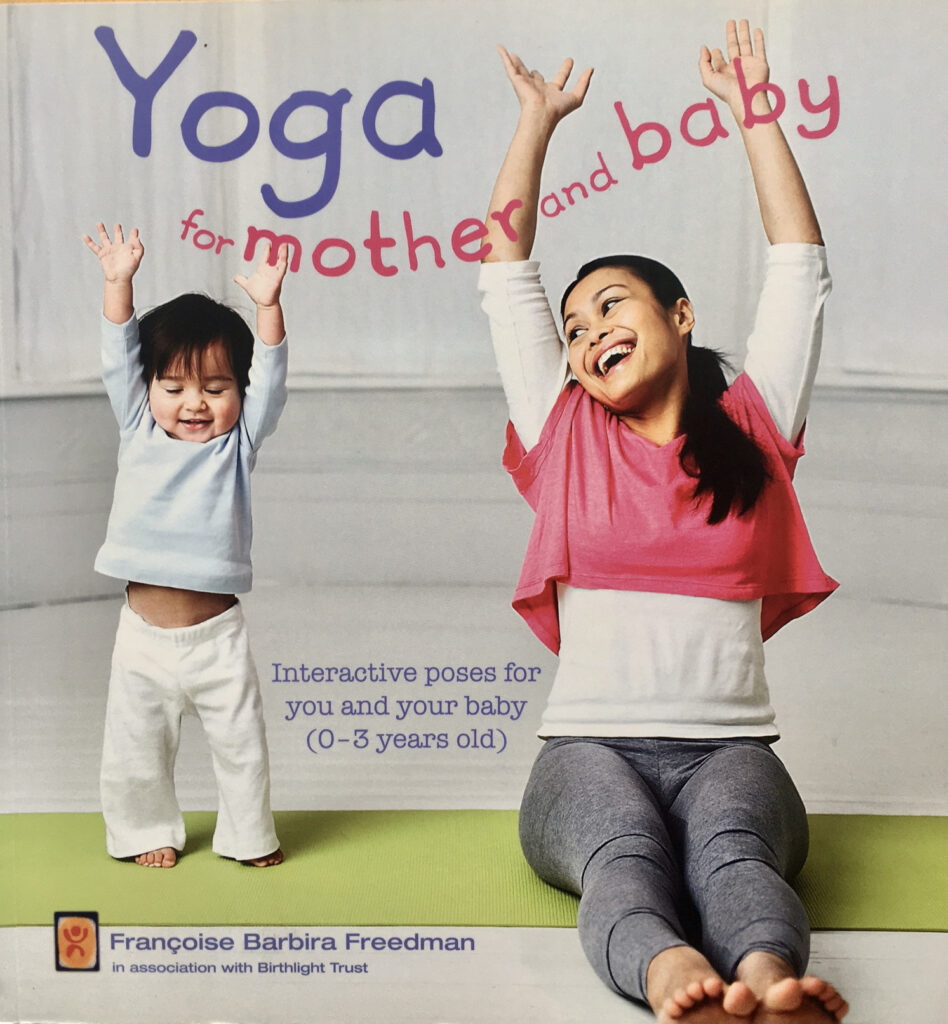
It all started with the book “Yoga for Mother and Baby“ by Francoise Freedman, which I received as a gift from my aunt when my daughter was born. A book with many exercises for young mothers with their babies and toddlers. I liked the exercises and the idea behind the joint practice so much that I started to discover Baby Yoga with my daughter on a regular basis.

From the book “Yoga for Mother and Baby” by Francoise Freedman

Since then, you not only practice with your daughter, but also offer Baby and Toddler Yoga?

While searching for more information about Baby Yoga, I came across the Birthlight training that was fortunately, locally at the time, offered in my hometown. At first I only wanted to do the training in Baby and Toddler Yoga for my own practice, but it turned into a regular course offering in different institutions in the west of Hamburg. And now I am training new Baby Yoga teachers myself. 

What fascinates you most about Baby Yoga?

My focus is always on the interaction between parents or caregivers and the baby. The exercises strengthen the connection between the two and sometimes this becomes almost visible in class. Then my heart goes out and I know that I have achieved something very special with Baby Yoga.

Beyond that, Baby Yoga also offers a lot of movement and relaxation for parents and baby. The motor skills of the babies and the muscles, especially after giving birth are also activated. Baby Yoga offers a nice break from everyday life. 

Yoga for Mother and Baby
Book by Francoise Freedman

Johanna Ayecke

Johanna Ayecke

Birthlight Tutor

Johanna had been practicing yoga for a while when she first came to Birthlight baby yoga in 2015 when her child was born. Fascinated by the asana and the positive effects on bonding and the baby’s physical and mental development, she became a baby yoga teacher in 2018 and toddler yoga teacher the following year (more>>)


Birthlight Baby Yoga hold Knees to chest

Birthlight Baby Yoga Training Online

18/ 19 & 25/26 November 2023 and 20/21 January 2024 (10.30 – 15.00)


Seit 2023 wird die Baby Yoga Ausbildung erstmals mit Johanna in deutscher Sprache angeboten. Hier erfahrt ihr, wie Johanna zu Birthlight gekommen ist und was sie am meisten an Baby Yoga fasziniert: 

Wie bist du zu Birthlight Yoga gekommen?

Alles begann mit dem Buch „Yoga für Mütter und Babys“ von Francoise Freedman, das ich von meiner Tante zur Geburt meiner Tochter geschenkt bekam. Ein Buch mit vielen Übungen für junge Mütter mit ihren Babys und Kleinkindern. Die Übungen und die Idee hinter der gemeinsamen Praxis haben mir so gut gefallen, dass ich begonnen habe mit meiner Tochter regelmäßig Baby Yoga zu entdecken.

From the book “Yoga for Mother and Baby” by Francoise Freedman

Seitdem übst du nicht nur mit deiner Tochter, sondern bietest auch Baby und Toddler Yoga an?

Bei der Suche nach mehr Informationen über Baby Yoga stieß ich auf die Birthlight Ausbildung, die glücklicherweise, damals vor Ort, in meiner Heimatstadt angeboten wurde. Erst wollte ich die Ausbildung in Baby und Toddler Yoga nur für die eigene Praxis absolvieren, aber daraus wurde dann doch ein regelmäßiges Kursangebot in unterschiedlichen Einrichtungen im Hamburger Westen. Und nun bilde ich selber neue Baby Yoga Lehrer aus. 

Was fasziniert dich beim Baby Yoga besonders?

Mein Fokus liegt immer auf der Interaktion zwischen Eltern oder Betreuer·in und dem Baby. Die Übungen stärken die Verbindung der beiden und diese wird in der Klasse manchmal fast schon sichtbar. Dann geht mein Herz auf und ich weiß, dass ich mit Baby Yoga etwas ganz Besonderes erreicht habe.

Darüber hinaus bietet Baby Yoga aber auch viele Bewegungs- und Entspannungsangebote für Eltern und Baby. Die Motorik der Babys und die Muskeln, gerade nach der Geburt werden zudem aktiviert. Baby Yoga bietet eine schöne Auszeit vom Alltag. 

Mehr über Johanna erfährt du hier. 

Johanna Ayecke

Johanna Ayecke

Birthlight Tutor

Johanna had been practicing yoga for a while when she first came to Birthlight baby yoga in 2015 when her child was born. Fascinated by the asana and the positive effects on bonding and the baby’s physical and mental development, she became a baby yoga teacher in 2018 and toddler yoga teacher the following year (more>>)


Birthlight Baby Yoga hold Knees to chest

Die nächste Baby Yoga-Ausbildung 2023/24 Online

Teil 1: 18./19. November, 25./26. November 2023 & Teil 2: 20./21. Januar 2024 (10.30-15.00 Uhr)

mom cradling baby

#BabyCommunicationWeek23 #AmazedByBabies #brazeltonuk

Friday – Brazelton Baby Communication Week: Baby Care as Unconditional Love

Parenting from a yoga perspective: a school of unconditional love. There is always more to learn, understand and give. Rewards abound along the way.

The nature/nurture, genes/environment debates have evolved with neuroscientific research and epigenetics yet remain inconclusive. Identical twins express different genes in the same family setting. Thankfully milestones are less rigidly set, with more flexibility about when and how babies negotiate their relationship to gravity in their first year.

From birth, even with pre-term babies, ‘positive touch’ and interactive play can help parents to elucidate whether their babies are asking for containment (swaddling, baby wearing, gentle handling) or free movement (all body moves, blanket kicking, strong pedalling). This may change at some points, but basic patterns are likely to last. Focused interaction in Infant massage and yoga also makes it possible to identify newborns’ dominant sensory orientation, their likes, and dislikes. Some babies respond more to human voices, others to visual stimuli. In eagerness to follow videos and books, caregivers may not notice that the sensory stimulation they offer is either too strong -frightening- or too weak -boring. Like Goldilocks, infants recognise what’s ‘just right’ for them.

Push & Counterpush


Do babies fancy a foot massage or invite a vigorous game of push-counter-push with their strong kicks? (There can be a delay in the counter-push response. It may take successive tries over a few days for a game to develop).

Two yoga principles can help parents to the ‘science of (early) parenting’.

The first principle is acceptance, inevitably coupled with self-acceptance. The postpartum is a time of fear to fail, uncertainty, and confusion. Births are rarely perfect, and ‘dream babies’ a deflated illusion. Even in the throes of postnatal depression, let’s turn to the power of embodied practice to reflect inaccessible truths. Simple gestures can express a connection that’s not yet there. With repetition, connection arises. Babies feel welcome fully as individuals, whatever the circumstances of their parents’ births or their own.

The principle of non-violence implies finding one’s own anchor to preserve inner peace even when challenged to the extreme by a baby’s incomprehensible demands.

As the Scottish old lullaby goes, there are days when mothers would willingly sell their bairns for a pound of tea. Acknowledging that this is a fact of life, not all mothers can find it in them to sing but the mudra of the elephant’s strength (Ganesha mudra) can help them access inner strength.

Heart to Baby

Touch Meditation

Ganesha Mudra

Comparison and fear not to do things right are a bane of early parenthood. Post Covid, circles of parents and babies in communities can help develop awareness of how both different and similar babies are across cultures. In Parent/baby yoga groups, watching other parents and receiving feedback provide antidotes to isolation. Face to face encounters with other babies matter for early awareness of othersand for parents to bravely re-affirm their commitment to ‘their’ babies when they go back home.

Baby Yoga Circle


1 Bond, Cherry 2003. Positive Touch and Massage in the Neonatal Unit: British approach. Seminars in
Neonatology 7(6):477-86.

2 The Touchpoints identified by Berry Brazelton are invaluable for caregivers throughout the early years.
www.brazeltontouchpoints.org
3 Margot Sunderland. 2016. The Science of Parenting. Dorling Kindersley.
4 Tara Brach 2021. Trusting the Gold: Uncovering your Natural Goodness. Sounds True Publishers.