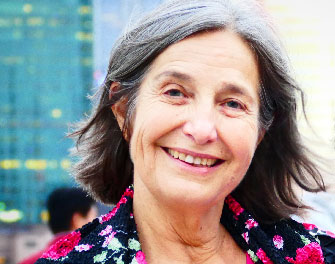
Francoise Freedman talks to “Green Parent” magazine regarding what’s different about Birthlight Baby Swimming!
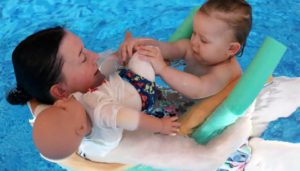
Baby baths – every parent knows about baby baths. We do them on a regular basis! But Francoise Freedman in her article in “Green Parent” magazine shows us that bathtime can be more than just about getting baby clean. Birthlight Baby Swimming is a progressive introduction to movement in the water, with a focus on the connection and communication between parents and their babies. The foundations set in home-baths with ‘relaxed support’ in our Aquatic Nurture programme. The ways in which Amazonian toddlers become buoyant and dive effortlessly have been a lasting inspiration to give babies the lead rather than pretend to ‘teach’ them to swim.

The bath is calming, stimulating and multisensory all at once. But most often, the ways in which we handle newborns shapes the bath experience. With responsive handling, daily baths can become shared moments of pleasure that enhance the early weeks and months for parents and babies together. The Birthlight Aquatic Nurture short course responds to the need of restoring the enjoyable dimension of newborns’ baths for new families at home. Baby bathing used to be -and sometimes still is-, part of hospital maternity care. Our aim is to empower parents to bathe their newborns confidently at home in their mutual space, rhythm, timing and intuition. In the process, parents come to appreciate what Marshall Klaus called ‘the amazing talents of the newborn’. Based on teaching the Birthlight simple practices over many years, we know that with minimal guidance, new mums and dads can lose their initial fears and gain confidence to engage with their newborns’ bath experience. Bonding, this magical connection, is facilitated. The cascade of benefits to parents and babies from happy baths in the early postnatal period cannot be underestimated, particularly at this time of restricted support due to the pandemic.
For those interested, the full article appears in the May issue of the Green Parent magazine.
Have a look at our full course description for Birthlight Baby Swimming

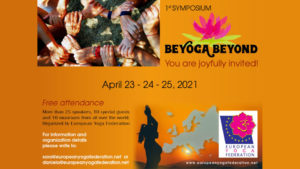
Françoise Freedman will be speaking at the BeYogaBeyond Symposium running from 23- 25th April 2021. The Symposium is organised by the European Yoga Federation and will be the first symposium held by them. The focus of the meeting, featuring over 25 speakers, 10 special guests and 10 musicians, is to gather a diverse collection of yoga enthusiasts and experts for an online symposium. Dr. Freedman will be speaking during the 9:15am – 10am slot on Sunday, 25th April . See the symposium’s website for more info about how you can join the online Symposium and for a programme of the Symposium. Attendance is free.
Dr. Francoise Freedman, Presentation, 9:15am

Together with 899 other people, I registered to hear the findings of the Report on the ‘Maternal Pandemic’ in an event jointly organised by the Centre for Mental Health and the Maternal Mental Health Alliance and funded by Comic Relief. A ‘bitter-sweet’ day, as the Chair of MMHA put it. Bitter, because the Report highlighted the damaging and unequal impact of the pandemic on maternal mental health. Sweet, due the potential for positive action in the UK if lessons from COVID-19 about giving priority to human wellbeing in society are followed, over and above statutory services that are likely to remain deficient after years of cuts.

Dr Alain Gregoire, president of MMHA and long-standing powerful advocate of prioritising maternal mental health within health care policies, pointed to the need for third sector support (such as that of Health Visiting and grassroots organisations) to fill the gap that the private sector could not fill. While the fact that new parents missed out on the normalisation of their worries – generally done through informal contacts with friends, family members and ‘baby groups’ – was reported, it was not clear whether digital provision could compensate for underestimated vulnerabilities. The potential impact of the pandemic on infants is yet unknown.
Clearly, community-based support can contribute to a more inclusive user-led service that will benefit all women more equally including those in racialised communities.
To make this work, some steps were identified. Janet Fyle from RCM spoke eloquently about the personal health cost of the pandemic to midwives and the need to impart them with adequate knowledge about referral. Helping women to report about their issues, particularly when there are language barriers, is key. Thresholds to specialised statutory care are complex to navigate.
In the jigsaw of third
sector resources, we
need to collaborate better with other organisations
Catherine Cho, from Action on Postpartum Psychosis and author of ‘Inferno’, brought her direct lived experience to the heart of this event. Pondering on how worse this could have been during lockdown, she reminded everyone that ‘a kind word is never forgotten’.
Digital support is likely to continue in tandem with face-to-face grassroots services, but Nathalie Nuttall from the Hearts & Minds Partnership identified a need for safeguarding guidelines to protect women and facilitate access to specialised care if required. More knowledge and referral skills something need to be in place for Perinatal or Parents & Babies teachers within Birthlight. In the ecology of maternity services, Birthlight has a place in offering Continuity of Support over the Primal Continuum – even as we work to promote a better integrated Continuity of Care that midwives have long shown to produce best outcomes. In the jigsaw of third sector resources, we need to collaborate better with other organisations and the Voluntary Sector and to articulate our value and services rendered.
COVID has driven home three lessons we already knew but needed to be reminded of. As Alain Gregoire put them in his ever-positive turns of phrase: human wellbeing prevails over money, early childhood prevails over school years for long-term health, parents and families need support to create a health society. “This is the moment to grasp IT!” We are fortunate in the UK to have the best infrastructure to deliver a fantastic service for the next generation. Perinatal mental illness is a wide spectrum: the differences that we as Birthlight teachers can make during pregnancy and in the weeks, months and years following birth cannot be easily quantified when we work preventively but they are real and long-lasting.


Network Yoga Therapy, founded by Anneke Sips who is a Birthlight teacher in the Netherlands trained in Perinatal Yoga, Postnatal Yoga and Well Woman Yoga.
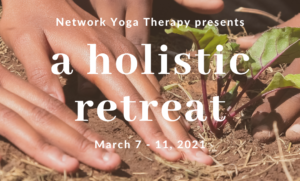
Yoga Therapy Network run by Anneke Sips recently hosted an online retreat around the theme of “a holistic approach towards mental wellness”. The catchline was “Personal evolution in the context of a changing world: 5 days of more silence, more undoing, more regeneration, more connecting, more living”. Anneke gathered together a cadre of worldwide speakers on various topics.
From the retreat’s brief:

We are facing a massive disillusionment with existing political systems, struggling with the overwhelming pressure of modern life and witnessing the rise of a technology-laden existence, where loneliness, chronic disease and mental illness grows.
We live in a world full of information and we starve for wisdom.
Our mental health is affected by many aspects of life: mind and body, food, lifestyle, relationships, work environment and stress. The climate and more. These factors cannot be considered separately. Mental wellness and health requires a holistic approach.
When we start to understand the earth, starting with soil, we observe how nature behaves and we learn to observe ourselves and our role in this, it doesn’t only offers simple solutions to (sometimes complex) issues, it brings hope for the future.
The yoga method is an approach that supports how we walk the earth. Yoga is not just about asana (postures), it is essential to keep the bigger picture (the broader landscape) in mind. It is holistic.
Mental well-being requires ‘nourishing’ skills for self-care from a holistic framework too. This framework helps us to stay healthy in any recovery process, it nourishes our self-healing ability, it makes minimal dependence and helps to increase self-leadership.
In this retreat, we look at the universal principles of wellbeing, and then at our own inner and outer landscapes. You will be offered tools for un-doing, regenerating, evolving and growth. You will be inspired to turn inward to re-discover your own wisdom.
A team of doctors, scientists and yoga professionals are here to meet you!
Click below …

The art of teaching with dolls

As Birthlight teachers, you probably recall falling in love with your doll as you named it and practised with it on your first courses. We all have funny stories about our dolls. I cannot forget the worried face of a passenger who thought I was going to lock my baby up in a plane’s luggage compartment. I had just taught a Baby Yoga course and was handling my doll in a caring way that confused this man. In some training courses, participants do not always have dolls handy. The strangest – not ‘cute’- animal soft toys and moppets, such as a stuffed wild boar, or a plastic lobster, do not seem to frighten babies when they are used as dolls.
The strangest – not “cute” – animal soft toys and moppets … do not seem to frighten babies when they are used as dolls
– Francoise Freedman

Where to get the best teaching dolls?
For teaching baby massage and baby yoga, Birthlight recommends Touchneeds’ 60 cm dolls modelled on 3-4 months real-size babies. The semi-weighted version (1.6 kg) handles well for demonstrating moves and is more practical than the full weighted version (4.2 kg). Several ethnicities are available (Afro-Caribbean, Asian, Caucasian, East Asian), all attractive. The dolls costs £69 + shipping, which is not cheap, but compared to alternatives from either toy dolls or teaching dolls suppliers, they are good value.
New practical, quick drying and hardwearing dolls from China
For some time, we have been aware that the aquatic dolls supplied by Touchneeds were not designed to meet the needs of baby swimming teachers: the fabric disintegrated, the joints
.. our Birthlight tutor Judy Kou worked on designing an alternative doll
opened and were difficult to fix, the dolls took a very long time to dry up and it was awkward to transport them wet in bags. Lifetime was often quite short. We tried to find solutions with Touchneeds and their Spanish manufacturers, but none were feasible. Meanwhile our Birthlight tutor Judy Kou (Taiwan and China) worked on designing an alternative doll, which we tested and found easy to use, practical and attractive. The doll’s face, neither East Asian nor Caucasian, is perhaps not as expressive as the faces of Touchneeds dolls but the practical advantages of its original design (quick tumble drying, no seams and hardwearing materials for intensive pool use) make it a preferable choice.
Judy’s new aquatic teaching dolls can be ordered directly from European Representative Nicole Sauseng, Birthlight tutor/course organiser in Austria. Nicole posts orders within Europe.
The doll’s cost is £68 +postage. http://www.aqua-academy.at/swim/

Over the last few months Birthlight has been enjoying the benefits of online courses. Due to the lockdown Birthlight found itself in a position where it needed to offer courses but without the ability to meet face to face. For some courses this was easier than others. The land courses seem to be more conducive to Zoom-based courses. But we even managed to do some blended Aqua courses. We found that these courses added some surprising benefits for attendees.

“Having all the resources to look back over for students has been a great advantage to learning the material”
Firstly, online courses can come with the benefit of reduced costs for attendees. The normal costs that come along with face-to-face courses, for example, accomadation, and associated travel expenses were able to be saved. This can be a considerable savings especially if you were to have to travel a great distance for a course.
I enjoyed the online experience, having the breakout rooms and rotation of groups gave us the possibility to get to know each other, there were moments of sharing that really build a nice group dynamics.
Another benefit came with being able to invite a global audience. The nice thing about Zoom and similar technologies is that it is worldwide and can accomodate those in any location as long as the time of the course was conducive to attending. This allowed us to expand our reach globally to others who may not otherwise be able to attend such courses.
Thirdly, we all benefit from having others from different cultures attending the courses. This allows for sharing between cultures and nationalities which we normally did not have on other courses. We can all learn from how things may be done differently in different cultures.
Lastly, as Kirsteen Ruffell, our course coordinator, points out “Having all the resources to look back over for students has been a great advantage to learning the material”. The LearnDash course material being online allows the students to revisit any material they want a refresher on or that they may have missed initially. It also allows people who have work commitments to take the course and then if they miss one small part due to not being able to be there they can go back and watch the video of that part.
But the proof is in the pudding. Many of our students have mentioned themselves of the advantages to themselves of the online courses. For example, Faye from the UK said, “I highly recommend the baby yoga and massage course. It was very in-depth and taught by a wonderful teacher who clearly has so much knowledge and experience. The online materials to support learning are brilliant, and you are able to access this after the live course dates are over, meaning you can continue to build on what you have learnt during the live sessions. I highly recommend this course and Birthlight as a course provider”.

Spot interview with Avni Trivedi
Avni Trivedi
Osteopath & Zero Balancer
Conscious wellness in a Modern World
@avnitouch
www.avni-touch.com
07961 123 719
What motivated you to choose applications of osteopathy to the reproductive process, qualifying as a paediatric osteopath?
I’ve always been interested in health in a preventative and holistic sense. When you’re treating a baby or small child, you’re working with their full potential, rather than just fixing issues when things have gone wrong. Treating babies requires a lot of deep listening, because they aren’t verbally telling you what’s going on. It also requires heightened palpatory skills, as their bodies are much more fluid than adults are. And the mother-baby dyad is endlessly fascinating to me. When you treat one, you influence the other. A baby that is more settled after treatment enables the parents to breathe deeper and feel more relaxed.
When learning about treating during pregnancy, I felt very limited by what I was told I could and couldn’t do. It felt to me as if there was a lot of fear around treating at a time that I believe is sacred and yet a regular, natural stage of life. I sought out teachers who helped me to be confident to treat in the first trimester and ‘complicated’ cases such as gestational diabetes, twins or breech presentation. I’m focused on the woman at the centre of her experience, rather than reduced to a list of medical labels and diagnoses.
I had a wonderful experience working as a newly qualified osteopath within a complementary health centre, where women were supported with osteopathy, acupuncture, reflexology and hypnotherapy for fertility, pregnancy and postpartum. Being part of a team of like-minded colleagues felt like the fullest approach to physical, emotional and mental support.
We met at the Yoga for Maternity Professionals at the Whittington Hospital in London, you were already a doula at the time, as well as editing a journal for doulas. What did you know about Birthlight? what was your impression of the training course?
I knew of Birthlight as an international organisation and felt aligned to the values. I’d heard about Francoise and am always drawn to teachers who have a sharp intellect and work in an integrated way with the body and emotions. I’ve always enjoyed the intersection of different modalities and approaches such as yoga, dance, bodywork and spirituality.
Her whole demeanor changed in moments …
The course was powerful, experiential and inspirational. I loved being in circle alongside so many professionals, developing deep trust. It didn’t matter about the professional titles: it was a warm and welcoming space for all. And developing a common language and aligned vision even though we each have different areas of expertise felt simple and a model for what maternity care can be like. I think it’s important for practitioners to have had that experience of safety and calm in order to pass it on to their clients. I remember a pregnant senior house officer coming to join us as a model for a practical session. Day to day, she would have been witnessing emergency situations and the session was palpable in the way that she was guided to be in calm and relaxed in her body. Her whole demeanour changed in moments. It felt important, not only because she was pregnant, but so that birth professionals can work through traumatic situations that they encounter.
You have so many strings to your professional bow, Avni. Can you say a few words about your trajectory from being an osteopath working with pregnant women and with babies to a much more integrated style of practice?
In some ways I’ve followed my curiosity and passions. I’ve also pursued further trainings when I’ve felt that the tools I had weren’t enough. For example, I was already studying for a MSc in paediatric osteopathy and learning the importance of the birth story. It made me question why so many of the babies we treated had had difficult births after what seemed like straightforward pregnancies. I decided to become a birth doula after that. Non-linear movement is a simple but deep tool that I can teach women to release stress, emotions and tension, e.g during IVF treatment, pregnancy, and dealing with breastfeeding challenges. I use that approach a lot working with clients who have experienced loss, such as miscarriage or a breakup. I’ve been curious about ways that people can learn to ground, relax and process when they aren’t in the treatment room.
Recently I’ve completed a women’s health coaching certification based on functional medicine and I plan to integrate that approach to help clients change behaviour to improve their health, especially for menstrual issues such as painful periods or menopausal symptoms. Like doulaing, it’s all about trusting that the woman knows what’s best for her and giving her space to express it.
Do you still see touch as something that is at the core of this integrated practice or has non-linear movement, that you teach taken more importance in your work recently? How would you describe your perception of merging East and West in your work?
We spend too much time using our visual sense,
when our felt senses have so much wisdom to offer
I see touch as something that’s so fundamental, especially because it’s our first sense and how we learn to explore the world around us. Much as I respect the skills it takes to develop as a practitioner, I’m increasingly interested in touch as self-connection and family bonding rather than something that is reserved for the practitioner-client dynamic. When you love someone, touch is an effortless way of being connected to them. Touch is something that should be part of our everyday self-care, such as a hand on the belly to feel settled, massaging the jaw to relieve stress or the feet to prepare for a good night’s sleep. With the distraction of screens it’s even more important to promote touch to keep the connection within couples and families, especially in simple ways such as hand-holding and hugs. We spend too much time using our visual sense, when our felt senses have so much wisdom to offer.
Non-Linear Movement is something I use to ‘unwind’ the stories I’m told and the things I feel in the treatment room. I’ve worked 1:1 as an osteopath, but non-linear enables me to hold space for groups, and community is so needed right now in the world. There’s a common thread between touch and movement in that they both enable us to be affected deeply. It’s that depth of engagement and receptivity that I enjoy engaging with.
Your mission statement is ‘wellness with ease’, can you say something about this?
I subscribe to a slower, gentler approach to healthcare. The firefighting method of treating doesn’t appeal to me, because you’re only ever getting people unstuck and out of pain, rather than addressing and healing from the root cause of issues or preventing them from happening entirely. I’m a big fan of the tiny actions that people take each day to connect with themselves. pushing doesn’t help. And moving with ease with the natural cycles of the day, menses and seasons rather than pushing or working too hard feels like an important aspect of woman-centred care as we are cyclical.
One of the main drawbacks of the western-style -now global- maternity care is fragmentation and the lack of a real therapeutic relationship between women and care teams. How do you address this in your work by focusing on a ‘therapeutic bond’ through pregnancy and beyond?
It’s so difficult for maternity professionals and the women they serve as there’s a lack of continuity of care. I’m lucky that there’s a natural intimacy that comes from being hands-on and having time to talk and listen to clients. It’s more of a dance than the practitioner ‘doing something’ to the client. The therapeutic bond is vital because you can’t work in connection with people without being affected by the situation, be it a difficult birth story or the devastation of baby loss. As a practitioner you need to know how your presence influences your clients. Being more grounded and present enables you to hold space and in turn helps clients to tune inwards and connect with themselves and their baby. The heart-centred aspect of care isn’t talked about in the current climate in maternity care.
Thank you so much, with love from all of us at Birthlight.

In 2021, Birthlight will continue working with Amurtel, an NGO that uniquely focuses on the wellbeing of refugee pregnant women and mothers in Greece. Françoise gave a training there last year to empower community leaders in refugee camps to be able to support other women. Next year we would like to provide some online training for staff members who support pregnant women and translate some of our booklets on Baby Massage, and Postnatal recovery into French, Farsi and Arabic to distribute to women in refugee camps.
Didi who directs Amurtel in Greece outlines the work they do.
Last year, AMURTEL welcomed Francoise to give a mother-baby yoga training with staff and refugee women. When Grace, a woman from Cameroon, came by after the training to pick up her certificate of completion, her reaction was a clear example of how such work empowers women. She looked at the certificate, she looked at me, then again back to the certificate with her eyes widening by the moment. “Oh my God! Look at this! It’s beautiful!” I thought she would break into tears and I wondered if she had ever been acknowledged for any achievement before. A single mother whose baby was a result of sexual violence, struggling to survive in a new country, she kept repeating over and over again to thank Francoise for the course. The impact the training had on her sense of self was immeasurable.
… we have seen that programs such as trainings, educational support groups and personalized care during pregnancy and infancy empower the Middle Eastern and African mothers by allowing them to gain knowledge as well as overcome isolation by finding community.
Since we began working with refugee and migrant women in 2015, we have seen that programs such as trainings, educational support groups and personalized care during pregnancy and infancy empower the Middle Eastern and African mothers by allowing them to gain knowledge as well as overcome isolation by finding community.
Sexual reproductive health and gender based violence are two areas that affect almost all the women coming to AMURTEL and in which we see a lot of change. For most Middle Eastern women, primarily from Afghanistan and Syria with fewer from Iraq and Iran, it is huge to overcome the intense taboos and shame of even saying aloud words relating to female body parts, let alone discussing any of it. It is not uncommon for them to have no idea where their menstrual blood comes from or how fertilization occurs, as two examples among many. This is particularly true for Afghan women, where illiteracy and lack of education are high. Most often very shy and embarrassed in the beginning, they soon enjoy learning female anatomy and physiology and the menstrual cycle, moving through related topics to finally ending with contraception and family spacing. Following this are discussions on women’s rights, social gender norms, what constitutes violence and where they can get help if needed.
Nasrin, an Afghan woman from a small village, admitted that the idea of a woman having such rights had never occurred to her. She and her friends have begun talking about this amongst themselves and have begun standing up to their husbands. Engaged at 15 and married at 17 to her cousin whom she did not love but was forced to marry, Nasrin says the beatings that she received every day of her life from her husband have begun to decrease. She feels hopeful that with time and further acclimation into European society, they will decrease even more.

Their stories are many. A great number of African women, from more than ten different countries with the current majority being French speakers from Cameroon and DR Congo, report feeling safe in Greece, that the violence they endured in their native countries was everywhere: in the home, the streets and the workplace. Many of our African women are single mothers whose children are the results of sexual violence or survival sex.
Afryea, a Ghanian mother of one, was sold as a teenager into a rich man’s house, used as a servant and sex slave and had her first child taken away at birth, most probably to be sold or enslaved. She does not know what happened to him. Managing to escape with the help of a man who became her husband, they spent years en route and finally arrived in Athens, where they’ve settled and had a child. Afryea emphatically states that the hardships she’s been through to get to Greece have all been worth it because what she lived through will never happen here to her daughter.
The stories of the Middle Eastern women are different and tend to center around the theme of having been homebound with their lives controlled by male family members. In Afghanistan, for example, a woman’s name is never uttered in public, not written on documents including the wedding invitation when she marries, medical prescriptions or hospital records when ill, not even on her death certificate or tombstone. She is always referred to as the wife, daughter, sister or mother of male relatives and that includes when speaking directly to her. In parts of the country, especially villages, women never leave the house without a male guardian. Thus, many women’s first step is to become independent little by little. Some proudly declare that they move around Athens on their own or with their children without having to have husbands or guardians with them while others say they are still not allowed to do that. A few tell that they no longer ask their husband’s permission every time they go out. Many want to study, an option not previously open to them. They say they have become stronger and speak their minds more readily. Shirin, a Syrian mother of 3, thinks she is one of the lucky ones because, “I voice my opinions with my husband in ways I did not do in Syria and my husband listens in ways he didn’t in Syria.”
Maryam, a 24 year old with one child, divulged in a group conversation that she wanted two or three children but her husband wanted seven. She and the other women all laughed and nodded their heads while one woman came out with the suggestion to let him take a second wife. That way, Maryam and her children would still be supported but she would not be forced to have more. Some of the women immediately agreed that this was the sensible solution while others, who were first wives and did not like having second or third wives in the family, disagreed. Maryam retorted as a strong, idealistic and hopeful 24 year old that she did not want her husband to marry more wives. She said now that she was in Europe and she knew her rights, she would ask him not to, begging, screaming, crying if necessary. Maryam went on to admit that in Afghanistan, in this situation she would never have said a word, despite how painful it would be. Of course, she and the others all agreed that if he decided to do it, she could not stop him. It was his choice ultimately, not hers. In the end, the fact that polygamy is outlawed in Europe gives Maryam a feeling of safety but not surety.
One thing that almost all our women have in common, regardless of where they hail from, is pride in motherhood. Being a mother is a primary personal and social role which defines them, both individually and in society. Most of our women agree that they were raised mainly to be mothers and this brings them much joy and a sense of fulfillment. The shared commonality of motherhood at AMURTEL allows them to gradually open up and be willing to discuss, or at least think about, a variety of topics, even sensitive ones such as sexuality, gender based cultural roles, abuse, and human rights.
This is possible due almost totally to support from individuals like yourselves.
At AMURTEL, we are committed to safe and empowered mothering from pregnancy through 18 months after birth. We aim to strengthen mothering skills by creating a safe women’s space within which to explore both the cultural similarities as well as the differences in African, Middle Eastern and European parenting. We strive to help mothers feel validated in their traditional customs while simultaneously introducing evidence-based ideas.
Our aim and hope at AMURTEL is that women will become stronger through knowledge, making friends and finding themselves part of a community of mothers. We believe everyone has the right and the capacity to maintain or regain their health, well-being, dignity and self-determination.
This is possible due almost totally to support from individuals like yourselves. The charity donation, the knitted infant hats and blankets and the diapers/nappies we’ve received from Newcomers in the past have all been part of how we manage to continue with the work. Once again, we thank you for your caring!
О поддержке женщин (Birthlight) (Russian Version)
В 2021 году Бёрслайт продолжит сотрудничество с Amurtel, неправительственной организацией, которая специализируется исключительно на благополучии беременных женщин и матерей из числа беженцев в Греции. В прошлом году Франсуаза провела там тренинг, чтобы дать лидерам общин в лагерях беженцев возможность оказывать поддержку другим женщинам. В следующем году мы хотели бы провести онлайн-обучение для сотрудников, которые поддерживают беременных женщин, и перевести некоторые из наших буклетов по Детскому массажу и Постнатальному восстановлению на французский, фарси и арабский языки для распространения среди женщин в лагерях беженцев.
Диди, которая руководит компанией Amurtel в Греции, рассказывает о своей работе.
В прошлом году AMURTEL пригласил Франсуазу провести тренинг по йоге для мамы и малыша с персоналом и женщинами-беженками. Когда Грейс, женщина из Камеруна, пришла после тренинга, чтобы забрать свой сертификат об окончании, ее реакция была ярким примером того, как такая работа расширяет возможности женщин. Она посмотрела на аттестат, она посмотрела на меня, потом снова на аттестат, и ее глаза расширились в этот момент. “Боже мой! Посмотри на это! Это прекрасно!” Я думал, что она расплачется, и задавалась вопросом, признавали ли ее когда-нибудь за какое-либо достижение раньше. Мать-одиночка, чей ребенок явился результатом сексуального насилия, изо всех сил пытаясь выжить в новой стране, она снова и снова повторяла благодарность Франсуазе за курс. Влияние тренинга на ее самоощущение было неизмеримо.
… Мы увидели, что такие программы, как тренинги, образовательные группы поддержки и индивидуальный уход во время беременности и младенчества, расширяют возможности матерей Ближнего Востока и Африки, позволяя им получать знания, а также преодолевать изоляцию, находя сообщества.
С тех пор, как мы начали работать с женщинами-беженцами и женщинами-мигрантами в 2015 году, мы увидели, что такие программы, как тренинги, образовательные группы поддержки и индивидуальная забота во время беременности и младенчества, расширяют возможности матерей Ближнего Востока и Африки, позволяя им получать знания, а также преодолевать изоляцию путем поиска сообщества.
Сексуальное репродуктивное здоровье и насилие по половому признаку – это две области, которые затрагивают почти всех женщин, приезжающих в AMURTEL, и в которых мы видим большие изменения. Для большинства женщин Ближнего Востока, в первую очередь из Афганистана и Сирии и меньшего числа из Ирака и Ирана, очень важно преодолеть жесткие табу и стыд даже при произнесении вслух слов, касающихся женских частей тела, не говоря уже об их обсуждении. Они нередко не знают, откуда берется их менструальная кровь или как происходит оплодотворение, и это только два примера из многих. Это особенно касается афганских женщин, у которых высокий уровень неграмотности и необразованности. Чаще всего вначале они очень пугаются и смущаются, но вскоре начинают получать удовольствие от изучения женской анатомии и физиологии, а также менструального цикла, продвигаясь по смежным темам и, наконец, заканчивая контрацепцией и планированием семьи. Затем следует обсуждение прав женщин, социальных гендерных норм, того, что представляет собой насилие и где они могут получить помощь в случае необходимости.
Насрин, афганская женщина из небольшой деревни, призналась, что мысль о том, что женщина имеет такие права, никогда не приходила ей в голову. Она и ее подруги начали говорить об этом между собой и начали противостоять своим мужьям. Насрин, помолвленная в 15 лет и вышедшая замуж в 17 лет за своего двоюродного брата, которого она не любила, но была вынуждена выйти замуж, теперь Насрин говорит, что количество избиений, которые она получала каждый день своей жизни от мужа, начало уменьшаться. Она надеется, что со временем и дальнейшей ассимиляцией в европейском обществе оно еще больше уменьшатся.

Их историй множество. Большое количество африканских женщин из более чем десяти разных стран, большинство из которых в настоящее время составляют франкоговорящие жители Камеруна и Демократической Республики Конго, сообщают, что чувствуют себя в безопасности в Греции, что насилие, которому они подверглись в своих родных странах, было повсюду: в доме, на улице. и на рабочем местм. Многие из наших африканских женщин – матери-одиночки, чьи дети являются результатом сексуального насилия или секса для выживания.
Африя из Ганы, мать одного ребенка, была продана подростком в дом богатого человека, использовалась в качестве слуги и сексуальной рабыни, а ее первого ребенка забрали при рождении, скорее всего, для продажи или порабощения. Она не знает, что с ним случилось. Им удалось бежать с помощью мужчины, который стал ее мужем, они провели годы в пути и наконец прибыли в Афины, где они поселились и родили ребенка. Африя решительно заявляет, что все трудности, через которые она прошла, чтобы попасть в Грецию, того стоили, потому что то, что она пережила, никогда не случится здесь с ее дочерью.
Истории ближневосточных женщин различны и, как правило, сосредоточены на том, что они были привязаны к дому, и их жизнь контролировалась членами семьи мужского пола. В Афганистане, например, имя женщины никогда не произносится публично, не указывается в документах, включая приглашение на свадьбу при вступлении в брак, в медицинских рецептах или в больничных записях в случае болезни, даже в свидетельстве о смерти или на надгробии. Ее всегда называют женой, дочерью, сестрой или матерью родственников-мужчин, в том числе и при непосредственном общении с ней. В некоторых частях страны, особенно в деревнях, женщины никогда не выходят из дома без опекуна-мужчины. Таким образом, первый шаг для многих женщин – постепенно становиться независимыми. Некоторые с гордостью заявляют, что передвигаются по Афинам самостоятельно или со своими детьми, без необходимости иметь с собой мужей или опекунов, в то время как другие говорят, что им все еще не разрешено это делать. Некоторые говорят, что больше не спрашивают разрешения у мужа каждый раз, когда выходят на улицу. Многие хотят учиться, а ранее это было невозможно. Они говорят, что стали сильнее и с большей готовностью высказывают свое мнение. Сирин, сирийская мать троих детей, считает, что ей повезло, потому что: «Я высказываю свое мнение вместе с мужем так, как я не делала в Сирии, и мой муж слушает так, как он не делал в Сирии».
24-летняя Марьям с одним ребенком рассказала на групповом обсуждении, что она хочет двоих или троих детей, а ее муж хочет семерых. Она и другие женщины засмеялись и кивнули головами, в то время как одна женщина выступила с предложением позволить ему взять вторую жену. Таким образом, Марьям и ее дети по-прежнему будут получать поддержку, но ее не заставят иметь больше детей. Некоторые женщины сразу согласились с тем, что это было разумным решением, в то время как другие, которые были первыми женами и не хотели иметь вторых или третьих жен в семье, не согласились. Марьям, будучи сильной, идеалистичной и подающей надежды 24-летней девушкой, возразила, что не хочет, чтобы ее муж женился на новых женах. Она сказала, что теперь, когда она в Европе и знает свои права, она попросит его не делать этого, умоляя, крича, плача, если необходимо. Далее Марьям признала, что в Афганистане в этой ситуации она никогда бы не сказала ни слова, несмотря на то, насколько это было бы болезненно. Конечно, она и остальные согласились, что, если он решит это сделать, она не сможет его остановить. В конце концов, это был его выбор, а не ее. В конце концов, тот факт, что многоженство в Европе запрещено законом, дает Марьям чувство безопасности, но не уверенности.
Что объединяет почти всех наших женщин, независимо от того, откуда они родом, – это гордость за материнство. Материнство – это основная личная и социальная роль, которая определяет их как индивидуально, так и в обществе. Большинство наших женщин согласны с тем, что их воспитывали в основном для того, чтобы стать матерями, и это приносит им много радости и чувство удовлетворения. Коллективная общность материнства в AMURTEL позволяет им постепенно открываться и быть готовыми обсуждать или, по крайней мере, думать о различных темах, даже деликатных, таких как сексуальность, гендерные культурные роли, жестокое обращение и права человека.
Это возможно почти полностью благодаря поддержке таких же людей, как вы.
В AMURTEL мы стремимся к безопасному материнству с возможностями, начиная с беременности и до 18 месяцев после родов. Мы стремимся укреплять материнские навыки, создавая для женщин безопасное пространство, в котором можно исследовать как культурные сходства, так и различия в воспитании детей в Африке, на Ближнем Востоке и в Европе. Мы стремимся помочь матерям чувствовать себя признанными в их традиционных обычаях, одновременно внедряя идеи, основанные на фактах.
Наша цель и надежда в AMURTEL – это то, что женщины станут сильнее благодаря знаниям, новым друзьям и нахождению себя частью сообщества матерей. Мы верим, что каждый имеет право и возможность поддерживать или восстанавливать свое здоровье, благополучие, достоинство и самоопределение.
Это возможно почти полностью благодаря поддержке таких же людей, как вы. Благотворительные пожертвования, вязаные детские шапочки и одеяла, а также подгузники / пеленки, которые мы получали от новичков в прошлом, – все это часть того, как нам удается продолжить работу. Еще раз благодарим за заботу!


“Hormonal Harmony – A Natural Guide to Women’s Wellbeing” by Susanne Haegele, Birthlight Wellwoman graduate.
Puberty, fertility, maternity, menopause… these major phases of a woman’s life have something in common: the deep impact of hormonal changes. This book shows you how to be proactive and contribute to rebalancing your hormones, naturally.
Building on ten years of experience, this guide offers practical tips, easy to integrate into your daily life, based on a better understanding of how a woman’s body works and what it needs. Experts in Chinese medicine, homeopathy and ayurveda, as well as a ’Moon Mother’, contributed articles with their advice for women’s health. Furthermore, four yoga sequences and beginner-level meditations will show you how to move and rest in order to regain your energy and serenity. The companion Youtube channel presents the techniques in a video format.
A book to share with friends and family, because knowledge is power!!!!!
Puberty, fertility, maternity, menopause… these major phases of a woman’s life have something in common: the deep impact of hormonal changes. This book shows you how to be proactive and contribute to rebalancing your hormones, naturally.

Fear no more; integrate special babies into your Baby Yoga class with confidence
Jay Ehrlich, “Yoga with special babies” tutor
Fear … we all feel this from time to time -that is human nature – instinct, but it is what we do with this emotion that counts most.
I have worked with children with special needs and families for 25 years. Some parents receive these special babies with open arms and open hearts, some with hearts filled with fear. As baby yoga teachers there are times perhaps when a parent of one of these special babies may wish to join our group, and sometimes, if we are honest, our initial response can also have a hint of fear too as questions start to filter around our minds … “how will I manage to adapt baby yoga for this baby, are inversions appropriate?…”.

Fear no more. Having qualified in 2002 as a Birthlight baby yoga teacher I wrote my course study on baby yoga for babies with special needs. Shortly after qualifying Francoise sent me on a training that changed my life (Yoga for the Special Child, with Sonia Sumar). With that knowledge and my years of experience I wrote a 2-day course accompanied by a manual to help baby yoga teachers feel confident to accept these wonderful babies into their groups. This 1-day CPD training will include adapted lesson plans for babies with Cerebral Palsy and Downs Syndrome as well as tips to help with lots of conditions including reflux.
Here is a quote from a mum of a gorgeous baby with Downs’ Syndrome who attended my baby yoga classes …
“Attending Jay’s baby yoga group has been a lovely experience. Yoga is so beneficial for my daughter and having a teacher who has been both understanding and responsive to her needs has been the key. Any positions and activities that needed to be, were sensitively adapted so that we always took a full part in the sessions and had great fun. Thank you for the fab introduction to baby yoga.Love Jo”
Yoga with Special Babies CPD
Thursday & Friday 3 & 4 December 2020
9.30am-1pm (UK time)
live online on Zoom.
6hours credit short course/CPD
Certificate of Attendance in Special Baby Yoga
Course Info & Booking
In Peace, Joy, Love and Light
Jay Ehrlich
“Yoga with Special Babies CPD Tutor