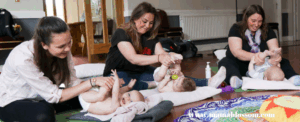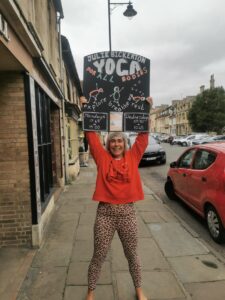
Baby yoga course
Hi, my name is Rebecca, the very lucky owner of Mama Blossom with now 4 teachers and 1 therapist helping me to support women and Read more
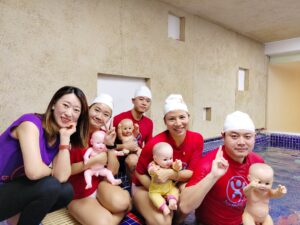
Baby swimming teachers in China
When the global pandemic hit in 2020, the baby swimming industry entered a deep winter— countless institutions quietly shut down. Yet one instructor chose to Read more
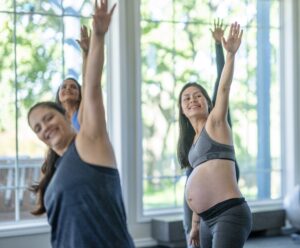
Yoga, specifically adapted for pregnancy, has many benefits for those totally new to Yoga and for seasoned practitioners alike whatever Yoga style and whatever your Read more

Why Breast Health & Comfort Deserves a Place in Yoga You probably know that breasts change throughout every menstrual cycle? During the luteal phase, progesterone Read more
(what to look for in a pregnancy yoga class or a prenatal yoga teacher Training) Three Factors that make a Skilled Prenatal Yoga Teacher Birthlight Read more

Summer pregnancy can feel challenging enough without adding hot yoga studios to the mix. But don't let rising temperatures keep you from the benefits of Read more
Congratulations on their 10 Year anniversary for Dammy&I Parent-Child Swimming Academy in Beijing! Between Beijing's hutongs and skyscrapers, three "Alice's Dream"-themed aquatic wonderlands are creating Read more
Postnatal Yoga Teacher Training: Support New Mothers’ recovery with Fourth Trimester Yoga Why Train in Postnatal Yoga: A Guide for Teachers Maybe you already teach Read more
Ever wondered how you could become an Aquanatal Yoga teacher? Read on to find out more about what Birthlight Aquanatal Yoga is and tips to Read more
Many parents may miss the intimate physical closeness of Baby Yoga as their little ones become more independent and unpredictable. Toddler Yoga offers a beautiful Read more


Baby yoga course

Hi, my name is Rebecca, the very lucky owner of Mama Blossom with now 4 teachers and 1 therapist helping me to support women and families on their journeys.

A very unusual start for a perinatal yoga teacher, I am a qualified engineer and spent 21 years working in management jobs in a large manufacturing company.  It was highly pressured and long hours. I have four children and when pregnant with my third I went to a pregnancy yoga class about 30 minutes away and loved the feel of the classes, so began my journey to train and set up my own class, closer and alongside my day job, it was just going to be something for me……but as it grew, in 2017 I took voluntary redundancy and gave myself the year (whilst having my 4th child of course lol) to see if it could work…

I started out by training and joining a Franchise in 2016, alongside this I had my first experience of Birthlight with the Aquanatal Yoga training later that year. The sense of community, warmth and welcoming from Birthlight in that first course warmed and inspired me. The Birthlight training was well laid out, but at the same time gave me the freedom to run classes in a way that was personal to me. 

My franchise journey with the other company was the opposite of this, teachers weren’t working together, the classes were restrictive in what we could do with them and just didn’t allow me to deliver what my local mums needed at that time. So in early 2019 I took the leap, moved out of the franchise, set up Mama Blossom and began my training with Birthlight, where my heart belonged. 

Pregnancy yoga classes Birthlight

Having already completed Aquanatal with Birthlight in 2017, I started next with Pregnancy Yoga training with them in 2019. Again the course was relaxed, friendly with like minded women supporting each other, content was as always a really good mix of practical and theory. What do I love the most? The freedom to use my training as I wished, no franchise, no control over content, no restrictions on what I charge. Just a joined up approach to supporting women through pregnancy in a way that no other training providers seem to understand. I love Francoise’s story, her approach and how her tutors are almost like a family, how they have reached so many parts of the world and continue to do so. Being a part of this felt like I wasn’t alone.

As the mums that started out with me in pregnancy wanted to involve their partners, there was a call for antenatal workshops…… as they had their babies, there was a call for baby classes….. as they wanted time out, a call for postnatal classes…..when they were looking to conceive again, there was a call for fertility……moving all the way through to menopause support. So Mama Blossom grew…

Birthlight was perfect to support this journey, as they have supported so many other women and families. Since 2017 I have now trained with Birthlight in Pregnancy Yoga, Couples Antenatal Preparation, Fertility Yoga, Caesarean Scar Recovery, Baby Swimming, Aquatic Nurture, Baby Massage, Baby Yoga, Postnatal Yoga, Menopause Yoga, Aquanatal Yoga. Outside of Birthlight, I have complemented the offerings with Closing the Bones and Hypnobirthing. And with so many great CPD offerings too!

Why do so many offerings work?

As Birthlight recommends, we have small class sizes and run classes in circles (where space is restricted, in a semi circle), no rows! They are small, friendly, we set up WhatsApp groups to keep in touch and create that feeling of finding their village, a space to come into each week to relax, recharge and be with others following the same journey. After experiencing this in pregnancy, they now have a safe space, a familiar face, a knowledge of what to expect, and they can return again to this with their partner, baby, when trying to conceive again…. For their journey, their village. 

But, with just me trying to run all of these classes, in multiple places it was just impossible to keep up with the business, to deliver quality and spend time with the family. In 2021 I reached out to my mum community for interest in teaching some pregnancy yoga for Mama Blossom, we had 4 ladies that had experienced Mama Blossom classes and wanted to help me reach more ladies with the classes, that teaching classes for Mama Blossom would be something for them, this was just perfect!

With all Mama Blossom classes based on Birthlight training, with the Birthlight vision aligned with integrated care and support for pregnancy, birth, early years plus their welcoming ability to create community and bring together differences in culture, social background and personalities it was the obvious choice for me. Training was set up with a combination of online and face to face training and they were very accommodating and organised their training locally to us all which made it so much easier with some teachers having very little ones or pregnant themselves. 

Pregnancy yoga classes Birthlight

2025, what does the Mama Blossom team look like now?

Few changes with 3 of the original teachers that have taught so many more women than I could have done on my own and empowering them in ways they never imagined. They too have gained so much more as teachers and built their confidence to move away from home with their families and take on life changing opportunities, have excelled in their main jobs with promotions and had some family challenges that mean they can dip in an out of teaching to support this. Becoming teachers gave them so much more.

We now have one of these teachers running pregnancy yoga classes for Mama Blossom and launching Blossom Sister alongside to bring in new offerings. We now have our own treatment room with another team member offering postnatal and pregnancy massage. Then in September my sister will be joining and offering women’s reflexology. Plus we have one and soon to be two now ex NCT teachers joining us to support with classes.

Mama Blossom Team

What do we do in Mama Blossom?

Fertility Yoga, Pregnancy Yoga, Baby Massage, Mum & Baby Yoga, Pregnancy Relaxation Workshops, Antenatal Workshops, Hypnobirthing, Postnatal Yoga, Caesarean Recovery Workshop and when we find time in our timetable, hoping to restart Yoga for Menopause, Women’s Circles and when we find a new facility, hoping to have Aquanatal Yoga back, I really miss it and there is a big demand for it. 

Why does Mama Blossom work?

Small classes, friendly faces, finding your village, continuity and familiarity. 

What makes our pregnancy yoga classes different to standard pregnancy yoga classes?

We teach in a circle, classes are small and friendly, we run in 6 week blocks and every class is different over a 12 week period (most mums will continue classes right up to having their baby).


We create community, at the start of class everyone introduces themselves, how their week has been (if they wish). Sometimes this may open up a topic of conversation. We also set up a WhatsApp group for everyone to keep in touch during the block and after, a space for them to support each other, share their stories and meet up. 

Classes are 1.5hr long and we incorporate yoga with education, breathing techniques and relaxation. Each week has a theme and the education is just 15 minutes, it’s a small snippet of antenatal education, just enough and then they can choose if they take it further with videos and links shared, reading books or antenatal classes if they want to know more. We all approach birth differently and this gives them freedom to do this, we give them the confidence to make choices to achieve their positive birth, however they birth. 

Pregnancy yoga classes Birthlight baby yoga classes

We use part guided breathing in class, as most women that attend our classes haven’t really practised yoga before, this works well in helping them build muscle memory and the ability to move and breathe at the same time in birth. Feedback is often how effective the breathing techniques are in labour, by coming to classes they have anchored to the movement, breath work and confidence to make choices in a deep relaxed state.
The first 10 minutes of yoga and breath work in class is the same every week, it’s our program into a relaxed state that the body recognises.

The main part of the yoga class changes each week. We adapt to the mum’s needs in class and build on the techniques over the 6 weeks. We also have themed weeks with chair yoga, rebozo scarf, birth ball, wall work…..giving mums the confidence to move and listen to their bodies is key with tools they can use in labour, the birth ball class is often a favourite.

Relaxation to finish is a guided relaxation, with scripts created by myself using the hypnobirthing techniques. They work through a 6 week course specifically for mums to prepare the body for birth. Giving mums the much needed relaxation they need as well as them having access to pre recorded relaxation tracks they can use at home and during labour and birth.

As not all mums want to book 6 weeks if they have a holiday planned and may miss a class, we often give them an option to do an extra class elsewhere with us having a few classes on, but often they are just happy to miss the week and catch up with our online content. We have yoga videos, education videos and relaxation recordings for them. For insurance reasons this access is only given to mums that have attended a class and know all the safety recommendations. 

The magic? Mums join class for pregnancy yoga, but find they get so much more than they expected, it’s the why, the whole package. And then they can join again for baby classes…

Don’t get me wrong, it’s tough and it’s tougher than ever before with more interventions occurring in local hospitals with less positive outcomes.
I love what I do, where else do you get such amazing feedback, see friendships being formed, women becoming empowered and we are seeing much more positive birth outcomes for mums attending classes xx

Rebecca Louis

Rebecca Louis and her team offer classes across Staffordshire & Derbyshire.

https://www.mamablossom.com/


Why not join a class near you?

Birthlight Training Director Kirsteen recommends you find a Birthlight trained Baby or Toddler Swimming teacher near you, look on the Find-a-Class Directory here: https://birthlight.com/directory

Baby swimming teachers in China

When the global pandemic hit in 2020, the baby swimming industry entered a deep winter— countless institutions quietly shut down. Yet one instructor chose to swim against the tide: Sunny, the first person to introduce UK’s Birthlight to China. From bringing the program to China in 2013 to withstanding pressure and hosting the third international summit in 2024, she has spent a decade lighting an unwavering beacon for the industry.

Baby swimming teachers in China at the side of the pool

From Zero to One: Bringing Birthlight to China

In 2013, Sunny introduced this internationally leading baby swimming program to China for the first time. At the time, the domestic baby swimming industry was still in its infancy, with major gaps in both theories and techniques. But she firmly believed, “The intimate interaction in water helps children grow healthier and brings families closer together.”

Establishing Industry Influence: From Summit to Hundreds of Coaches

BIn 2017, with support from Birthlight headquarters, she successfully hosted China’s first Birthlight International Summit, invited global experts and a former Chinese Vice Premier (the late Wu Guixian). The summit played a key role in shaping industry teaching standards.

In 2019, the second summit doubled in size, drawing professionals from China and abroad and significantly expanded Birthlight’ influence in China.

By 2020, she had organized 35 training sessions across China, cultivated hundreds of coaches and set the root for Birthlight’s scientific approach.

Darkest Hour: Standing Strong Amid the Pandemic

In 2020, the pandemic struck, giving a hard hit to the baby swimming industry. Many institutions closed down, and trainings stopped. But Sunny didn’t give up. “If we institutions back down, what about the coaches and families who are still holding on?” She pivoted to online courses and public lectures to keep the spark alive—and quietly prepared for the next breakthrough.

2024: A Comeback Against the Odds—The Third International Summit

As the industry started to recover in 2024, Sunny, as a Birthlight trainer, resolutely launched the third international summit, bringing together domestic and international experts to explore the future of baby swimming in the post-pandemic era.

It was more than an industry event—it was a declaration of resilience: “As long as someone still believes in the value of baby swimming, Birthlight will never leave.”

Sunny baby swimming teacher speaking at the international summit

Ten Years of Trials: A Testament of Leadership

Through ten years of highs and lows, Sunny has proven that a true industry leader is not defined by what they achieve in good times, but by what they endure in tough ones.

From 2013 to 2024, from a handful of supporters to hundreds of peers, her story mirrors the evolution of China’s baby swimming industry. Her next goal? Helping more families discover love and growth through water.

“Water flows, but faith does not. The waves may recede, but those who persist will remain.”

Sunny Shan Birthlight Baby Swimming Teacher

Sunny Shan

Tutor profile: Sunny Shan – birthlight

Birthlight Baby Swimming Tutor in China


Why not join a class near you?

Birthlight Training Director Kirsteen recommends you find a Birthlight trained Baby or Toddler Swimming teacher near you, look on the Find-a-Class Directory here: https://birthlight.com/directory

Yoga, specifically adapted for pregnancy, has many benefits for those totally new to Yoga and for seasoned practitioners alike whatever Yoga style and whatever your birth plan wishes may be. Birthlight Perinatal Yoga refers to yoga adapted specifically for pregnancy from conception through the first year after birth and including practices for labour and birth.

Pregnant woman sitting on her knees and holding her belly.

Just as all different motivations bring people to general yoga classes for the first time, similarly pregnancy inspires many to take up antenatal yoga- perhaps to replace other exercise that’s no longer comfortable or seen as appropriate. Many more are generally interested in yoga’s reputation for breathing and relaxation practices, and gentle stretching and strengthening asanas. 

Here we explore 5 common benefits that many yoga for pregnancy classes encompass.

  1. Finding Strength from Within

Regular Yoga for pregnancy can gently strengthen the deeper muscles that support your growing baby bump without strain. In turn, this will help relieve pressure on all your joints at a time when pregnancy hormones are loosening them. Getting in touch with your breath and gentle exercise can make you feel much more comfortable throughout your pregnancy.

If you are planning a vaginal birth, you’ll feel more confident knowing how to move and find positions that will help your baby move through your pelvis in labour. Knowing your pregnant body, how to avoid triggering aches and pains and how to use your breath to change how you feel can greatly help reduce the effects of stress or worry and promote a calm inner strength whatever your birth plan. These  will also serve you well on the other side of the birth.

If you’re planning a cesarean birth or end up having one, then some of the same breathing practices that you’ve been doing during pregnancy can be used to calm your nervous system as you approach surgery. 

However you end up birthing your baby, your breath also acts as an invisible bond and line of communication with your baby through the birth process and after they have been born. 

2. Slowing Down and Relaxing 

The pressure to ‘do’ and ‘achieve’ can be irresistible in our fast-paced lives but taking time to pause, to become aware of your breath and connect with your baby can really have far reaching health and wellness benefits. This applies even if you already have a Yoga practice that you enjoy. Pregnancy can be a great opportunity to explore other more subtle aspects of asanas that your current yoga style may not include or different breathing practices that can be so useful when you are breathing for two (or sometimes more!).

If you find it hard to switch off, joining a yoga class can give you lots of techniques to access blissful moments where body and mind can rest and rejuvenate. It is a life skill that needs practising to become easily accessible. But the bonus is that the more you practice the easier it will get and the more you can benefit. Once your baby arrives they will enjoy times where they ‘tune in ‘ to your calm breathing and you can enjoy relaxation together as part of your daily routine. Yes, that really is possible! Even if you already already have an older child or other kids in your family mix it is never too late to start.  

So, give yourself permission to rest and relax deeply more often during pregnancy- relaxation improves digestion, sleep patterns, elimination, immunity, and even personal relationships as we can react to daily challenges from a calmer place! 

Babies also need us to slow down so we can notice and read their cues which in turn helps them feel secure. The world is a super sensory place for newborns: they need to integrate their experiences at a much slower pace than adults.

3. Tips for Daily Life: Enjoying your Pregnancy Day by day

Practising how to have good posture in a yoga for pregnancy class can help you have better habits at home or at work particularly as your body changes so much over 9 months and your centre of gravity shifts forwards. Better posture will help you remain active throughout your pregnancy, and make it easier to breathe and digest. Your Pregnancy Yoga teacher should be able to offer you tips and practices to incorporate into your day whether it’s how to roll over in bed without pain, how to pick up your toddler without straining your back or how to use a winding down practice to help you get off to sleep at night.

Many small practices or changes can help you enjoy your pregnancy more. More enjoyment means more oxytocin in your body- that ‘happy hormone’ that’s also important for labour, breastfeeding and bonding. It is also important for helping you to relax, enjoy the company of loved ones and, interestingly, as it is also involved in tissue repair it can aid your physical recovery after birth.

A pregnant lady sitting on exercise ball practicing yoga

4. Learning to Let Go of Worry

Pregnancy often is a time of increased worries and anxiety about all kinds of concerns and doubts. This is where acquiring healthy habits of self-nurture for the mind as well as the body can really help. Learning to tune into your breath and body can be very grounding when emotions may be fluctuating more than usual. The more familiar you become with these tools by practising them regularly the easier it will be for you to use them to help you through daily ups and downs,  through your birth experience however it may unfold and through parenthood challenges into the future.

We all experience ‘the monkey mind’ from time to time when thoughts and worries seem to swirl around in our heads in annoying or upsetting ways, perhaps keeping us awake or interrupting our focus. Learning ways to ‘tame’ the thinking whirlwind can really resource us to find clarity and perspective. This is also good to practice before your baby arrives when all the normal worries of new parenthood can interrupt your enjoyment of your newborn. Equally beneficial, if this is not your first baby, is setting aside regular time for quieting the mind and relaxing the body during this pregnancy.

5. Preparing to Become a Parent

Two mothers holding their babies in correct yoga positions.

Part of being pregnant is considering what kind of parent you want to be – even if you already are one. Yoga for pregnancy isn’t just about preparing for birth but also giving yourself some time to bond with this baby before birth- perhaps even more precious if you already have a busy work or family life. Experiencing some quiet moments to contemplate and simply ‘be’ can help you imagine and plan for beyond birth.  

The “fourth trimester”, as the postnatal period is sometimes called, can be hard to imagine especially when you’re expecting your first baby. However, it is well worth planning for in terms of which daily and weekly habits and activities, people and practices can best support and resource you as you settle into life with your newborn.

A parent holding small baby's hand.

In your prenatal Yoga class you’re also likely to make pregnant friends and acquaintances whose babies may become friends of your baby. Whether the class is in person or online, it can be reassuring to journey through pregnancy with other pregnant women and pregnant people even though they may have different experiences and plans for birth.

Many people find that the breathing, grounding and relaxation practices they learned in pregnancy serve them very well after birth too and through the many challenges of being a parent. Returning to yoga with your baby after birth can be a great way to keep up your practice and aid your recovery in the welcoming circle of  a postnatal yoga class  – probably there’ll be some familiar faces you may have met before in the prenatal yoga class. 

So Perinatal Yoga really is yoga for pregnancy, birth and beyond!

Why not join a class near you?

Birthlight Tutor, teacher, and Training Director Kirsteen recommends you find a Birthlight trained Yoga for Pregnancy teacher near you, look on the Find-a-Class Directory here: https://birthlight.com/directory

Why Breast Health & Comfort Deserves a Place in Yoga

You probably know that breasts change throughout every menstrual cycle? During the luteal phase, progesterone causes milk glands and ducts to swell in preparation for potential pregnancy, which is why many women experience breast fullness or tenderness before their period begins.

But did you know that breast support comes from structures called Cooper’s ligaments—fibrous bands connecting to your collarbone and chest fascia? Unlike muscles, these ligaments can stretch over time but cannot be strengthened through exercise, making posture and movement awareness particularly important for long-term comfort.

Breast tissue undergoes remarkable transformations throughout a woman’s life, responding to hormonal shifts. Moreover, women’s responses to these shifts are coloured by social and cultural norms wherever we happen to be in the world and affect women’s sense of themselves. Each society’s views and taboos around breasts have changed over the centuries. In many ancient cultures, women’s clothing was often quite revealing, with little to no coverage of the breasts, particularly where women were considered to be sacred or divine. Today, images of breast exposure and breast feeding often provoke very strong reactions.

How Breast Tissue Develops

Breast tissue starts developing during the embryonic stage—and continues evolving through distinct phases that deserve our attention and care.

During childhood, breasts consist mainly of connective tissue with a small network of ducts, remaining relatively unchanged until puberty arrives. Between ages 8-13, estrogen stimulates growth of ductal tissue while progesterone promotes development of lobular tissue. Fat deposition increases, giving breasts their characteristic shape, and Cooper’s ligaments develop their crucial supportive network. 

Reproductive Years: Monthly Rhythms

Throughout the reproductive years, breasts are affected to varying degrees by the hormones of the menstrual cycle. Understanding this pattern can help women recognise what’s normal for their bodies:

Follicular Phase (Days 1-14): Early in the cycle, when estrogen begins rising, breast tissue is usually less full. As estrogen increases, blood flow to breast tissue gradually increases and ducts begin to slightly expand.

Luteal Phase (Days 15-28): After ovulation, progesterone levels rise significantly. Milk glands and ducts swell in preparation for potential pregnancy, increased fluid retention occurs in breast tissue, and many women experience the familiar fullness, tenderness, or sensitivity. Some experience lumpiness that resolves after menstruation begins—part of what’s medically called cyclical mastalgia.

This monthly cycle explains why a breast examination might feel different depending on when it’s performed, and why some women find certain yoga poses more or less comfortable at different times of the month.

The Twenties and Thirties

During young adulthood, breasts reach full development with prominent glandular tissue and higher density visible on mammograms. Interestingly, this is also the most common period for fibroadenomas to develop in around 9% of women although they can occur at any age. Fibroadenomas are benign, mobile, rubbery lumps influenced by estrogen that are completely normal but of course can cause concern for women finding this kind of change. 

Pregnancy and breast feeding: Dramatic Transformation

Few experiences transform breast tissue as dramatically as pregnancy and breast feeding. Increases in estrogen and progesterone cause significant growth as milk-producing lobules multiply and enlarge. Blood flow increases substantially, and breasts may increase by up to a third in size during breast feeding as alveoli fill with milk and ducts expand to accommodate milk flow.

After breast feeding stops, milk-producing structures gradually involute (shrink), but many women notice permanent changes in breast size, shape, or density. Understanding that these changes are normal parts of the feminine experience can help women approach them with acceptance rather than distress.

Mother wearing nursing bra

Perimenopause: The Time of Unpredictability

Perhaps no phase of breast health is less understood than perimenopause, typically beginning in a woman’s 40s. During this transition, estrogen and progesterone levels become erratic and unpredictable, creating irregular hormone patterns that can cause confusing breast symptoms. Some months may bring more pronounced tenderness or swelling than usual, while other months might have minimal symptoms.

Structural changes also begin during this phase. There’s a gradual decrease in glandular tissue, fibrous tissue starts being replaced by fatty tissue, and breast density typically begins to decrease. Cooper’s ligaments may begin to stretch, initiating some sagging, and women might notice changes in breast size—either increases due to weight gain or decreases due to tissue changes.

Common benign conditions during this phase include cysts (fluid-filled sacs), fibrocystic changes (general lumpiness and tenderness), fat necrosis (damaged fatty tissue), and sclerosing lesions (areas of hardened tissue). Existing fibroadenomas typically begin to shrink as estrogen levels decline.

Breast cysts deserve special mention, as they’re most common during perimenopause. These fluid-filled sacs develop as a result of hormonal fluctuations characteristic of this transitional period, may fluctuate in size during menstrual cycles, and can sometimes become tender or painful.

Menopause and Beyond: New Equilibrium

After menopause, declining estrogen leads to replacement of glandular tissue with fatty tissue. Breasts often become less dense and more fatty, Cooper’s ligaments may stretch further, and size may decrease or increase depending on overall body fat changes. Fibroadenomas continue to decrease in size or calcify, and there’s continued replacement of glandular with fatty tissue.

A Missing Element in Yoga Training

Despite these profound changes affecting millions of women throughout their lives, most yoga training and yoga classes don’t address breast comfort or health specifically. Traditional yoga teacher training programs spend extensive time on anatomy and alignment for nearly every part of the body—detailed instruction on hip alignment, shoulder positioning, spinal curves—yet breasts are rarely mentioned.

This oversight means that women often adapt yoga poses on their own, sometimes experiencing discomfort during forward bends, twists, prone poses or inversions without understanding why or how to modify appropriately. The lack of attention to breast health in yoga is particularly puzzling given yoga’s emphasis on body awareness and holistic wellbeing.

The Posture Connection

What many people don’t realize is how intimately connected breast health is to posture and movement patterns. Cooper’s ligaments attach to the clavicle and deep fascia of the pectoralis major muscle, creating a complex relationship between breast tissue, chest muscles, and overall posture.

Forward shoulder posture and rounded shoulders—increasingly common in our screen-dominated world—create shortening of pectoral muscles and alter the normal resting position of the chest wall. Over time, this changes the directional pull on Cooper’s ligaments. While well-toned pectoral muscles can’t prevent ligament stretching, they do create a firmer foundation that may provide better indirect support to breast tissue.

Good posture with proper shoulder and spine alignment creates a more optimal position for the chest muscles and provides a better foundation for breast tissue. This may help distribute the weight of breasts more effectively, potentially reducing strain on Cooper’s ligaments.

The Ayurvedic Perspective: Ancient Wisdom for Modern Bodies

Ayurveda, the traditional Indian system of medicine, offers a complementary perspective on breast health that can enrich our modern understanding. In this system, breast tissue is considered a site of kapha dosha and is associated with the mammary channels (stanya vaha srotas). The health of breast tissue connects to several key factors:

Proper lymphatic flow (related to rasa dhatu or plasma tissue): The lymphatic system plays a crucial role in breast health, removing excess interstitial fluid, cellular waste products, and inflammatory mediators while maintaining proper tissue hydration.

Hormonal balance across the menstrual cycle and life stages: Ayurveda recognizes the intimate connection between breast health and comfort and the body’s natural rhythms.

The energy of the heart center and emotional wellbeing: Breasts are seen as connected to the heart chakra and emotional health.

The quality and flow of bodily fluids and nourishment: Proper circulation and nutrition are considered essential for breast tissue health.

This traditional understanding offers valuable insights that complement modern anatomy and physiology, suggesting that breast health isn’t just about physical structure but involves emotional, energetic, and systemic factors. From Ayurveda we can add self massage and stimulation of certain marma points to help move the lymph, energy and emotions.

The Lymphatic Connection

Understanding the lymphatic system’s role in breast health reveals another layer of why movement and yoga can be beneficial. The breast has an extensive lymphatic network throughout the tissue, with primary drainage routes including axillary (armpit), internal mammary, and supraclavicular lymph nodes. The lymphatic system removes excess interstitial fluid from breast tissue, maintains proper tissue hydration, prevents fluid accumulation, and supports immune surveillance.

During breast feeding, increased lymphatic activity helps manage substantial fluid shifts and supports removal of metabolic byproducts during active milk production. Lymphatic vessels weave through the same connective tissue framework as Cooper’s ligaments. Proper lymphatic function prevents fluid buildup that could increase stress on these ligaments, while chronic lymphatic congestion can contribute to ligament stretching due to increased tissue weight. Muscular contractions, including those of the pectoral muscles during yoga practice, help stimulate lymphatic flow. Regular movement aids in preventing lymphatic stasis in breast tissue, indirectly supporting optimal breast tissue health and ligament function.

A Thoughtful Approach to Breast Health Through Yoga

Given this complex picture of breast health throughout a woman’s life, it becomes clear why specialized approaches to yoga and self-care can be valuable. The Birthlight Yoga for Breast Health short course offers practical tools and insights for understanding and supporting breast health through different life stages, combining modern knowledge with traditional Ayurvedic perspectives.

Most yoga classes approach the body as if breasts don’t exist. Forward bends, twists and prone poses are taught without consideration for breast compression and inversions without regard for how breast weight might affect comfort or alignment. This one-size-fits-all approach can leave women feeling physically uncomfortable or left to leave certain poses out without being given an alternative practice or way of practising. Even in women’s health focussed classes breast comfort and breast health are rarely covered.

The course addresses these gaps by offering modifications and awareness techniques that honor the female form rather than ignoring it. This isn’t about creating limitations—it’s about creating more inclusive, comfortable, and effective practices.

Why not join us in October for this short course? Full details here: https://birthlight.com/product/birthlight-yoga-for-breast-health-short-course-oct-2025/

(what to look for in a pregnancy yoga class or a prenatal yoga teacher Training)

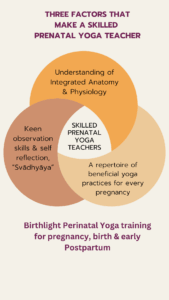
Three Factors that make a Skilled Prenatal Yoga Teacher

Birthlight Prenatal Yoga offers specialised practices designed for the entire pregnancy journey—from conception through to the early postpartum period, including labor and birth. While many are drawn to prenatal yoga for gentle stretching, strengthening, and relaxation techniques, what truly elevates the experience is the guidance of a skilled teacher.

Yes there are lots of resources on the internet but nothing quite matches having the personal attention of a skilled teacher with a good breadth of anatomical knowledge and a broad repertoire of practices that best serve the pregnant body. This is more than just tweaking classic yoga postures and leaving out a fair few. Combined with good observation skills and the habit of regular self reflection these three factors will facilitate your yoga practice during pregnancy in the best possible way.

Let’s explore the three essential factors that distinguish exceptional prenatal yoga teachers.

1. Understanding of Integrated Anatomy & Physiology

A skilled pregnancy yoga teacher possesses deep knowledge of how the pregnant body works, changes, and responds throughout the journey of pregnancy and beyond. Our Perinatal Yoga training  places great importance on understanding the anatomy and physiology of pregnancy, birth, and postnatal recovery as it informs the practices that will be of most benefit during this transformative time.

Supporting the Changing Body

Skilled prenatal teachers understand how to gently strengthen the deeper muscles that support your growing baby bump without strain. This targeted approach relieves pressure on joints when pregnancy hormones are naturally loosening them. Their anatomical knowledge allows them to guide you through movements that gently tone the muscles supporting your growing baby bump. Later some of these movements can help position your baby optimally for birth while keeping you comfortable in late pregnancy.

Breathing for Two

The physiological understanding of breathing during pregnancy goes beyond simple relaxation. Skilled teachers recognise breath also as an invisible bond and communication line with your baby. Whether you’re planning a vaginal birth or cesarean, a knowledgeable teacher helps you develop breathing practices that calm your nervous system, support labor, and establish early connection with your baby.

Communicating Clearly with Students

As prenatal teachers, it is key to be able to explain this anatomy and physiology to pregnant women and their partners in accessible, meaningful ways. Skilled teachers don’t just possess this knowledge—they help you understand it  in an embodied way, not just a theoretical way. Thus empowering you with better proprioception – the feeling and awareness of what is happening in your body and why certain practices are beneficial for you. This in turn  builds confidence and encourages pregnant people to become active participants in their pregnancy and birth journey taking some of the practices into daily life too.

2. A Repertoire of Beneficial Yoga Practices for Every Pregnancy

The most skilled teachers adapt their approach to meet each person’s unique needs not just in 1:1 classes but also, importantly, in group classes too, drawing from a comprehensive repertoire of practices. This important factor comes from the understanding that any yoga should fit the person practicing, not the other way around.

Diverse Approaches for Diverse Needs

Whether you’re new to yoga or an experienced practitioner, a skilled teacher provides practices appropriate for your body, pregnancy stage, and birth plans. They offer variations that accommodate physical limitations, previous injuries, or common pregnancy symptoms, ensuring everyone receives maximum benefit regardless of circumstance. It means that everyone in a class can stay feeling included although they may not all be doing the same practices throughout the session. Equally they can help advise you on how to adapt an existing yoga practice that you may be keen to continue as much as possible.

Beyond Physical Postures

Exceptional teachers recognize that prenatal yoga extends beyond asanas. They incorporate:
• Relaxation techniques that improve digestion, sleep patterns, immunity, and personal relationships
• Dharana and dhyana practices (concentration and meditative awareness) that help manage pregnancy anxieties and quiet the fluctuations of the mind
• Moments for Bonding that foster connection with your baby before birth
• Community-building practices that connect you with other expectant mums

Preparation for Birth and Beyond

Skilled teachers provide practices specifically designed for labor and birth, helping you feel more confident in finding positions that facilitate your baby’s movement through the pelvis if you’re planning a vaginal birth.  They also teach techniques that remain valuable postpartum, supporting your transition to parenthood and physical recovery.

3. Keen Observation Skills & Self-Reflection, “Svādhyāya”

Perhaps the most distinguishing quality of exceptional prenatal yoga teachers is their ability to truly see their students and continue to refine and adapt their own teaching practice.

Personalized Attention

Apart from having a comprehensive enrollment form where you share any symptoms or important details about your health with your teacher, they will also check in with you briefly at each class to see if there’s anything new that may need to be taken care of- this could for example be just whether you’re feeling particularly tired or energetic. Your teacher can then take this into account during the session. Your pregnancy yoga teacher will also use their observation skills  to note  subtle cues in your posture, breathing, and energy. This will help them see when you might need additional support or modification and offer adjustments. Sometimes a small change can dramatically shift how you experience a practice. Again the aim is to help you find steadiness, ease and enjoyment. This attentiveness creates a safe environment where you feel seen and supported in your practice of Svadhyaya (self-study/self-knowledge).

The Power of Laughter and Joy

One important factor that we aim to pass on to all Birthlight teachers who train with us is the understanding  that laughter is a magical class ingredient. In fact we recommend at least three good laughs in a class! This is often a surprise as it’s not something we usually do in the majority of yoga classes.  It’s not just about creating an enjoyable atmosphere—it’s a catalyst for increasing oxytocin, the love, calm, and connection hormone that also orchestrates the hormones of labor, birth, bonding and breastfeeding. Skilled teachers intentionally incorporate elements that bring joy and lightness to their classes, knowing that the physiological benefits extend far beyond the momentary experience of happiness.

Embodied Wisdom Through Self-Reflection

The Sanskrit term “Svādhyāya” refers to self-study and reflection. Professional prenatal yoga teachers engage in continuing self-reflection beyond their initial training, examining their teaching methods, updating their knowledge, and refining their approach. This commitment to growth ensures they bring authentic, tested wisdom to their teaching.

Creating a Sattvic Space

A sattvic space is one where you can practise finding stillness, clarity and inner-nourishment. Through their own self-awareness, skilled pregnancy yoga teachers create practice spaces where you can safely explore your changing body, fluctuating emotions, and emerging identity as a parent. Prenatal yoga is not a talking therapy session, although some teachers may also be trained in counselling or psychotherapy. However, many people appreciate the opportunity to briefly share how they are feeling at each class and feel a camaraderie with others in the group.

Opening up a regular space in your day and week for noticing what you feel, acknowledging what your changing needs may be and noticing your insights and intuitive knowledge about yourself can be very empowering, balancing and confidence boosting. 

In turn, as teachers model the self-compassion and present-moment awareness they facilitate their students in cultivating a sattvic (balanced, harmonious) atmosphere for practice where no one is encouraged to push beyond what their body and mind are asking for. Indeed if some people are looking for a direct replacement for a sweaty workout they may be disappointed with this type of class at first. But if they are open to cultivating a more subtle awareness of asana and movement in the wider context of all the other aspects yoga has to offer they will find a lot to explore!

The Transformative Impact of Skilled Facilitation

When prenatal yoga is led by a teacher embodying these three factors, the benefits extend far beyond physical exercise. With such guidance, prenatal yoga becomes a comprehensive preparation for birth- however it unfolds, and parenthood that:
• Builds inner strength and confidence
• Creates space for slowing down, grounding and deep relaxation
• Provides practical tools for daily pregnancy challenges
• Helps release worry and manage anxiety
Prepares you holistically for parenthood
Supports optimal physiological processes during pregnancy, birth, and recovery

Our Birthlight Perinatal Yoga training prioritises these three essential factors—anatomical understanding, a diverse repertoire of practices , and self-reflective observation skills—because we recognize that truly effective prenatal yoga isn’t just about what is taught, but how it’s taught and why specific practices are best for certain people or are offered at particular stages of the perinatal journey. This comprehensive approach ensures Birthlight teachers can create classes in the service of pregnant women and pregnant people throughout their entire journey into parenthood.

Find a Birthlight trained yoga teacher in our Directory of Prenatal Yoga Teachers here.

See when our next Perinatal Yoga Teacher Training courses are on our Training Schedule here.

Thermometer showing forty five degrees hot weather

Summer pregnancy can feel challenging enough without adding hot yoga studios to the mix. But don’t let rising temperatures keep you from the benefits of practising or getting to your prenatal yoga class! Self care is such a buzz word but it’s not just for the time you’re on the mat. 

An increase in blood volume and a higher metabolic rate during pregnancy contribute to women feeling hotter generally through pregnancy. Even if your core body temperature doesn’t rise significantly, it is common to feel more affected by the heat during pregnancy- especially during heat waves.

 Looking after yourself throughout the week will contribute to enjoying your practice each time you do hit the mat. With a few smart strategies, you can stay cool and comfortable through the day and keep connected to your yoga practice throughout the warmer months and benefitting from your commitment.

1. Time Your Classes Strategically

If you have the option, choose early morning or evening classes when temperatures are naturally cooler. Many studios offer sessions that avoid the peak heat of the day. Or maybe they have the option of joining online giving you the chance to  avoid a hot journey.  If you’re practising at home, aim for the coolest parts of your day. Your body will thank you for avoiding that afternoon energy drain, and you’ll feel more energised for your practice. Maybe car pool or share a ride to class to avoid the heat of public transport or a hot pavement walk.

Remember, ‘Hot Yoga’ classes aren’t recommended during pregnancy even if that’s your usual practice.

2. Dress for Success (and Coolness)

You don’t necessarily have to invest in specialist  lightweight, breathable fabrics that wick moisture away from your skin. Even if you have some pregnancy-specific activewear with extra room for your growing belly you may be better off wearing something loose rather than leggings or body hugging tops.. Light colors reflect heat better than dark ones and loose-fitting tops and pants or shorts allow for better air circulation. 

3. Hydrate Regularly Throughout the Day

Start hydrating well before class begins. Aim to drink water consistently throughout the day, not just during your yoga session. If you’re dehydrated your body will hold onto the water it has and this could contribute to swelling or oedema.

Bring a large water bottle to class – an insulated bottle will keep water cool, and take sips between poses throughout the class whenever you feel you need it, no one will mind and this is looking after yourself! After all this good hydration you may need to pee more and if you are in late pregnancy you’ll know all about this as your bladder is compressed by your growing baby. Make sure you take a pee break whenever you need it – during class and before the final relaxation so you can really relax properly.

4. Create Your Own Cooling Station

A cooling station with fans and woman laying on her belly looking relaxed

Suggestions to keep your temperature down…you could bring a small spray bottle to mist your face when needed..Alternatively bring a small towel and soak it in cool water before the start of class. Place it on your neck or wrists during rest periods to help regulate your body temperature. 

A handheld fan can be incredibly useful during meditation or breathing exercises. Some practitioners even freeze water bottles to roll under their feet during pauses.

5. Master Cooling Techniques Before and During Class

Before class: Cool your pulse points before class by running cold water over your wrists, behind your ears, and on your ankles if it is possible. This helps lower your overall body temperature quickly. 

During class: practise Sheetali pranayama (cooling breath) – curl your tongue to create a tube and inhale through it, then exhale through your nose- see side panel for full how to..) Keep sipping water throughout your practice rather than waiting for breaks or the teacher to remind you. 

6. Do Less, But Do Move Regularly Throughout Your Day

Summer heat combined with pregnancy fatigue calls for a “less is more” approach but that doesn’t mean being too static as this can really impact your circulation and worsen any swelling. Throughout your day, take regular gentle movement breaks especially if you have to sit at a desk or stand for most of the day. Simple foot flexing, ankle circles, and gentle calf raises while sitting or standing can prevent blood pooling. If you have your own yoga self practice choose shorter, gentler sequences over long, intense flows.

To help reduce pregnancy swelling, avoid standing for long periods, wear comfortable shoes and socks that won’t pinch if your feet swell, and try to rest with your feet up as much as you can. Take regular walks during the day or do simple foot exercises to keep circulation moving. This is especially important in hot weather when swelling tends to worsen. You can also try cooling wraps and even ‘slippers’ that are often used for recovery after surgery or injury. (never place ice packs directly on your skin, wrap in a cloth or towel then apply).

7. Manage Swollen Feet and Fingers with Smart Pose Modifications

Swelling is caused by your body holding more water than usual when you’re pregnant due to increased blood volume and your higher metabolic rate., It’s particularly common in your legs, ankles, feet and fingers. Throughout the day, the extra water tends to gather in the lowest parts of your body, especially if the weather is hot or you’ve been standing or sitting a lot. The pressure of your growing baby bump can also affect blood flow in your legs, causing fluid to build up.

Heat can worsen normal pregnancy swelling which is most common in the 3rd trimester, so minimise static standing poses and opt for seated or supported variations instead. Birthlight Pregnancy Yoga walks can be a good alternative. For final relaxation (savasana), prop your lower legs and feet up on a bolster or blocks to encourage circulation and reduce swelling. Between poses, wiggle your toes and rotate your ankles to keep blood flowing. If your fingers are swollen, avoid poses that put weight on your hands.

Another symptom that can feel worse in hot weather is varicose veins. Again avoiding prolonged sitting or standing poses (same during your day). Maybe it is possible to arrive early and elevate your legs on a chair or up the wall before the class starts to help them feel more comfortable. Maintaining static poses or one-legged balances probably won’t feel enjoyable so break the time and repeat the pose for shorter times instead. Alternatively take a seat and give your lower legs a gentle massage instead!

Caution re Swelling/oedema

Remember, swelling that comes on gradually is quite common especially in the 3rd trimester, though it can be uncomfortable. However, if you notice a sudden onset or a sudden increase in swelling, contact your midwife or doctor directly as this can be a sign of pre-eclampsia. The same goes for swelling only on one leg particularly the calf- it may be red and tender too, as this could be a symptom of a DVT or blood clot.

8. Know When to Take a Break

Relax! Deep relaxation in pregnancy is more beneficial than struggling to or through a class when you just don’t feel up to it. So turn off your phone and get into pregnancy savasana – remember your teacher’s tips for getting comfortable with plenty of props- side lying on your left will be better if you’re suffering from swollen feet or legs or varicose veins or you can try reclining on a supported slope with your lower legs raised. 

In hot weather it’s especially important to not lie flat on your back without supporting props under your knees even if you’re less than 30 weeks. Relaxing on your left side avoids strain on your inferior vena cava vein from the weight of your baby. Pay attention to your body’s signals of overheating: excessive sweating, dizziness, nausea, or feeling faint. If you experience any of these symptoms, stop yoga practice immediately, find a cool place to sit, and hydrate. Don’t be embarrassed about taking breaks or leaving class early if needed. You and your baby’s health and wellbeing are always the priority.

Physical Poses are Only One Aspect of Yoga Practice

Pregnancy Yoga offers incredible benefits for both physical and mental health, but summer heat requires extra attention to wellbeing and comfort. By implementing these strategies, you can continue enjoying your practice whilst keeping both you and your baby safe and comfortable.

Remember, every pregnancy is different, and what works for one person may not work for another. Heat waves bring extraordinary temperatures so taking extra good care of yourself is a priority. Always let your Prenatal teacher know about your concerns, especially if you’re not feeling well or you have any new health issues or symptoms.

Stay cool, stay hydrated, and most importantly, listen to your body, it may be asking for something different to usual. Your yoga practice should be a source of joy and relaxation, not stress or discomfort. Physical poses- Asanas are only one aspect of yoga there are plenty more ways to benefit without generating more heat. So explore breathwork, visualisation, meditation as well. With these tips, you can maintain that beautiful connection to your changing body throughout the summer months.


How to use Sitali (Sheetali) breath to help you cool down

Classically this cooling breath is done in a relaxed upright seated position but practically it can also be done standing, walking or reclining too.

During pregnancy it is beneficial to sit with the hips a bit higher than the knees wherever you are in your pregnancy. This makes more space for your breath, your baby, your digestion and circulation. Use folded blankets or flat cushions to achieve this whether you are sitting on the floor or a chair.

After finding your comfortable sitting position, close your eyes if you feel comfortable doing so, relax your gaze and establish your full breath so that your breathing is slow and deep, not shallow and fast. Slightly stick out your tongue and roll the sides of your tongue up to make a kind of tube shape (see alternative option below if you cannot do this). Slowly breathe in through this tube then close your mouth and relax your tongue to breathe out slowly through your nose. This is one round. The moisture of your tongue will help cool  the air you breathe in, helping to cool you down from the inside. Repeat this process another 8 times.

If you cannot roll your tongue into a tube, and not everyone can, you can try just letting your mouth and teeth open slightly and breathing in through your mouth with the air flowing between your teeth and then closing the mouth to breath out in the same way as described above.

As with all breathing practices in pregnancy there is no holding the breath (breath retention) and anyone who feels light headed or or uncomfortable should simply stop and breathe normally.


Tips from Ayurveda to Help with Pregnancy in the Heat from Liese van Dam

Drink Barley Water in the Third Trimester of Pregnancy

Barley is a safe and nourishing whole grain to consume during pregnancy. It is rich in essential vitamins and minerals such as iron, folic acid and calcium – all vital for foetal development and overall maternal wellbeing.

From the fifth month of pregnancy, Ayurveda specifically recommends incorporating barley water into your daily routine. Barley is a natural diuretic, and from this stage onwards, many women begin to experience fluid retention. Barley water helps to gently reduce swelling and support kidney function. Barley water also provides gentle hydration, which is crucial for both mother and baby. At the same time, it can help to stimulate Agni – the digestive fire – and support digestion, which can become sluggish in later pregnancy. Some women also find that barley water relieves common discomforts such as heartburn.

In addition to keeping you hydrated, the diuretic properties of barley water can help to ease oedema (fluid retention), especially in hot weather and/or during the third trimester.

To make barley water, simply boil ½ cup of pearl barley in 8 cups of water with the lid on, until the grains are soft. Strain the liquid and flavour it with a little jaggery, sucanat (unrefined cane sugar), honey or rice syrup if desired. The cooked grains can be saved and eaten with your next meal.

If you’re unable to tolerate gluten or prefer an alternative, fresh green coconut water is a lovely option. It’s now widely available in many health food shops and supermarkets.

Self-Massage

Another helpful remedy for oedema is massage — either full-body or focusing on the affected limbs. Use gentle, sweeping strokes, and in warm weather, coconut oil is an excellent choice. Take care not to slip with oil on your feet; allow the oil to soak into the skin or rinse off with warm water and a mild, natural soap.

When external oil application (oleation) is not possible or feels too complicated, movement from within can be very effective. Many women find great relief with Birthlight practices, particularly gentle body movements. When oedema is localised in the hands or feet, micromovements of the ankles and wrists can be especially soothing.

Liese van Dam is a guest tutor for Birthlight specialising in Ayurveda and Yoga for Women’s Health, you can join her Applied Ayurveda for Women’s Health Course  starting in October

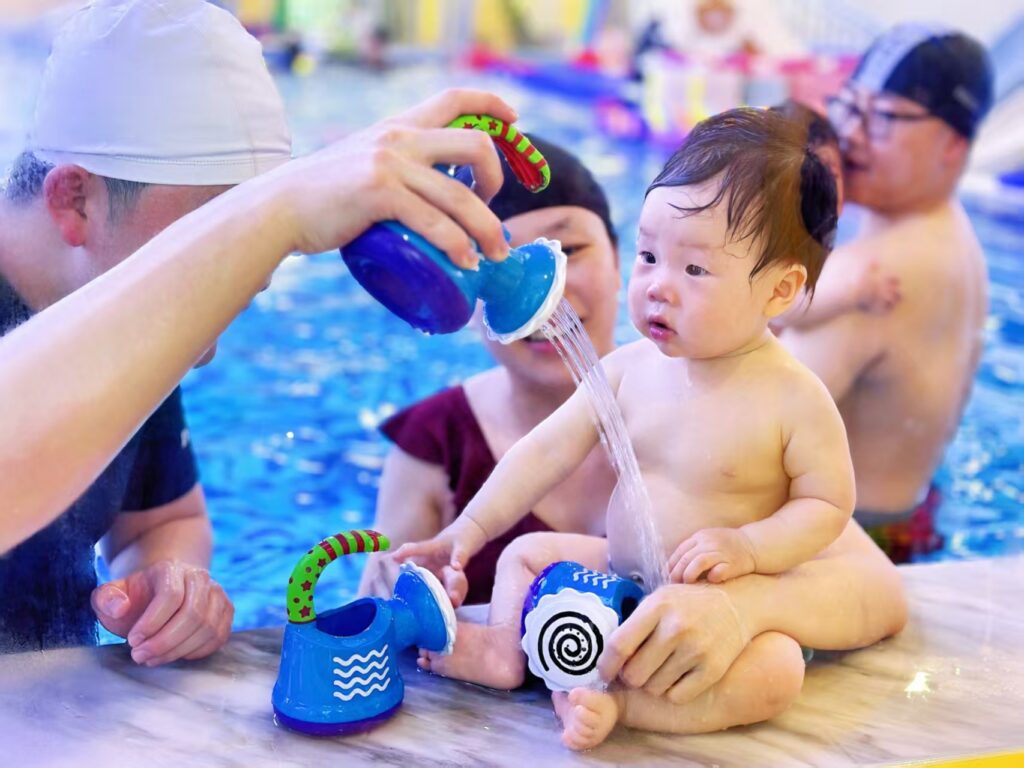
Congratulations on their 10 Year anniversary for Dammy&I Parent-Child Swimming Academy in Beijing!

Between Beijing’s hutongs and skyscrapers, three “Alice’s Dream”-themed aquatic wonderlands are creating extraordinary memories for families. As DAMMY&I Parent-Child Swimming Academy – Beijing’s exclusive Birthlight-certified institution since 2018 – we have dedicated a decade to perfecting aquatic education, guiding 7,000 families and certifying 16 Birthlight instructors. Our partnership with Birthlight UK has transformed “empowering through water” into a cherished reality for Chinese households.

Enchantment Begins: Aligning with Global Excellence

In 2015, when China’s parent-child swimming industry was taking its first steps, we discovered the magic of Birthlight. Dr. Françoise Freedman’s blend of aquatic therapy and child development psychology perfectly matched our vision. Through 23 onsite training sessions with Birthlight experts over ten years, we’ve built a robust system covering water safety, trust-building, and age-specific curriculum design.

Alchemy of Innovation: Rewriting the Local Playbook

While upholding Birthlight’s global standards, our R&D team has crafted localized innovations: 

– 40-minute immersive classes with “Musical Water Rings” and “Treasure Hunts” boost engagement; 

– Culturally tailored programs like “Aquatic Drama Studio” address Chinese parenting priorities; 

– Our co-created *Birthlight China Family Guide* now enriches the global resource library.

Sparkling Outcomes: A Decade of Multidimensional Magic

Birthlight’s framework has delivered transformative results: 

**Developmental Wonders**: 168 skill assessment metrics show learners exceeding industry benchmarks by 32%; 

**Safety Always**: A decade of zero accidents through our “5D Protection System”; 

**Nurturing Family Bonding **: 89% parents enhance communication skills through our programs; 

**Industry Leadership**: As Birthlight’s North China hub, our teaching models guide 50+ institutions nationwide. 

Shared Legacy: East-West Synergy

Becoming Beijing’s sole Birthlight-certified institution in 2018 validated our localized approach. Our 2022 contributions to *Birthlight Global 0-3 Curriculum* infused Chinese parenting insights into international standards – proving true collaboration breeds universal solutions. 

As we embark on the next decade, we’re co-developing AI teaching assistants and family support programs in the Birthlight ethos. Like Alice’s timeless adventure, DAMMY&I will keep reimagining aquatic education, turning every splash into a story of growth.

Postnatal Yoga Teacher Training: Support New Mothers’ recovery with Fourth Trimester Yoga

Why Train in Postnatal Yoga: A Guide for Teachers

Maybe you already teach yoga for pregnancy and the women in your classes would like to come back a join your classes after birth? Or maybe you’re curious how you could better support women who’ve had a baby recently when they want to come to your general classes? Or perhaps you support women through labour and birth and would like to offer them specialist care after birth to recover? Postnatal yoga requires specialised knowledge that goes beyond standard yoga training. Support new mums’ recovery with Fourth Trimester Yoga aka Postnatal Yoga and enrich your teaching and train to serve women at a pivotal time in their lives.

“Giving birth transforms women’s lives in profound, and often unexpected, ways. Each experience is different, and yet all births call for a new integration of physical and spiritual well-being. The flow of breath in yoga opens a steady calm path in the midst of all the emotions and changes that new mothers inevitably go through.”

Begin Supporting Women With Gentleness, Not Pressure

One of the most powerful aspects of Birthlight postnatal yoga is that very gentle adapted practices can be started even within hours after birth, days or in the early few weeks.  It’s crucial to understand that this early start is absolutely not about pressuring new mothers to “bounce back” or emulate unrealistic celebrity postpartum standards. Quite the opposite—these incredibly gentle techniques are about nurturing, comfort, and subtle support for the body’s natural healing processes. The early practices honour the profound individual journey the new mother’s body has undertaken and provide a sanctuary of rest and restoration, not a path to imposed aesthetic goals.

Postpartum Yoga Support Through the Physical Demands of Early Motherhood

Teaching ergonomic ways of holding and feeding babies that become good habits while they’re still small helps prevent common postpartum discomforts such as neck and shoulder pain and stiffness, wrist pain and back pain. These are what we call “baby holds”- we have different names for different holds, and we also teach easier ways to pick babies up and put them down along with how to change baby holds whilst they are in the mother’s arms whether they are sitting or standing or moving around. Many people haven’t even held a baby once before they hold their newborn. These give new mums greater confidence in holding and handling their baby and greater variety in ways to hold them. This in turn gives babies an increased sense of security.  These simple techniques become invaluable as babies grow heavier, potentially saving mothers from months of back and neck strain. Your early guidance creates a foundation of body awareness that serves women throughout their mothering journey by creating good habits of posture in their daily baby caring activities.

How Progressive Postnatal Yoga Helps Ongoing Recovery Through the Postnatal Year

All Birthlight Postnatal Practices are progressive meaning that classical yoga poses are selected for their particular benefits for postnatal recovery and broken down into their essential elements in progressive steps. This means that they can be practised easily by new mums to whatever extent is appropriate for where they are in their recovery. Whereas Yoga for Pregnancy focuses more on opening the body, breath and mind to accommodate the growing baby, in Postnatal Yoga the focus is on ‘closing the body’, coming back to spinal alignment, regaining strength and power, rebalancing energy, hormones and emotions. 

Although the Postpartum period is generally considered to be the 6-8 weeks after birth for most women there are many more months of adaptation to their new life and gradual progression to full fitness whatever that may look like to each person. 

For all these reasons in our Postnatal Yoga training we show you how to offer progressive practices and ways to think about whether someone is ready for the next step and more challenge rather than saying at 8 weeks everyone can do plank pose!

Create Meaningful Offerings

With postnatal yoga training, you can diversify how you share yoga through:

  • One-on-one personalised sessions- home visits, or yoga spaces.
  • Group classes with or without babies – daytime, evening or weekends
  • Supportive circles for the “fourth trimester” – create local community, opportunities to make friends and form support networks
  • Postnatal self-care days and workshops – some people even run postnatal retreats
  • Gentle integration with baby massage or baby yoga

Nurture Ongoing Connections

Women who attend your prenatal classes can continue their yoga journey with you postpartum and meet up again with the friends they may have made in your pregnancy yoga class. This continuity creates a bond and adds a lot of satisfaction to your teaching, establishing you as a supportive presence through major life transitions.

Provide Essential fourth trimester Support When It’s Most Needed

Many new mothers receive minimal guidance on physical recovery after their six-week checkup. By offering informed postnatal yoga , you can provide a supportive community during a time when women often feel overlooked in their own healing journey as the focus totally shifts to how the baby is doing. They may even feel like giving up on their recovery through tiredness, parenting challenges, lack of support and encouragement and the cultural pressure ‘to get back to normal’. However, regular practice with people they know helps them to keep going and keep benefitting. In addition, as so many women come to yoga for the first time during their pregnancy it is wonderful to be able to offer them a class that will progressively lead them to enjoy a regular yoga too.

Honouring the Ayurvedic Golden Window

In Ayurveda, the first 42 days after birth are considered a sacred “golden window”—a critical period where proper care can influence a woman’s health for the next 42 years. This ancient wisdom recognizes that how a mother is supported during this time can prevent numerous imbalances later in life. As a postnatal yoga teacher, you’ll be equipped to honor this golden window with practices that support deep restoration, proper rest, and balanced energy during this pivotal time of vulnerability and potential.

The Birthlight approach recognises that proper postnatal recovery significantly impacts long-term health and wellbeing. Your classes will offer women practices that have been tried and tested that support their bodies’ healing process, regardless of their birth experience. 

Why Women Will Be Drawn to Your Postnatal Yoga Classes

The Power of Nurture

Birthlight postnatal yoga is fundamentally focused on nurture—creating a foundation that supports both physical healing and emotional wellbeing. As their teacher, you’ll offer practices that honor the understanding that self nurture forms “a long-lasting base for core-tone as well as for developing a happy relationship with a growing baby and re-claiming oneself as a woman/mum.”

Beginning Where They Are—With Compassion, Not Expectations

The full repertoire of Birthlight postnatal yoga begins with such simple, gentle practices that women can start benefiting from them soon after birth with progression through the postnatal year. We respect the fact that the body went through 9months of incredible change and incredible adaptation during pregnancy. After birth the body needs time to for ligaments and fascia that stretched so much to regain strength and elasticity. Pelvic organs need to re-find their position in the pelvis. The proprioceptive system needs to adapt to the changed centre of gravity – balance is often wobbly in the first weeks. The spine and pelvis need to find and maintain alignment again. Muscles need to gradually strengthen. The nervous system needs regular cues to find equilibrium to counteract the inevitable effects of being on call to look after baby 24/7 and the mothering challenges that arise.

Unlike the cultural pressures to instantly “get your body back,” these accessible techniques offer comfort and support from the first vulnerable days and weeks through the postnatal year, meeting women exactly where they are in their recovery without judgement. The focus is on long lasting health and wellbeing- breathing to bring balance in body and mind, calm strength, energising and relieving stretching, deep rest in relaxation along with effective practices that can be realistically fitted into daily routines whilst caring for a young baby . Postnatal recovery with yoga can also begin later, even many months or even years later! The practices will still have great healing effects if someone never had the opportunity to go to a postnatal yoga class during the first year after birth or even much later. It may take a bit longer to feel the results if they miss the ‘golden window’ completely but it is still worth it, even if they are planning on having another child.

“Every woman progresses at her individual rate, depending upon many factors: how well she is after the birth, how dedicated she is to her yoga practice, how busy her life is, and how well the baby is settling down. Some days flow smoothly whilst others seem to snarl up. The most important thing is to do what you can – today. Yoga is totally non-judgmental, so to compare yesterday with today is pointless. Every day is an opportunity to progress towards greater pelvic strength, better alignment of the spine, deeper relaxation, more serenity and inner balance.”

Francoise Freedman

A Space That Honours Their Unique Postnatal Journey

Each postnatal experience is different. With specialised training, you’ll have the yoga practice repertoire to address varying recovery needs—whether someone had a cesarean birth, experienced tearing, or has diastasis recti—offering specific practices to help and modify practices based on their previous yoga experience.

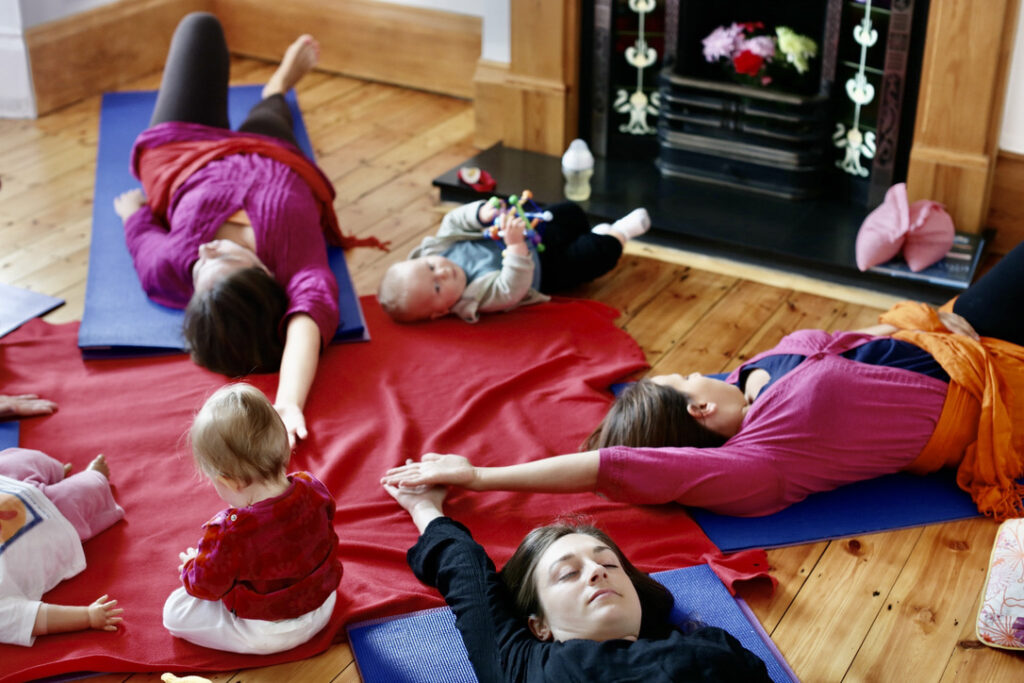
Mum-Focussed Postnatal Yoga Classes But Babies Welcomed and Included!

Your classes can offer a much needed opportunity, strike a beautiful balance—including babies without requiring baby yoga or massage, thus ensuring mothers don’t need childcare yet can still have time to focus on their own healing. This unique approach allows women to set some time for self-care without feeling they need to wait until their baby is asleep or being looked after by someone else. That said, of course Postnatal Yoga is a natural combination with Baby Massage and Baby Yoga.

Community During a Transformative Time, creating spirals of joy

Practised in a circle, Postnatal yoga creates a sacred space for new mothers to connect with others experiencing similar challenges. Your classes stretch beyond the facets of yoga and into building a circle of support during a time when many women can feel lonely or isolated. This is what we refer to at Birthlight as creating spirals of joy- the knock on positive effects of practising yoga together that spreads benefits beyond the individual mum and baby pairs, as they flourish the benefits spread to other family members and friends and collectively in the group coming together each class.

Gentle Evolution Throughout the First Year

Your training will enable you to offer progressively supportive practices that evolve as women move through different stages of postnatal recovery—from the tender immediate postpartum weeks through the entire postnatal year.

The Gentle effective Path Back to Regular Yoga Practice

One of the most valuable aspects of specialized postnatal yoga training is learning how to lovingly reintegrate postnatal women into regular yoga classes. This knowledge helps you:

  • Guide women confidently through their entire recovery journey
  • Prevent common discomforts or imbalances that can occur when returning to regular practice too quickly
  • Offer modifications that honour the continued healing process
  • Create inclusive regular classes that welcome postnatal women

By training in postnatal yoga, you’re developing the expertise to support women during a crucial life transition while honouring the profound work of nurturing a new life. The Birthlight approach understands that proper postnatal recovery isn’t just about physical healing—it’s about fostering the mother-baby bond and creating space for women to reclaim themselves in their new identity as mothers.

As a postnatal yoga teacher, you become part of this sacred work—helping women nurture themselves in the midst of nurturing their babies, all the while gradually rebuilding core strength and rediscovering themselves in this new chapter of life.

Frequently Asked Questions about Birthlight Postnatal Yoga Teacher Training:

Do you have to have already trained in Yoga for Pregnancy to become a Postnatal Yoga teacher? 

No, not at all. During the training we talk about how a woman’s pregnancy and birth may affect her postnatal recovery.

What if I don’t want to teach classes with the babies there- I think my women want time to themselves?

That is fine, but you may find that more women can come if they can bring their baby with them, otherwise they may have to wait until their partner is home or someone else can look after the baby.

Can you teach Postnatal Yoga in the evenings?

Yes, these are usually classes without babies so you need to think about when a suitable time would be. Also women tend to be more tired in the evenings rather than during the day or in the morning but it may be an ideal time for some women.

What happens if the babies cry?

Crying is inevitable at some point, babies cry to communicate. Babies are welcomed, not ignored so if they need feeding or changing, or picking up at any time we encourage mums to do so at any point during the class. They just join back in when they can. We can facilitate a good relaxed feeding position and they can do some breathing practice whilst they feed for example. Sometimes babies just want a change of view- and you might choose to do a practice where everyone picks their baby up- there are lots of ways we can entertain the babies whilst we practise! We also discuss this on the course.

Can you teach Postnatal Yoga one to one? 

Yes, and if it is early after birth this is the best way. After a vaginal birth without complications we recommend that new mums spend at least the first week mostly in bed and the second week mostly on the sofa. If their birth experience was more challenging and there was any surgery, tear or cut, or infection then recovery will take longer. So then 1:1 classes visiting them in their home is ideal to start them off very gently. 

Won’t it be too gentle for someone who has practised yoga for years?

Even those who have practised for many years need progressive practices instead of jumping straight back to everything they were doing before. How fast they progress is very individual. We teach many small steps to progressively adding more challenging practices so that women don’t jump to more complex practices too fast and then for example overstretch or provoke PGP or lower back pain and end up having to go back to the ‘beginning’ again. Our course covers offering different practices for different women in your classes according to their needs.

See when our next course is on our training calendar: https://birthlight.com/training/


Ever wondered how you could become an Aquanatal Yoga teacher?

Read on to find out more about what Birthlight Aquanatal Yoga is and tips to consider if you’re thinking about training to become an Aquanatal Yoga teacher. Aquanatal Yoga offers unique and wonderful benefits during pregnancy that are different to aqua natal fitness classes and different to prenatal yoga on dry land. It may also be called Aqua Yoga for Pregnancy or Prenatal Aqua Yoga. Aquanatal Yoga is a unique synthesis harnessing the distinctive qualities of being in water with yoga principles, breathing exercises, movement and some recognisable yoga poses. For many, this combination makes Aquanatal Yoga very accessible wherever they are in their pregnancy and whatever their level of fitness.

Aside from the benefits of remaining active during pregnancy or getting more active, exercising in water supports all the joints of the body. This is especially useful around the hips, lower back and pelvis as these are areas which can be sore and achy during pregnancy. The water supports the weight of your growing baby bump and takes the pressure off. Hydrostatic pressure in water means we can work muscle chains gently but effectively without strain. It can be surprising to feel like you’ve worked all your muscles after an Aquanatal Yoga session even though it didn’t feel like hard work whilst you were in the pool.

Many people feel less self-conscious in water and find the sessions reduce their stress levels helping them relax more easily. They also enjoy practising and connecting with the others in the class also going through pregnancy. It is also special allocated time to connect with themselves, their pregnancy and their baby.


So what is it like teaching an Aquanatal Yoga class?

As an Aquanatal Yoga instructor, you begin each class by reviewing any new enrolment forms submitted by participants, which help you understand any symptoms or medical issues they may have, along with any private concerns they wish to share. This means you know how to look after the individual women in the group, who has back pain or Pelvic Girdle Pain for example.

Classes usually take place in a warm pool where participants can comfortably stand with their feet touching the bottom. When pool temperatures are slightly cooler, you advise wearing a t-shirt or rash vest for additional warmth. You’re in the water with the group throughout the class.

Each session starts with a brief check-in. which also provides an opportunity for you and participants to learn everyones’s names.You ask how everyone is feeling and whether there are any new developments you should consider during the class so you can offer alternative ways of doing things where needed. You begin with warm-up exercises standing  in a circle, which also provides an opportunity for participants to learn each other’s names.

You then guide the class flowing through breathing practices and physical exercises, often utilizing floats and woggles of various sizes for support. Some exercises use the pool wall, while others are performed statically. Many activities involve movement around the pool, combining steps, glides, turns, floating rotations, and adapted swimming strokes. You offer encouragement, options and verbal adjustments to help everyone get the most out of the class.

The session winds down with a floating relaxation where participants are fully supported by woggles, this is often their favourite part of the class! You help the women position their woggles and make sure they don’t bump into each other. If it’s possible in your venue you may dim the lights and maybe play some relaxing music. The class finishes with a final short practice in a circle and a group farewell. You always make yourself available to answer questions and offer advice to those who may be anxious about being in water or experiencing new pregnancy symptoms.

Of course they won’t be pregnant forever but you will enjoy hearing about the arrival of their babies and if they used anything from your class to help them with the labour. 

If you are a Pregnancy Yoga teacher and have a love of water or swimming…

Maybe you’d like to combine your yoga knowledge with the qualities of water and create new sequences in a new medium where you can add practices that are impossible on land.

If you are a midwife…

Maybe you would like to offer sessions that are accessible to more women whatever their fitness levels, who might not consider going to a prenatal yoga class. These sessions can help women get active in pregnancy, reduce stress and gain confidence in the lead up to birth.

If you are a physiotherapist with an interest or speciality in women’s health..

Maybe you’d like to expand your skillset and offer sessions that combine your skills with yoga and water to help all women enjoy their pregnancy more whilst being active, whether that be in group or 1:1 sessions.

If you’re a swim teacher or baby swimming teacher…

Maybe you’d like to gain a new teaching skill and encourage mums-to-be to your pool before they bring their baby along for sessions. Mums enjoying the water during pregnancy will naturally pass this on to their baby.

If you’re another professional working in water with pregnant women…

You may wish to add another element to your therapeutic repertoire or a new type of session to offer in 1:1s or groups.

Frequently asked questions…

  • How long is an Aquanatal Yoga class?

Anything from 30-50mins depending on your pool temperature and how long you choose to have for the final relaxation.

  • How many women can be in an Aquanatal Yoga class?

It depends on the size of the pool. You need enough space for everyone to be able to move around the pool rather than being static on one spot and enough space for their whole body to be floating with noodle supports and no be bumping into other people. Many practices are often done or at least started in a circle, not rows. 

  • What is included in an Aquanatal Yoga session?

Classes can be designed around the needs of the women in your class, where they are in their pregnancy and any pregnancy symptoms they may be having. You can teach group or individual sessions. On this training you will learn how to adapt practices and add ones that can help alleviate common pregnancy symptoms. Classes typically include a welcome to all, warm -ups, practices using the pool wall, various practices with and without floats or noodles with feet on the pool floor or not, adapted swimming strokes, breathing practices, sometimes some partner practices and always relaxation.

  • Would I be teaching from the poolside or in the pool?

Aquanatal Yoga is taught with the instructor in the pool with the women, often in a circle. This is so you can properly demonstrate how to use the noodles and floats for the movements and help place them for relaxation. It also creates a friendly caring atmosphere in the class where you’ll be directly on hand if they need help or more explanation.

  • Where can I teach Aquanatal classes?

In a pool with a depth of around 1.2 -1.4 metres. The attendees should be able to get their shoulders comfortably under the water without kneeling. While we can do Aqua Yoga in a shallow pool it is not ideal as it is most effective when more of the body is immersed to the chest or neck, without having kneel or  bend the knees a lot. A warm pool is ideal for enjoyable longer supported floating relaxation. The temperature ideally needs to be between 30 to 33 degrees. It is possible to have sessions in a slightly cooler pool and the course covers how to adapt the class format for a cooler pool. A flat pool floor is preferable to a sloping one. Having steps rather than a ladder to ender the pool will make it accessible for those further on in their pregnancy where they are restricted in their movement by the size of their baby bump. Think about how many people would fit for a floating relaxation fully supported by woggles.

Leisure centres and hospitals sometimes have therapy pools which are a good temperature, usually wherever baby swimming classes take place will have a warm pool. You can also try private health clubs and special needs schools.

  • What about water safety? Do I need to be a lifeguard?

It depends on what the protocol is where you will be teaching and if a lifeguard will be present whilst you are teaching. This is something you should find out when you are looking for a venue to teach at. In any case we strongly recommend that you complete a NRASTC (National Rescue Award for Swimming Teachers and Coaches). 

  • Do I need to be a Yoga Teacher?

No. You do need to have some personal experience and practice of yoga and an interest in it though, in order to be able to teach these classes. 

  • Do I need a swimming qualification to take this course? 

No. However you do need a love of being in water! Everyone taking this course does need to be a confident swimmer, but you don’t need any swimming awards. Whilst the sessions take place in pools where you can have your feet on the bottom of the pool, we teach lots of practices, including adapted swimming strokes, where your feet are not on the bottom. Whilst some practices where you put your face in the water will be optional for the women taking these sessions you will need to demonstrate them.

  • What about insurance?

You’ll need to check with your current insurer or your professional body if you’re already working in water. If you’re coming from a Yoga Teacher background, you’ll need to add this discipline to your insurance and we recommend that you look at BGi to compare policies and cover. If you come from a midwifery background or a doula background, again check with your current insurance. If your your workplace covers your insurance remember you will not be covered to teach independently. 

  • Can I start teaching straight after the course? 

Yes, planning, teaching and documenting 4 case study classes forms part of your coursework to complete your training and receive your full qualification. On successful completion of the live online and pool days you’ll be issued with a Certificate of Attendance valid for 6 months whilst you complete your coursework, this can be used for insurance for teaching your case study classes. Extensions may be given up to 12 months from your training days. Once your tutor has assessed all your coursework and passed you, you will then receive your full teaching certification.

  • How is the course assessed?

The course is partly assessed by your tutor throughout the live online and in person days at the pool, to make sure that you can demonstrate the practices effectively and understand the theory. The other part is assessed on the coursework you submit. The coursework is carefully read and commented on by your tutor to make sure we are confident in your abilities to teach safely and effectively and to give you guidance on how to further your skills and understanding. All elements of the coursework must be submitted in order to graduate. 

  • Are there adjustments to the coursework for people with dyslexia or any other need that makes completing written coursework difficult? 

Any adjustment should be discussed and agreed before you enrol on the course. We endeavour to support in the best way we can although sometimes we lack the resources to do so. Please contact us on 073575968711 or email: [email protected] if you have any questions.

Many parents may miss the intimate physical closeness of Baby Yoga as their little ones become more independent and unpredictable. Toddler Yoga offers a beautiful solution – maintaining that precious connection while embracing the explosive energy and curiosity of emerging personalities. But don’t worry if you haven’t had the chance to join a Baby Yoga class, Toddler Yoga is waiting for you and your child, designed to support your family bonding and your child’s development!


Bridging the Gap: From Baby Yoga to Toddler Exploration

Whilst Baby Yoga centres on gentler movements and close contact, toddler yoga evolves into an interactive dance of connection. It provides a structured yet playful way for parents to continue that deep bond, navigating the paradox of a child who simultaneously craves both independence and connection.

Building Your Child’s Foundation: The First 1000 Days and Body Awareness

The “first 1000 days” describes the period from conception through to your child’s second birthday—a critical window when your child’s brain grows at an incredible rate. During this time, the foundation for all future learning and development is established.

Toddler yoga arrives at the perfect moment in this developmental window. The movement, touch, language, and connection in yoga classes provide the rich, varied experiences that help build strong neural pathways—essentially, your child’s brain communication networks.

When your toddler balances like a tree or stretches like a cat, they’re developing proprioception—their ability to know where their body is in space without looking. This body awareness flourishes during these early years, with each yoga pose becoming a lesson in understanding physical boundaries, balance, and self-awareness.

These movements strengthen connections between the left and right sides of the brain and develop the inner ear system that helps with balance and spatial awareness. Even simple activities like reaching across their body to touch the opposite foot build crucial brain pathways that will later support reading, writing, and complex thinking.


Embodiment takes this understanding further. A child who becomes aware of and gradually learns to listen to their body’s signals develops emotional intelligence at its most basic level—recognising feelings of tension and relaxation that form the foundation of managing emotions. This bodily understanding becomes a powerful tool for self-regulation as they grow.

By introducing or continuing yoga during this special time, you’re providing building blocks for physical, emotional, and cognitive skills that will benefit your child throughout life—far beyond the yoga mat.


Fully Engaged Participation!

Unlike activities where parents sit on the sidelines, toddler yoga requires active participation from the adults. Parents become co-creators of each moment, supporting, encouraging, interacting fully! The power of modelling is significant – kids do as they see us doing not as we say to do! Toddlers delight in copying the adults’ actions, though not always on cue. Don’t be surprised if your toddler sometimes seems reluctant during class but later spontaneously demonstrates poses at home, teaches them to their toys, or recounts the yoga story days later.

Toddlers and preschoolers enjoy crawling or creeping through tunnels made by the adults.


A Language of Movement and Words

Language development takes centre stage during toddlerhood, and yoga becomes an unexpected ally. Each pose tells a story, each movement becomes a word. When a child stretches like a cat, they’re simultaneously learning to embody and express language through their body. Parents narrate these movements, turning yoga into a rich language experience. “Look how tall you’re standing like a tree!” becomes a moment of verbal and physical learning where children associate words with movements, building vocabulary and body awareness simultaneously.

A Sensory Journey: Beyond Screens

In our screen-saturated world, toddler yoga offers a rich, tactile alternative. Here, sensory stimulation becomes a full-bodied adventure that no digital experience can replicate. Simple props can help transform the experience – a scarf becomes a cloud, blocks become stepping stones, and breathing becomes a shared symphony. Songs and rhymes enrich the actions or illustrate the storyline further their exposure to language in context. As the teacher and parents change tone and pitch they signal different part of a story or different parts of the session, toddlers begin to anticipate what will happen next and tune into the activity- concentration, action, relaxation, joining in a circle or joining up with another parent and toddler for a paired practice.

Unlike the world of screens, these experiences engage all senses in unpredictable, interactive ways, building crucial brain connections along the way. For parents, it’s a chance to rediscover play alongside their children, connecting through movement, touch, sound, and shared experience.

The Developmental Bridge

Toddler yoga forms a crucial developmental bridge to children’s yoga, creating a continuum of movement and learning. The skills developed here – body awareness, emotional regulation, listening, and playful interaction – become the foundation for more structured practices in later childhood.For parents overwhelmed by their toddler’s volatile energy, these sessions can provide practical techniques to:

* Channel energy positively

* Communicate through movement

* Create moments of calm and connection within chaos

* Reconnect when independence feels challenging


Bringing Yoga Home: Daily Family Integration

The magic of toddler yoga truly blossoms when it extends beyond “formal” sessions into everyday family life. Simple practices can transform ordinary moments; try these out during your day:

Morning Stretches**: Begin the day with a few playful animal poses while getting dressed

* **Transitional Moments**: Use a calming breath exercise before meals or after playtime

* **Bedtime Ritual**: Incorporate gentle stretches into your nighttime routine to signal the body it’s time to rest

* **Emotional Regulation**: When big feelings arise, introduce the “breathing buddy” – placing a small toy on their belly to watch it rise and fall with deep breaths

* **Nature Connection**: Turn outdoor walks into yoga adventures, mimicking trees, animals, or clouds you encounter

These daily integrations help children understand that yoga isn’t just a special activity but a toolkit for navigating life. When parents consistently model these practices, children naturally incorporate them into their own self-regulation strategies.


Relaxation Matters: Balancing Activity with Relaxing Together

Relaxation is where the true integration happens. After the activity of yoga poses, short relaxations create essential moments for toddlers to process and absorb their experiences. Toddlers need these pauses to “save” what they’ve learned and experienced. In a toddler Yoga class they may not immediately want to lie down to relax but very often begin to tune into the relaxing atmosphere the adults create. As toddlers begin to recognise the phases of the class they often come to enjoy and participate in this part of the session as much as the rest.

When you relax alongside your toddler—perhaps lying side by side like stars in the sky or cuddling together like hibernating bears—you’re teaching them to value stillness as much as movement. These shared calm moments can create a rhythm in your day that helps your toddler learn to regulate their often overwhelming energy and emotions.

These quiet times together also offer powerful non-verbal ways to reconnect after upsets or confrontations. When words fail (as they often do with toddlers), a few minutes of gentle breathing together can repair connection more effectively than lengthy explanations. After a tantrum or disagreement, inviting your child to rest against your body while you both take deep breaths creates a physical reassurance that your relationship remains secure despite the storm.

By integrating relaxation in flexible yet stabilising forms, you bring yoga’s full spectrum to family life. Even five minutes of conscious breathing while sitting together creates a calmer household environment and shows your child the value of balance. In harmony with yoga’s ancient principles, these moments of nurturing yourself and your toddler simultaneously strengthen your bond and build lifelong skills for emotional regulation.


Embracing the Wonderful Toddler Years

These years blend tremendous growth and challenge. Toddler yoga provides a container for this complex stage – a space where independence and connection harmoniously coexist. More than anything, these sessions teach the art of presence – finding joy in movement, laughter in imperfection, and connection amidst chaos. As children grow, the practice evolves with them. What begins as simple imitation gradually becomes creative engagement as children invent their own poses and yoga stories.

In the dance between dependence and independence, yoga has the potential to be the gentle rhythm that helps hold it all together.